The scenes of empty shelves at the start of an outbreak are a demand problem rather than a supply problem, and understanding that is what allows sensible preparation without contributing to them.
Why do shelves empty?
Because supply chains are optimised for steady demand. Shops hold limited stock and are resupplied continuously, so a modest increase in how much everyone buys empties shelves far faster than production or distribution can respond. The food was there, the logistics could not move it fast enough, and the gap looked like scarcity, which prompted more buying.
What is the alternative?
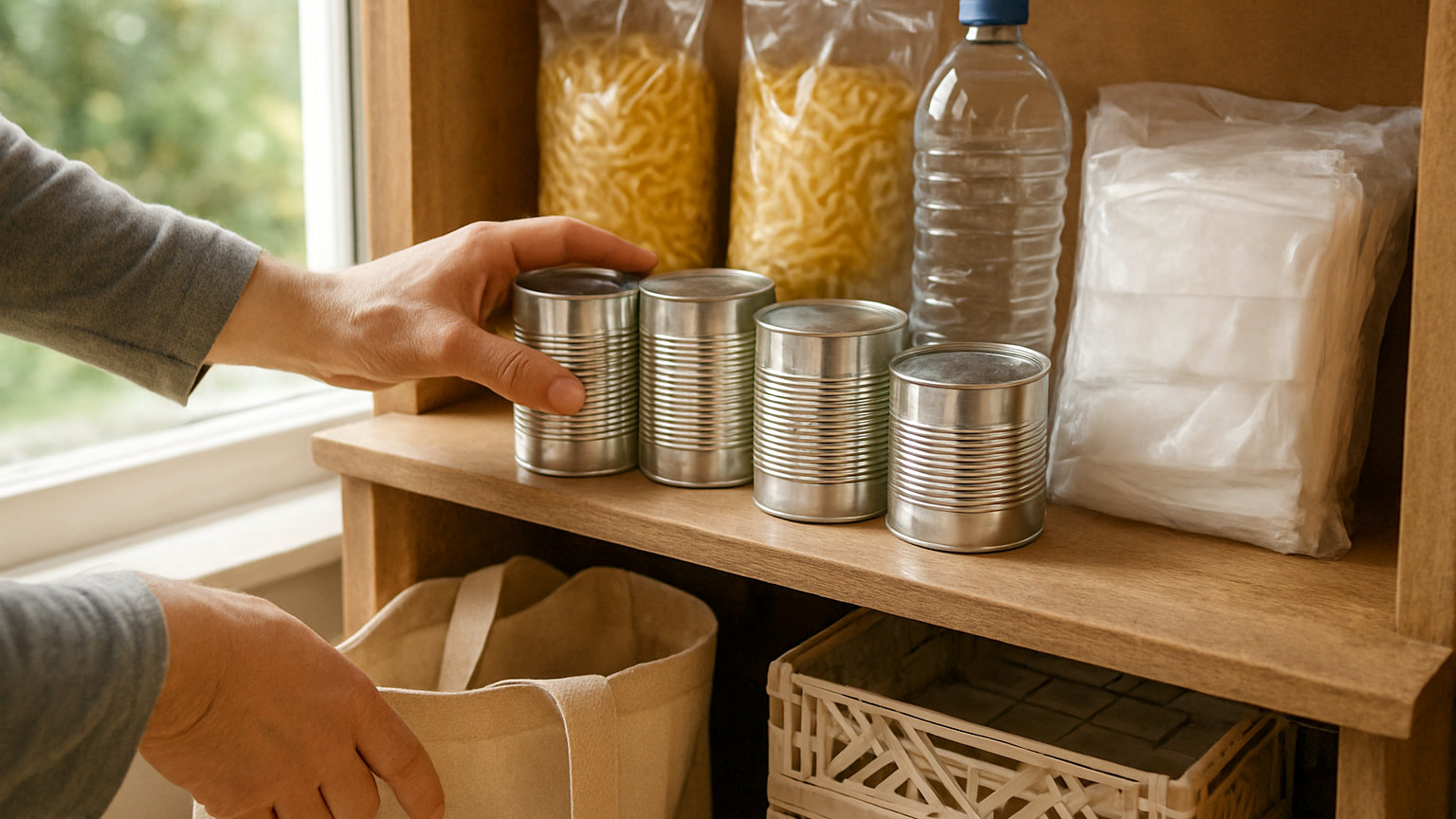
Buying slightly more than you need, continuously, before anything happens. Adding two or three extra items to each normal shop over a couple of months builds a full store without any single large purchase and without affecting availability for anyone else. It costs the same money, spread out, and produces a better result.
- Add two or three extra items to each normal shop
- Build over weeks rather than in a single trip
- Buy what you normally eat so it rotates
- Order repeat prescriptions early rather than stockpiling
- Think about pets, nappies and sanitary products too
- Two or three weeks is a sensible target
How much should you aim for?
Two or three weeks of food, medication and essentials, which covers a household period of illness or isolation without needing to shop. That is more than most people keep and considerably less than the images of stacked trolleys suggest. It fits in a normal cupboard and rotates through ordinary use.
What gets forgotten?
The non food essentials. Nappies, formula, sanitary products, pet food, cat litter, toothpaste, soap, cleaning products and bin bags all run out and all are irritating to be without. Medication, both prescription and the ordinary cupboard items. Anything specific to a dietary requirement, which is harder to source at short notice.
What about prescriptions?
Order in good time rather than stockpiling, which is the specific behaviour that causes medicine shortages. Pharmacies are not stocked to supply everyone with double quantities simultaneously, and shortages during recent outbreaks were driven partly by this. Ordering a few days earlier than usual, and using repeat dispensing, builds a natural buffer without harm.
Why does it matter what others do?
Because the people most harmed by panic buying are those who cannot participate in it: people on low incomes who cannot afford to buy extra, people without cars who cannot carry it, older and disabled people who cannot get to the shops early, and shift workers who arrive after the shelves have emptied. Gradual preparation avoids that entirely.
What if you have left it late?
Buy normally and accept some gaps. Shortages during recent outbreaks resolved within weeks as supply chains adjusted, and nothing essential was unavailable for long. Ask a neighbour, use smaller local shops which frequently had stock when supermarkets did not, and use delivery services if you can get a slot. Do not join the rush.
What is the honest position?
A household that has quietly built two or three weeks of ordinary supplies over a couple of months is genuinely prepared, has spent no more money, and has taken nothing from anyone. That is the whole of it, and it is available to most households at any time other than the moment everyone else is doing it.
Does buying extra ever cause harm?
Only at the wrong moment. Buying two tins instead of one on an ordinary Tuesday has no effect on anyone. Buying twenty on the day an announcement is made takes them from the person behind you. The distinction is entirely about timing rather than quantity, which is why the advice is to build steadily and to stop adding to the store once a rush has started.
Add a few items to each shop over weeks, aim for two or three weeks of supplies, order prescriptions early, and remember the non food essentials.