Most illness is looked after at home, and doing it well is mostly about fluids, rest and knowing which signs mean the situation has changed. This is general information rather than medical advice.
What are the basics?
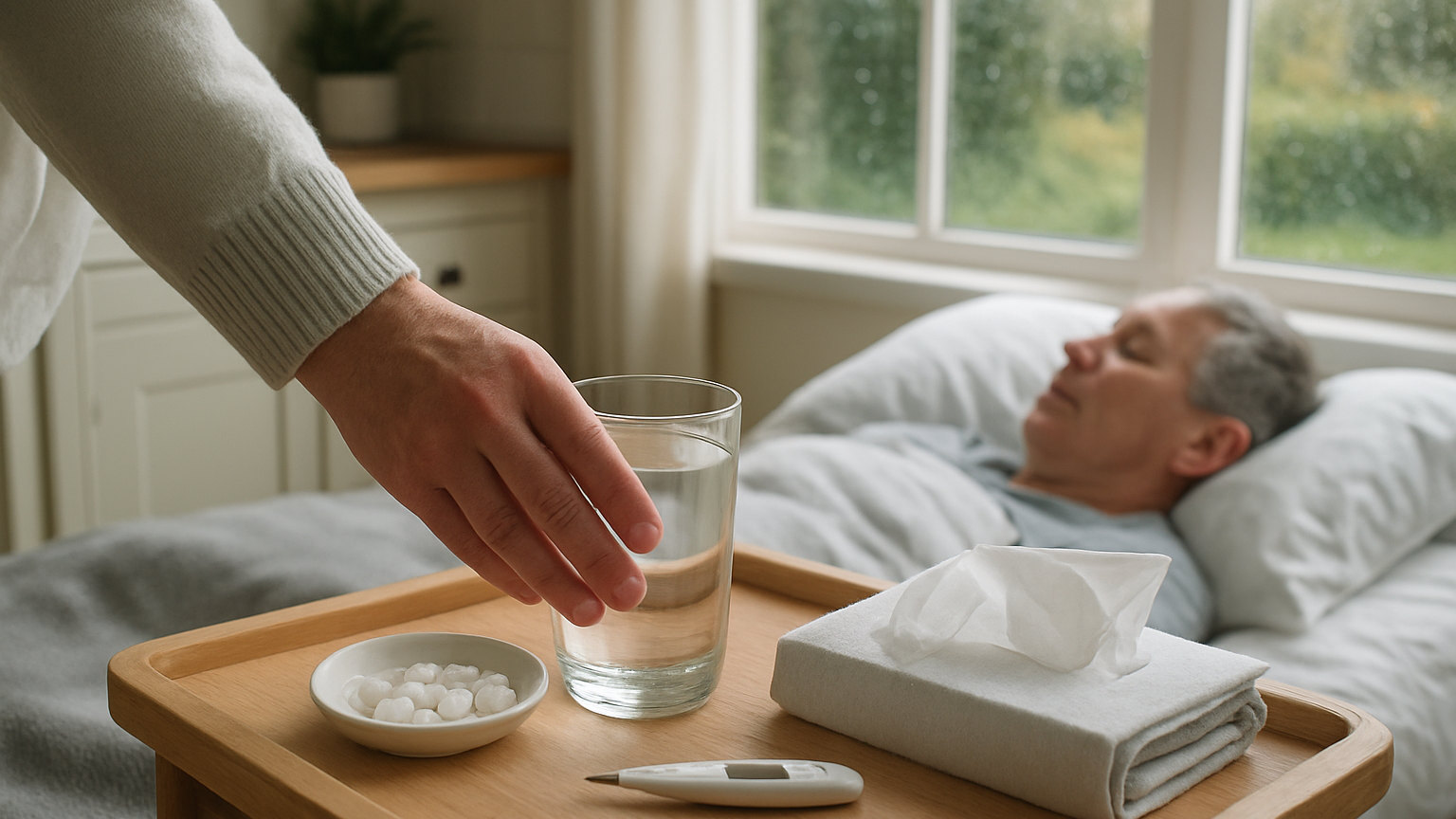
Fluids, rest, and paracetamol for fever and discomfort if suitable for that person. Encourage regular small drinks rather than large ones, which are better tolerated. Do not force food, since appetite returns as they improve and a day or two of eating little matters far less than not drinking. Keep the room comfortable and ventilated.
How should you manage a fever?
Treat the person rather than the number. Fever itself is part of the immune response and does not automatically require treatment, and paracetamol helps if someone is uncomfortable, aching or unable to rest. Keep them cool but not cold, offer fluids frequently, and do not use cold baths or fanning to force the temperature down, which can be counterproductive.
- Small frequent drinks matter more than food
- Paracetamol for discomfort, following the dose instructions
- Never exceed the dose or double up on the same ingredient
- Check on them regularly, including overnight if unwell
- Call 111 for advice, 999 for the red flags below
- Trust a sense that something is wrong
What should you watch for?
Breathlessness at rest or difficulty completing a sentence. Chest pain. Blue or grey lips or face. Confusion, unusual drowsiness or difficulty waking. Being unable to keep any fluids down. A rash that does not fade when a glass is pressed against it. Very reduced urination. Any of these warrant urgent medical attention rather than watching a while longer.
When do you call 111 and when 999?
Call 111 for advice when you are unsure, when symptoms persist or worsen, or when you want guidance about whether someone needs to be seen. Call 999 for the red flags: severe breathing difficulty, chest pain, blue lips, unresponsiveness, a non fading rash, or a seizure. In an emergency do not wait to see whether it settles.
What is different about children?
They deteriorate faster and show it differently. Watch for reduced wet nappies or trips to the lavatory, unusual floppiness or drowsiness, a weak or high pitched cry, refusing feeds, rapid breathing or drawing in beneath the ribs, and any non fading rash. Parental instinct is a legitimate reason to seek help, and health professionals would far rather assess a well child than miss an unwell one.
What about older people?
Presentation is often atypical. Confusion, a fall, reduced appetite or simply not being themselves can indicate significant illness without an obvious fever or cough. Dehydration develops quickly and thirst is a poor guide, so fluids should be offered regularly rather than waiting to be asked. A sudden change in someone usual condition warrants advice.
How do you look after yourself?
Deliberately, because carers become exhausted and then unwell themselves. Eat and sleep properly, take breaks, share the caring where possible, and accept practical help. A carer who becomes ill leaves a household with nobody managing, which is why protecting the carer is part of caring rather than a distraction from it.
What should you have to hand?
A thermometer, paracetamol, rehydration sachets, fluids, a bowl, tissues, a bin and a phone with 111 saved. Also a written note of the person medication, conditions and allergies, which is what a clinician will ask for and what nobody remembers accurately under stress.
What should you record?
Enough to notice a trend. Temperature at consistent times, how much they are drinking, whether they are passing urine normally, and how their breathing seems. A few lines a day on a piece of paper shows a direction that memory does not, and it is exactly what 111 or a GP will ask about. It also helps a second carer take over without losing the thread.
Fluids and rest, paracetamol for comfort, check regularly, know the red flags, call 111 when unsure and 999 for the serious signs.