Household isolation is a matter of degree rather than an absolute. Most British homes cannot achieve genuine separation, and the practical measures still reduce transmission substantially.
What is the basic arrangement?
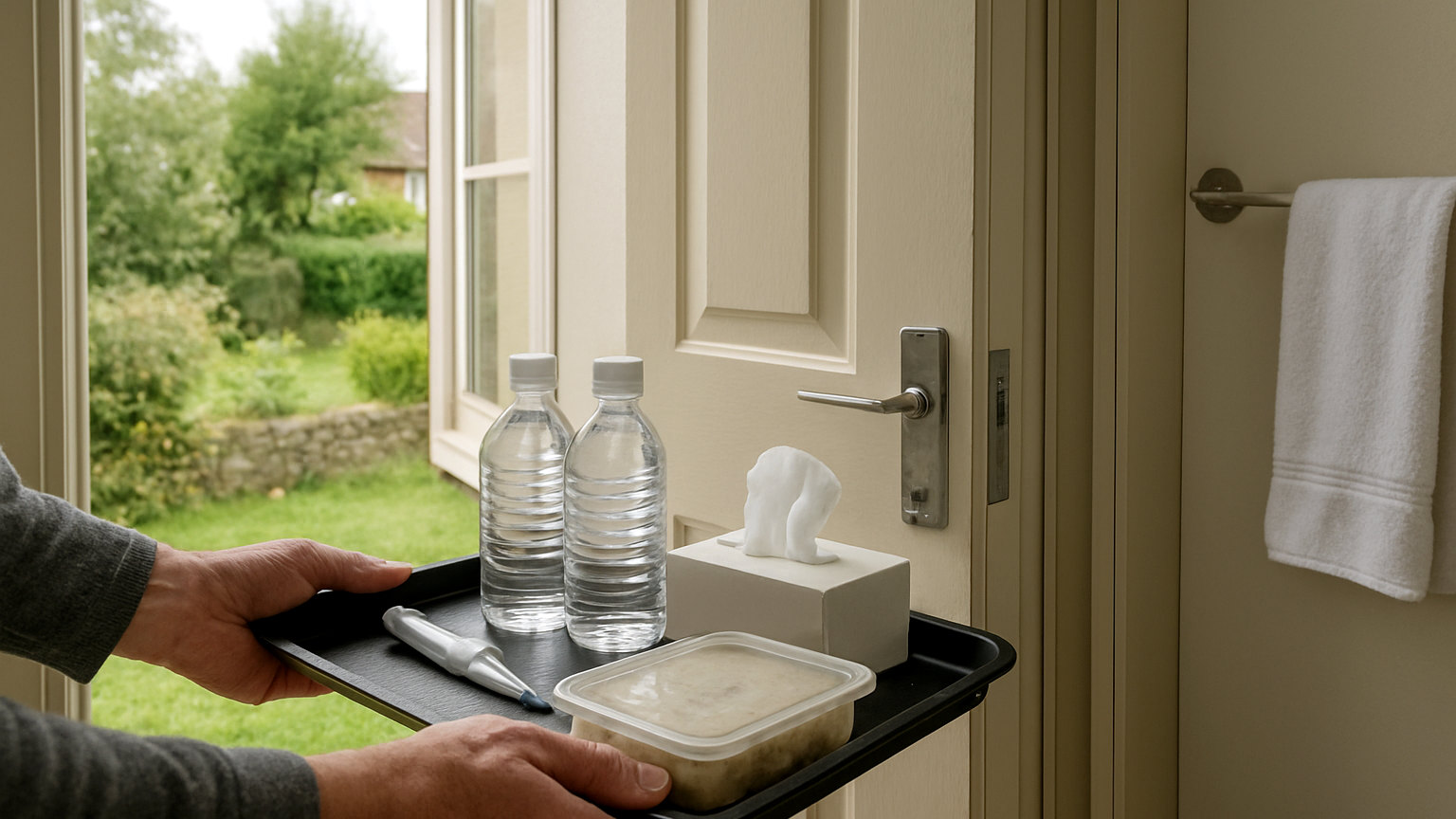
The ill person stays in one room with the window open, uses a separate bathroom if the house has one, and has meals brought to the door rather than eating with the household. They use their own towels, flannel, cup and cutlery. Anyone entering the room wears a well fitting mask and opens windows afterwards.
Which room should it be?
One with a window that opens and, ideally, one that is not a thoroughfare. A bedroom is usually the answer. Avoid a room that others must pass through, and avoid the room containing the only bathroom access if that can be arranged differently. Comfort matters too, since someone may be there for a week or more.
- One room with the window open where possible
- A separate bathroom if the house has one
- Own towels, flannel, cup, plate and cutlery
- Meals left at the door rather than eaten together
- Masks when anyone shares the space
- Ventilate shared rooms after the person has used them
What if there is only one bathroom?
Sequence it and ventilate. The ill person uses it last where possible, cleans the surfaces they touched, and the window is left open afterwards for a period before anyone else goes in. Everyone has their own towel. Close the lavatory lid before flushing, which reduces the spray produced. This is imperfect and meaningfully better than nothing.
How do you handle meals?
Leave them outside the door and collect the tray afterwards. Wash up in the normal way with hot water and detergent, which is sufficient, and wash your hands afterwards. There is no need for separate washing up arrangements or disposable crockery in most circumstances, although both are convenient if the household would rather.
What about children?
Isolation is largely impractical for young children and should not be pursued at the cost of their wellbeing. A frightened three year old cannot be left alone in a room and should not be. Concentrate instead on ventilation, hand washing and keeping the ill child away from anyone in the household at higher risk. Nominate one adult as the main carer to limit exposure across the household.
What about the carer?
One person where possible, ideally not someone at higher risk. That person wears a well fitting mask in the room, washes hands after contact, and ventilates. Consistency reduces the number of people exposed and makes it easier to notice changes in the ill person condition. The carer should also be looked after, since they will be tired and worried.
How long does it last?
Follow current NHS guidance, which varies by infection and changes over time. Do not rely on a period remembered from a previous outbreak. If in doubt, the general principle is to stay away from others while symptomatic and particularly while feverish, and to be more cautious around anyone vulnerable for longer.
What if it is not working?
Accept partial measures rather than abandoning them. A household in a small flat with one bathroom and small children cannot isolate properly, and ventilating, masking in shared space and protecting the most vulnerable member still reduces transmission. Doing something imperfectly is considerably better than concluding it is impossible.
What about pets?
They generally continue as normal and a little thought helps. Some infections can pass between people and animals, though it is uncommon and usually mild, and current guidance during any specific outbreak will say if it applies. Practically, someone who is unwell will struggle to walk a dog or clean a litter tray, so agree who takes that on and keep the animal out of the isolation room if it means someone else entering repeatedly.
One room with the window open, separate towels and crockery, meals at the door, one designated carer, and partial measures where full ones are impossible.