Food and water questions generate a great deal of anxiety after any release, and the actual advice is narrower and more reassuring than people expect.
What food is safe?
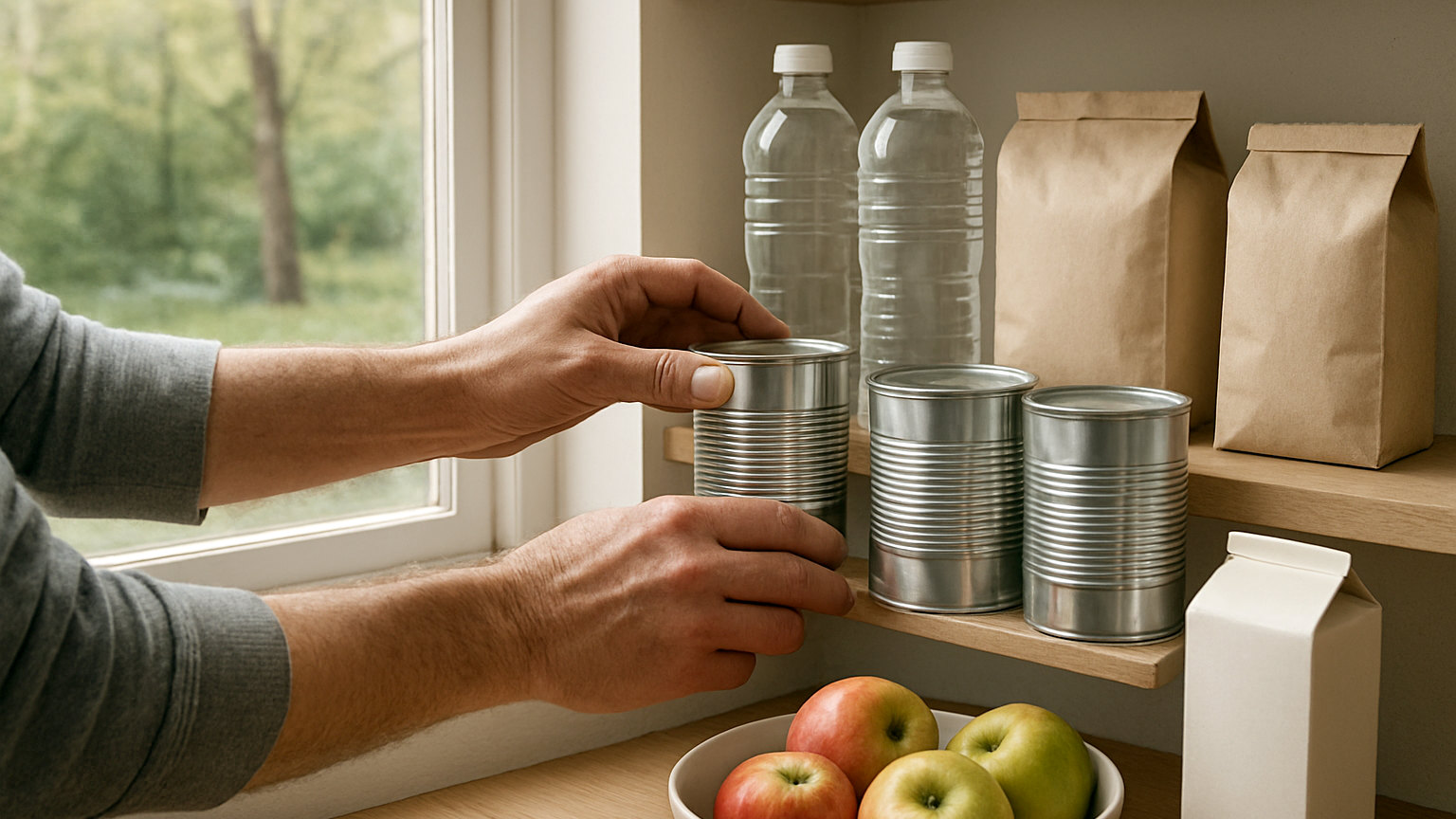
Anything that was indoors and in packaging or a container. Tins, jars, packets, bottles, food in cupboards, fridges and freezers are all protected from airborne contamination, and wiping the outside of packaging before opening deals with anything that settled on it. This covers essentially everything in a normal kitchen.
What is restricted?
Food exposed outdoors and produce from the affected area. Fruit and vegetables growing in gardens and allotments, milk from grazing animals, and food from open air markets or outdoor storage may be subject to restrictions. Milk is a particular focus because grazing animals concentrate contamination rapidly from pasture, which makes it an early and sensitive indicator.
- Packaged food stored indoors is generally safe
- Wipe the outside of packaging before opening it
- Do not eat garden or allotment produce until advised
- Restrictions may apply to local milk and meat
- Mains tap water is usually unaffected, and follow advice
- Do not use collected rainwater or open water
What about tap water?
Mains supply is generally protected, since it travels through an enclosed system from covered treatment works and reservoirs, and it is monitored. Follow whatever advice is issued rather than assuming, since the position depends on the nature of the release and the local supply arrangements. Stored water in sealed containers indoors is unaffected.
What about rainwater and open water?
Do not use it. Water butts, ponds, streams and any open collection have been directly exposed and may be contaminated, and no household treatment removes radioactive contamination. Filtering and boiling deal with organisms and do nothing here. This is one of the few situations where the usual improvised water sources are ruled out entirely.
Why is milk singled out?
Because of the pathway. Radioactive iodine deposited on grass is eaten by grazing animals and appears in milk within a day or two, concentrated. Children drink proportionally more milk and are more susceptible, which makes it the priority control. Restrictions on milk and on grazing are standard early countermeasures and were used following historical incidents.
Who decides the restrictions?
The Food Standards Agency together with the health and environment agencies, who monitor and issue formal controls on production, movement and sale of food from affected areas. Those controls are legally enforceable and are lifted as monitoring allows. Follow official advice rather than making your own judgement about what is probably fine.
What about gardens and allotments?
Leave produce and follow advice, which may include not harvesting, not digging and covering ground. Washing removes surface contamination to some extent and does not deal with anything taken up by the plant. Advice will be specific to the isotopes involved and the area, and it will be published rather than needing to be sought.
How long do restrictions last?
It depends entirely on the isotopes involved. Short lived material such as radioactive iodine decays quickly, so restrictions may be lifted within weeks. Longer lived contamination can require controls on land and produce for far longer, and monitoring continues either way. Do not assume the position after a few days without checking.
What about food in the freezer and fridge?
Entirely fine, since both are sealed containers inside a building. The same applies to anything in cupboards, tins, jars and sealed packets. Wipe the outside of the appliance handle if you were outdoors and touched it before washing, and otherwise treat the contents as normal food. This covers most of what a household would eat during a sheltering period.
What if you have livestock?
Bring them under cover if you can and use stored feed and water rather than pasture. Housing animals and switching to stored feed are standard early countermeasures, precisely because grazing concentrates contamination rapidly. Follow the specific advice issued for your area, and expect restrictions on movement, milk and meat to follow, which are legally enforceable rather than advisory.
Packaged indoor food is fine, wipe the outside, avoid garden produce and open water until advised, and follow Food Standards Agency guidance rather than guessing.