The United Kingdom advice for a release of radioactive material is short and it runs against instinct. The correct response is almost always to get inside and stay there rather than to leave.
What does the advice say?
Go in, stay in, tune in. Get inside a building, preferably a substantial one. Stay inside with doors, windows and ventilation closed until you are told otherwise. Tune in to local radio, television, official social media or the UK Emergency Alerts system for instructions. The same three words apply to chemical releases and large fires producing smoke plumes.
Why not evacuate?
Because a building provides substantial protection and moving through a plume does not. Walls and roofs absorb radiation, and being inside with the ventilation off keeps contaminated air out. Driving away puts you outdoors in the open, potentially into the path of the release, on roads that may be needed by responders. Evacuation is used where authorities judge it appropriate and it is their decision rather than yours.
- Get inside a substantial building immediately
- Close all doors, windows and vents
- Turn off ventilation, air conditioning and extractor fans
- Move to an internal room away from external walls
- Tune in to radio, television or official channels
- Stay in until told the advice has changed
Where in the building should you go?
As far from the outside as possible, which usually means an internal room, a hallway or a room with no external wall. A basement or cellar is better still if there is one. Put as much building material between you and the outside as you can, and stay away from windows. This is the same principle used for any airborne hazard.
What about the ventilation?
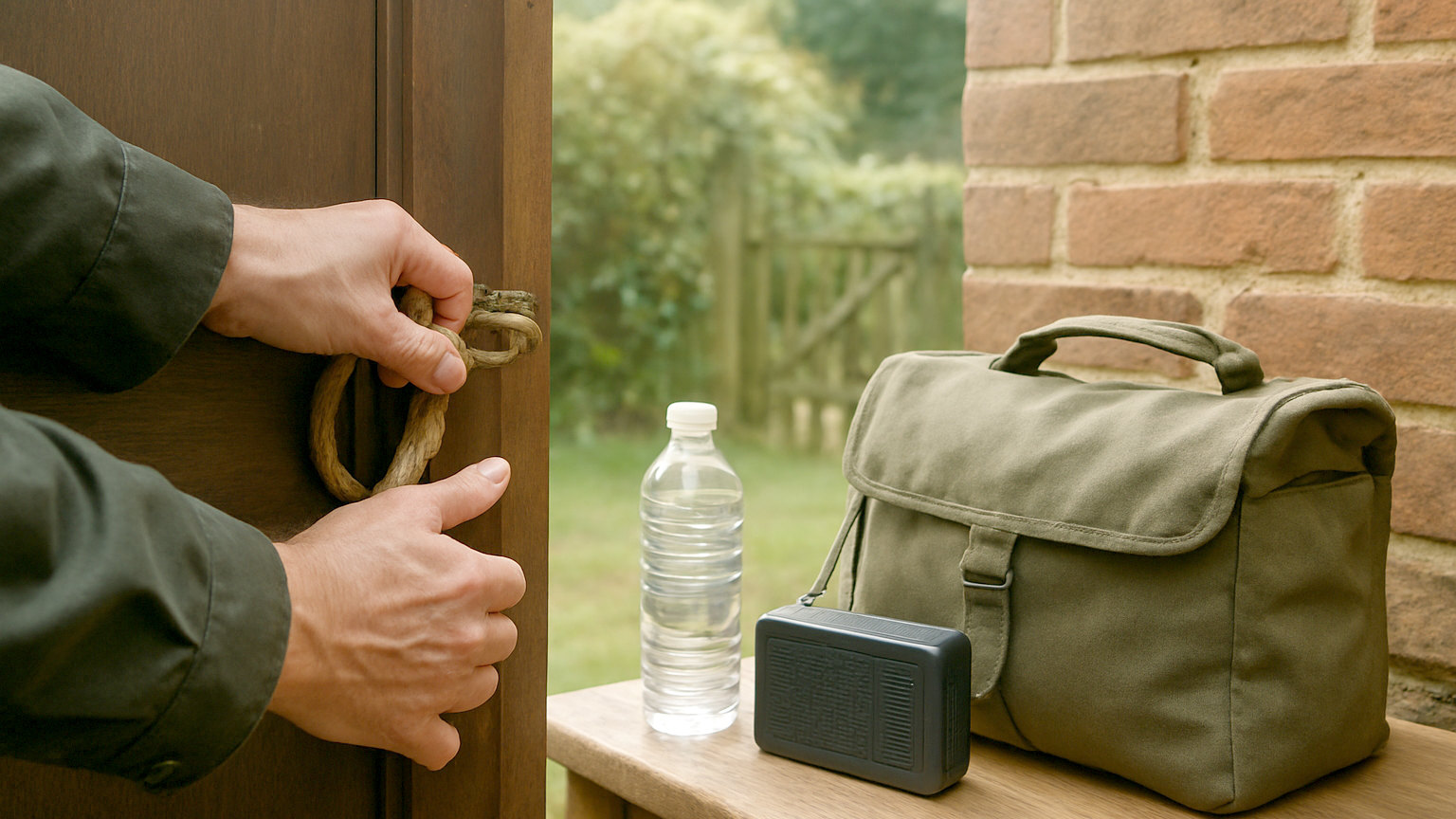
Turn everything off. Mechanical ventilation, air conditioning, heat recovery systems, extractor fans and anything else drawing air in from outside should be switched off and the vents closed or covered where possible. Blocking gaps around doors with towels helps. The aim is to reduce the exchange of air between inside and outside for the period of the release.
How long would it last?
Typically hours rather than days for the sheltering phase. Releases disperse, and authorities will assess and issue further advice, which may be to continue sheltering, to evacuate in an organised way, or to say the immediate phase has ended. Follow whatever the current instruction is rather than deciding for yourself when it has been long enough.
How would you be told?
Through the UK Emergency Alerts system, which sends a loud siren and message directly to phones in a defined area without needing an app or a signal registration. Also through local radio, television, police, the local authority and, near licensed nuclear sites, established local warning arrangements. Keep a battery or wind up radio, since it works without mains power or a network.
What should you do about people outside?
Bring them in and treat them as potentially contaminated. Anyone who was outdoors during a release should remove outer clothing at the door, bag it, and wash. Bring pets in and, if they were outside, wipe them down. Do not go out to collect children from school, since schools have their own sheltering arrangements and driving into a plume helps nobody.
What is the single most useful preparation?
Knowing the advice and having a radio. The three words cost nothing to remember and are the opposite of what most people would do, which is why they are worth learning in advance. Everything else follows the ordinary household preparation that covers a storm or a power cut.
Does the same advice cover chemical incidents?
Yes, and that is part of why it is worth knowing. Go in, stay in, tune in is the standard response to any airborne release, including chemical spills, industrial incidents and large fires producing dense smoke plumes. Those are considerably more likely than a radiation emergency, which means the three words earn their place regardless of how remote the nuclear scenario feels.
Go in, stay in, tune in. Close everything, turn off ventilation, move to an internal room, and wait for the instruction to change.