Radiation protection rests on three principles that professionals apply constantly, and every piece of public advice is an application of one or more of them.
What is the time principle?
Dose accumulates with exposure time, so halving the time near a source halves the dose. This is why responders work in short rotations, why you move away promptly rather than lingering, and why sheltering during the passage of a plume rather than being outside for its duration matters. Spending less time in a hazardous area is the simplest of the three.
What is the distance principle?
Dose falls sharply with distance from a point source, following an inverse square relationship, so doubling the distance reduces the dose to roughly a quarter. That is a steep fall and it means moving away is disproportionately effective. It is why the first instruction at any incident involving a radioactive source is to move well back and keep others back.
- Time: less time near a source means less dose
- Distance: dose falls with the square of the distance
- Shielding: dense material between you and the source absorbs radiation
- Doubling distance cuts dose to roughly a quarter
- Contamination requires removal rather than these three
- All public advice is an application of these principles
What is the shielding principle?
Material between you and a source absorbs radiation, with denser material absorbing more. Alpha is stopped by almost anything, beta by a few millimetres of plastic or metal, and gamma requires substantial thickness of dense material such as concrete or lead. This is why sheltering in a masonry building works and why a car or a tent provides much less.
How do they combine?
Multiplicatively, which is why applying all three is powerful. Being inside a brick building, on a middle floor away from external walls, for a short period, combines shielding, distance and time. Each contributes, and the combination reduces dose far more than any single measure. Emergency advice is designed to achieve all three at once without requiring people to think about it.
Where do they not apply?
To contamination. If radioactive material is on your skin, your clothing or inside you, the source is with you, so distance is meaningless and shielding is impossible. The only effective response is removal: taking off and bagging clothing, washing, and for internal contamination specific medical measures. This is why decontamination is treated as a separate discipline.
How does this apply at home?
Directly. Go inside applies shielding. Move to an internal room applies distance and further shielding. Stay in until told otherwise applies time by keeping you away from the outdoor hazard while it passes. Remove clothing and wash addresses contamination, which the three principles cannot help with.
Where else do you see them?
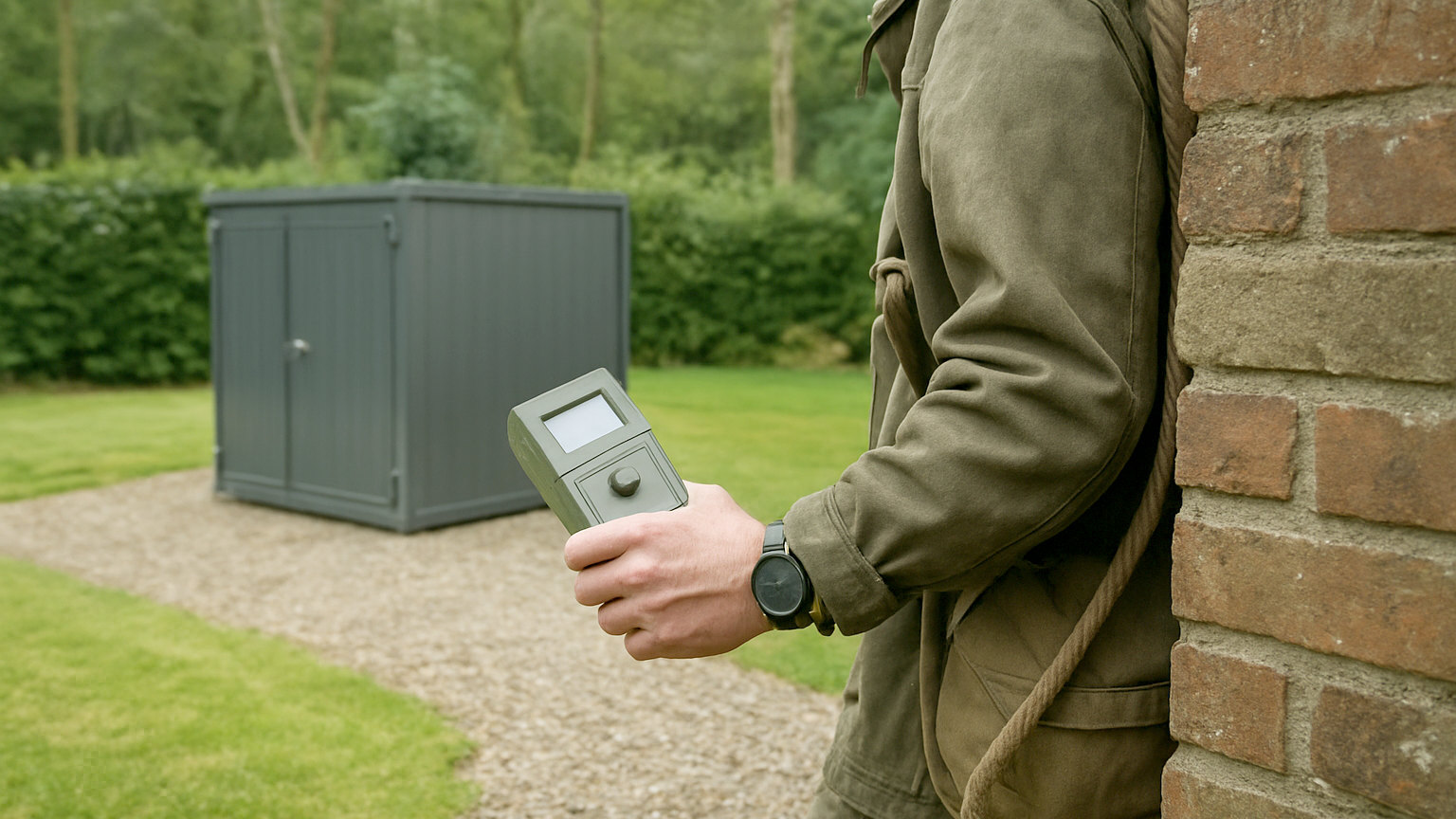
In every setting using radiation. Radiographers step behind a screen and use short exposures. Industrial radiography sites are cordoned to a defined radius. Nuclear workers wear dosimeters and rotate tasks. The same three ideas govern all of it, scaled to the source, which is a reassuring indication that the public advice is not improvised.
What should you take from it?
That moving away and getting behind something substantial are disproportionately effective, and that they are worth doing immediately rather than after deliberation. If you ever encounter a situation involving a radiation source, increasing distance is the fastest useful thing you can do.
Where does this come from?
From radiation protection practice developed over decades and codified internationally. The principles predate any specific incident and are taught to everyone who works with radiation, from hospital physicists to industrial radiographers. Public emergency advice is the same framework simplified into instructions that can be followed without training, which is why the wording is so short.
Do the principles conflict?
Occasionally, and the resolution is usually obvious. Moving further away may mean spending longer outdoors, and getting behind shielding may mean staying closer to a source. In practice the advice to go inside resolves both, since a building provides shielding and separates you from the outdoor hazard at the same time. Where the trade is unclear, follow the official instruction rather than reasoning it out.
Less time, more distance and more material between you and the source, all applied at once, with decontamination as the separate answer to material on you.