Britain has a well developed legal framework for nuclear emergency planning, and households living near licensed sites receive information directly. Most people living outside those zones are not covered and do not need to be.
What sites are there?
Operating and decommissioning power stations at locations including Sizewell, Heysham, Hartlepool, Torness and Hinkley Point, alongside sites in the process of defuelling. Fuel and reprocessing facilities including Sellafield, Springfields and Capenhurst. Defence sites including Devonport, Faslane and Aldermaston. Research reactors and a range of licensed medical and industrial facilities.
What does the law require?
Under the Radiation Emergency Preparedness and Public Information Regulations, operators must assess the potential consequences of an emergency and produce an on site plan, and local authorities must produce an off site plan for the surrounding area. Those plans are tested through exercises, and the arrangements are overseen by the Office for Nuclear Regulation.
- Operators must have on site emergency plans by law
- Local authorities produce off site plans for the surrounding area
- A detailed planning zone is defined around each site
- Households inside it receive prior information automatically
- Potassium iodate tablets are pre distributed in those zones
- Plans are tested through regular exercises
What is a planning zone?
An area around a licensed site within which detailed emergency arrangements apply, determined by assessment of what a reasonably foreseeable emergency could produce. Within it, households and businesses receive prior information about what to do, warning arrangements are established, and countermeasures such as sheltering, tablet distribution and evacuation are planned in detail. A wider outline zone allows arrangements to be extended if needed.
How would you know if you live in one?
You would have been told. Prior information is distributed to every household and business in the detailed zone, updated periodically, explaining the site, the warning arrangements and what to do. If you have never received anything, you are almost certainly outside the zone. Local authority websites publish the off site plans, and the operator and council can confirm the position.
What does the prior information contain?
What the site does, what a radiation emergency would mean, how you would be warned, what you should do, and where to get further information. In many areas it comes with potassium iodate tablets and instructions about when to take them. It is worth reading and keeping somewhere findable rather than filing and forgetting.
How would you be warned?
Through established local arrangements, which vary by site and may include sirens, automated telephone calls, loudhailers and door to door notification, alongside the UK Emergency Alerts system, local radio and police. The prior information for your area will say specifically what to expect, which is one reason to read it before rather than after.
What about transport of nuclear material?
It is regulated and moves regularly by road and rail in specially designed packaging tested to withstand severe accidents. Emergency arrangements exist for transport incidents, coordinated through the emergency services. In the event of an incident the advice would be the same as for any release: keep away, follow instructions and go in, stay in, tune in if told to.
Should anyone else prepare specifically?
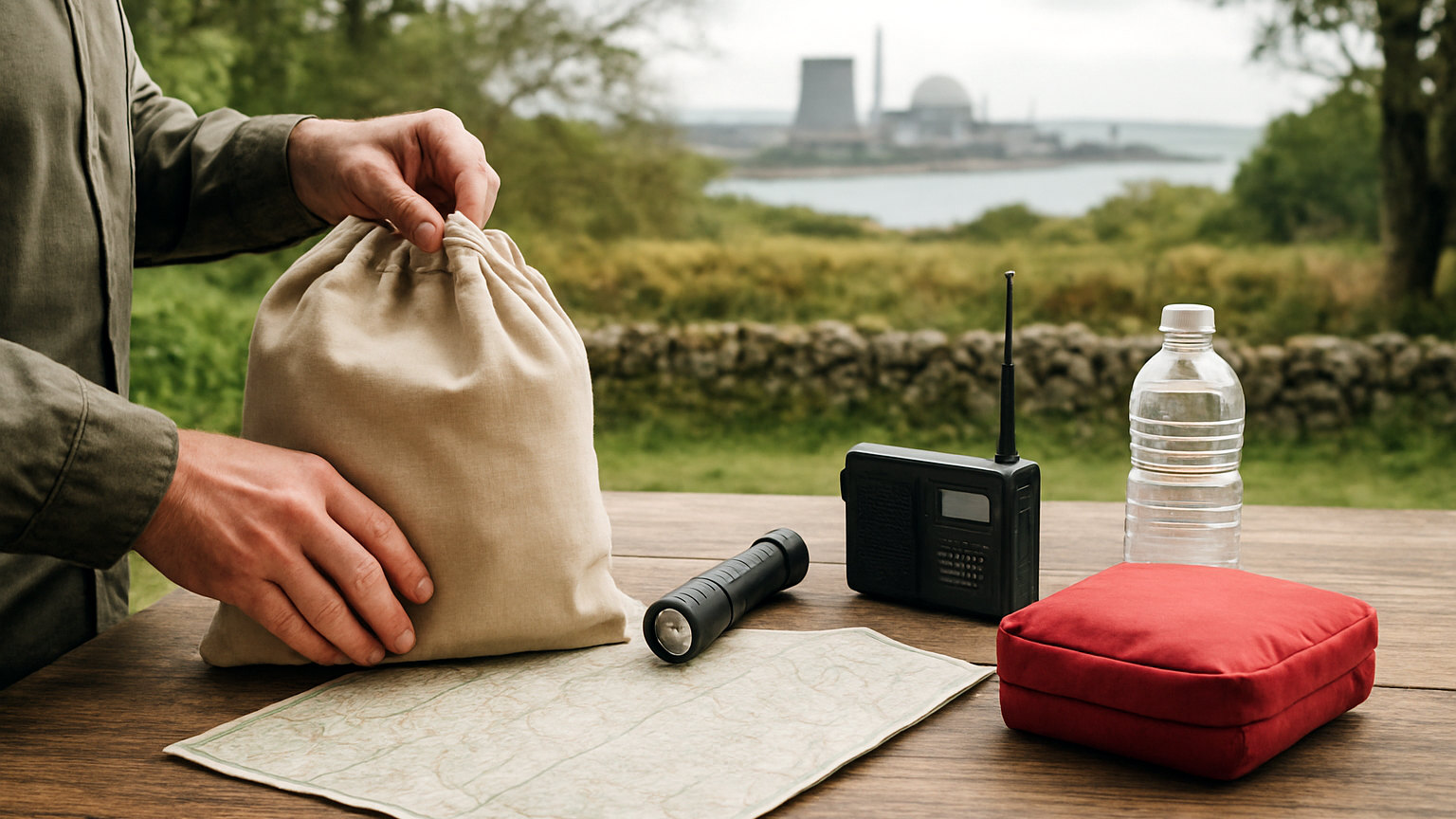
Not to any great extent. Households outside planning zones are best served by ordinary preparedness: a radio, a torch, stored water and a written plan, all of which would serve equally well here. Knowing the go in, stay in, tune in advice costs nothing and covers the general case.
How are the plans tested?
Through regular exercises, which are a legal requirement and involve the operator, emergency services, local authority, health bodies and sometimes national government. They range from tabletop discussions to full live exercises involving deployed responders, and findings are used to revise the plans. Members of the public are occasionally involved, and local exercises are usually publicised in advance so people are not alarmed.
Licensed sites have legally required plans and defined zones, households inside receive information and tablets directly, and everyone else needs ordinary preparedness.