Personal radiation detectors are widely sold and are one of the least useful purchases available in this subject. They measure something genuine and the difficulty is in what to do with the number.
What do consumer devices measure?
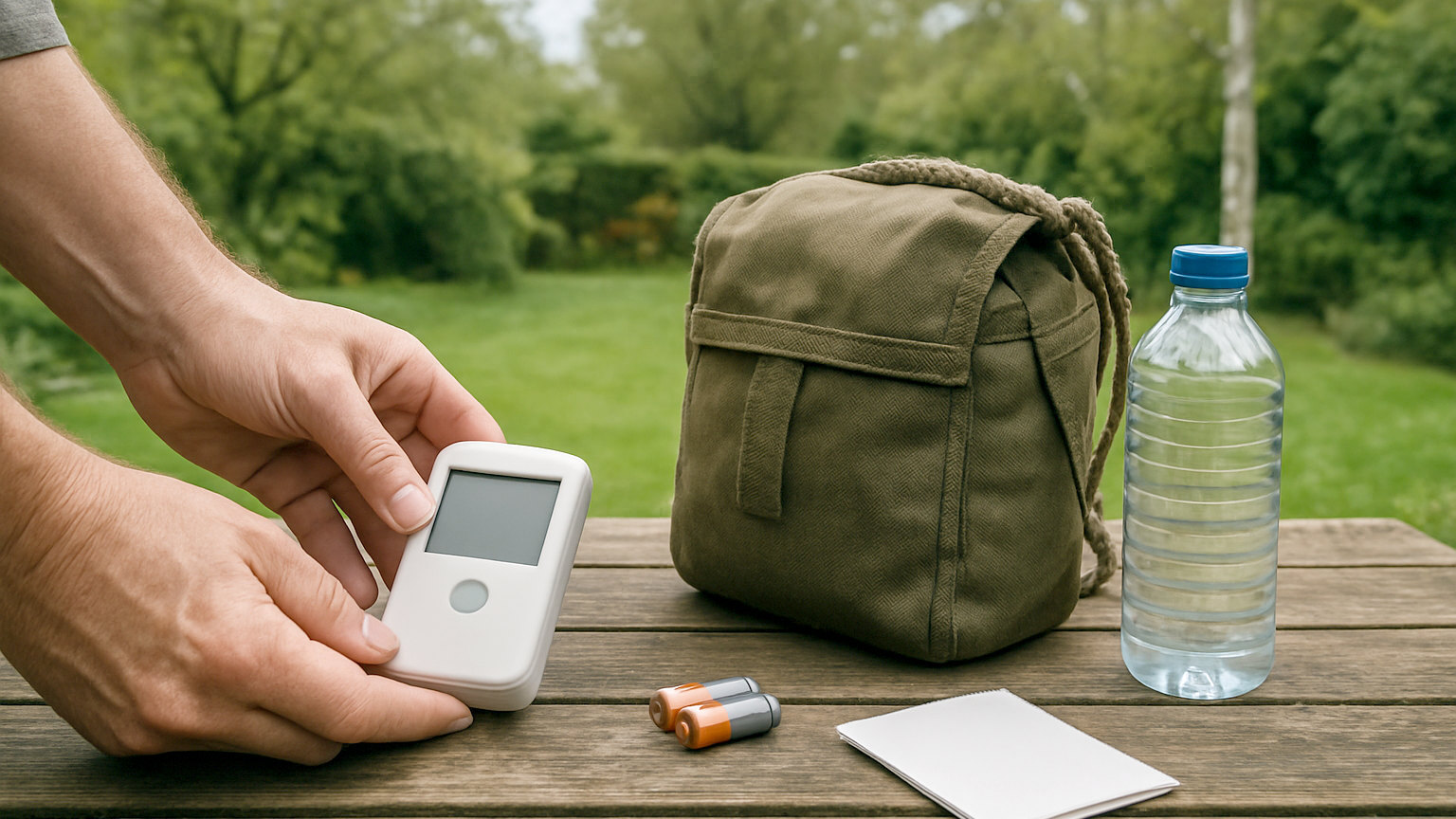
Usually gamma and sometimes beta, giving a count rate or a dose rate. Most inexpensive units use a Geiger tube, which detects events without distinguishing what produced them, so they cannot identify which isotope is present. That matters because the hazard depends heavily on the isotope, and a count rate alone does not tell you what you are dealing with.
What is the interpretation problem?
Background varies naturally by a considerable factor depending on geology, altitude, building materials and weather, and readings fluctuate randomly because decay is a random process. A reading that looks elevated may be entirely normal for granite country, a stone building or a rainy day. Without a baseline and an understanding of variation, the numbers generate alarm rather than information.
- Most consumer units cannot identify which isotope is present
- Natural background varies widely by location and conditions
- Readings fluctuate randomly, which is normal
- Calibration is frequently uncertain on cheap devices
- Extensive official monitoring networks already exist
- The anxiety generated usually exceeds any benefit
What monitoring already exists?
A great deal. The United Kingdom operates continuous environmental radiation monitoring networks, with automatic monitoring stations across the country reporting to national systems, alongside monitoring around licensed sites and routine sampling of food, water, air and soil. Data is published. Any release significant enough to matter would be detected and reported through these systems rather than by individuals with handheld units.
Is there any legitimate use?
For enthusiasts, educators and people with a technical interest, yes, and they are genuinely interesting instruments. For occupational use, calibrated dosimetry is provided and managed under regulation. For household emergency preparedness, they add nothing that official monitoring does not provide faster and more reliably.
What about during an actual incident?
The advice would be to shelter and follow instructions, and a personal reading would not change that. Knowing a number without the context to interpret it, and without knowing the isotope, does not improve any decision you would make. The instruction to go in, stay in and tune in applies regardless of what a device on your kitchen table says.
What about detecting radon?
That is different and genuinely worth doing, and it needs the right equipment. Radon measurement uses passive detectors left in place for three months, because levels fluctuate with season and weather, and a Geiger counter will not measure it usefully. If you want to measure radiation in your own home for a good reason, this is the one, and the kits are inexpensive.
What should you spend the money on instead?
A radon test if you are in an affected area. A wind up radio, which is how you would receive instructions. Stored water, torches and the ordinary household preparations that cover every realistic disruption. Each of those has a clear use and none of them produces a number you cannot interpret.
Is there a case for a dosimeter?
For people who work with radiation, and their employer provides one under a monitoring programme. For everyone else, no. A personal dosimeter records accumulated dose over a period and is read by a service, which is not something a household can usefully act on.
What do the phone apps claim?
More than they can deliver. Applications using a covered camera sensor to detect gamma events exist and can register very high dose rates, and they are unsuitable for detecting anything at or near background levels. They are a curiosity rather than an instrument, and treating a phone reading as meaningful information during an incident would be a mistake.
Skip the detector, test for radon instead if you are in an affected area, rely on official monitoring, and spend the money on a radio and stored water.