The largest artificial radiation exposure most people receive comes from healthcare, and the sensible response is neither anxiety nor indifference but a basic understanding of how it is managed.
How much dose is involved?
It varies enormously by procedure. A chest X ray delivers a very small fraction of annual background exposure, equivalent to a few days of ordinary living. A CT scan delivers considerably more, in some cases equivalent to a few years of background. Dental X rays and limb X rays are very small. The figures are published and radiology departments can explain them.
How is it regulated?
Through two principles built into law. Justification, meaning any exposure must do more good than harm and must be clinically warranted rather than routine. And optimisation, meaning the dose must be kept as low as reasonably practicable while still producing a useful image. Every medical exposure in Britain must be justified by a qualified practitioner.
- Medical exposure must be clinically justified in each case
- Doses are kept as low as reasonably practicable
- A justified scan does more good than the small risk it carries
- Tell staff if you are or might be pregnant
- Keep a note of scans if you have had several
- Industrial sources are licensed, tracked and cordoned in use
Should you decline a scan?
No, if it is clinically indicated. The risk from a justified scan is small and the benefit of an accurate diagnosis is large, and declining imaging because of radiation anxiety leads to worse outcomes far more often than the radiation does. It is entirely reasonable to ask why a scan is needed and whether an alternative such as ultrasound or MRI would answer the question.
What should you tell staff?
If you are or might be pregnant, which changes the assessment for many procedures. Also if you have had a lot of imaging recently, since that is relevant to justification. Keeping your own note of scans and dates is useful, particularly if you have been seen by several services, since records do not always follow you.
What about children?
The same principles with more caution, since children are more radiosensitive and have longer for any effect to develop. Paediatric imaging protocols use reduced doses, and alternatives without ionising radiation are preferred where they answer the question. Ask if you want to understand the reasoning, which staff are generally happy to explain.
What about industrial sources?
They are licensed, registered and tracked. Radioactive sources are used in industrial radiography for inspecting welds, in gauges measuring thickness and density, in research and in some sterilisation processes. Their possession and transport are regulated, sites are cordoned during radiography, and lost or stolen sources are treated as serious incidents with immediate response.
What if you find something unusual?
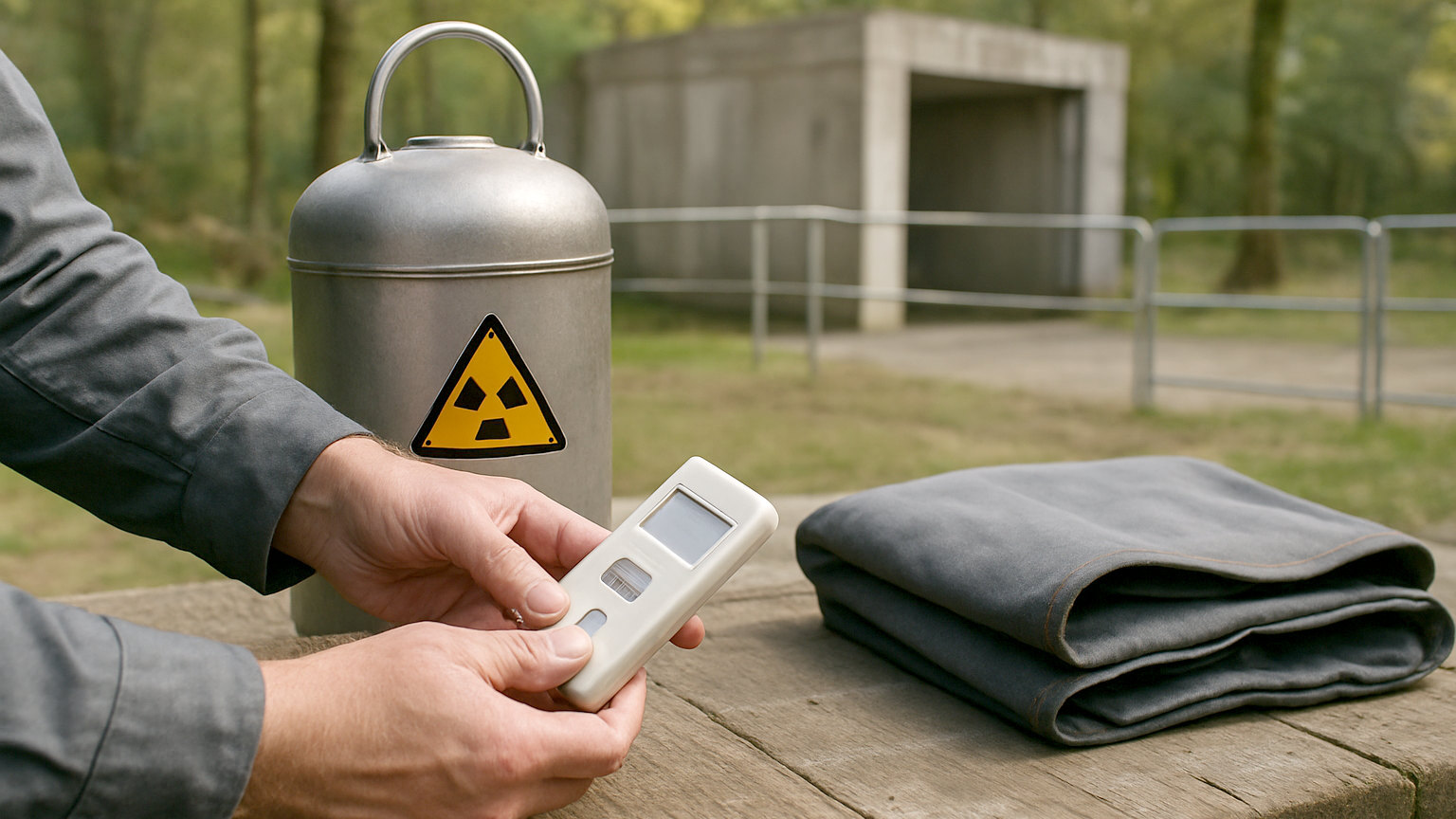
Do not touch it, move away, keep others away and call the police. Orphan sources, meaning radioactive material outside regulatory control, are rare and are occasionally found in scrap metal or abandoned equipment. They are usually marked with the trefoil symbol. Distance is the immediate protection, and the authorities have arrangements for dealing with them.
What is worth remembering?
That the regulated uses of radiation in medicine and industry are among the better controlled hazards in the country, with legal duties, monitoring and independent oversight. The exposures most people receive from them are small and justified, and the anxiety attached to the word radiation is frequently disproportionate to the actual numbers.
What does the trefoil symbol mean?
It marks the presence of radioactive material or a radiation generating device, and it is worth recognising. You will see it on equipment in hospitals, on transport packaging, on industrial gauges and at cordons around radiography work. It is an instruction to keep away unless you have a reason and the training to be there, and reporting anything marked with it found outside a controlled setting is the right response.
Medical exposure is justified case by case and worth accepting, tell staff about pregnancy, keep a note of scans, and keep away from any unattended source.