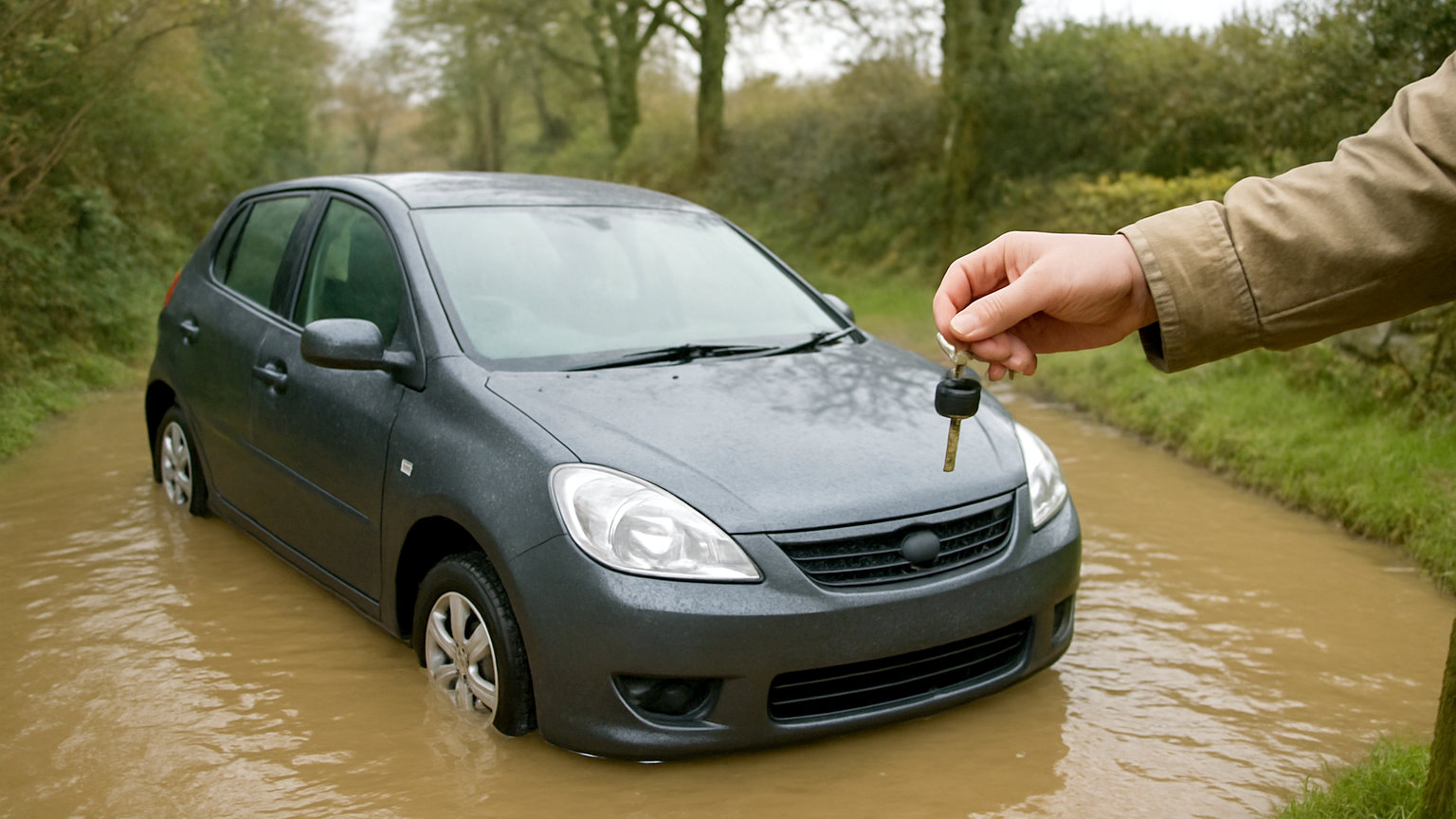
A car that has been standing in floodwater is a different proposition from a wet car. What you do in the first hour determines whether the insurer treats it as damaged or as damaged by you.
What is the first rule?
Do not attempt to start the engine. Water drawn into the cylinders causes hydraulic lock, since water does not compress, and turning the engine over bends connecting rods and destroys it. A vehicle that might have been recoverable becomes definitively scrap. This applies even if the water looked shallow and even if the car seems fine.
What should you do instead?
Leave it, photograph it and contact your insurer. Take images showing the water level against the vehicle, the interior, and the surroundings, which establishes what happened. Note the depth and duration if you know them. Most policies include recovery, and the insurer will arrange for the vehicle to be moved rather than driven.
- Do not start or attempt to start the engine
- Photograph the vehicle and the water level
- Disconnect the battery if you can do so safely
- Contact your insurer before any recovery or repair
- Tell them the depth and how long it was submerged
- Expect a write off if water reached the interior
How do insurers treat them?
Cautiously, and usually as write offs where water entered the cabin. Modern vehicles contain a great many electronic control units, connectors and sensors, and immersion causes corrosion that produces faults over the following months rather than immediately. Because those faults cannot be reliably chased down, insurers commonly total the vehicle rather than repair it, which is generally the right outcome for the owner.
Does salt water make it worse?
Considerably. Salt water is far more corrosive and conductive than fresh, accelerating damage to electrical connections, wiring and bodywork, and it continues corroding long after drying. A vehicle flooded in a tidal or coastal event is almost always written off. Fresh water immersion is bad and salt water immersion is effectively terminal.
What if only the footwells were wet?
Still report it. Water in the cabin soaks into carpets and underlay and sits against wiring looms and control modules, many of which are mounted low. It also produces persistent damp and mould. A car with wet carpets that dries and appears fine frequently develops electrical faults later, and having reported it means the claim is straightforward when it does.
What about buying a flood damaged car?
Avoid it. Flood damaged vehicles are sometimes repaired and resold, and the faults surface later. Warning signs include a musty smell, damp or mismatched carpets, silt in the boot well or under seats, corrosion on unpainted metal under trim, moisture in lights, and electrical faults. Check the vehicle history for a write off marker before buying anything.
What should you do if you drove through water?
Test the brakes gently at low speed once clear, since wet brakes are far less effective and need drying with light application. Then have the vehicle checked, particularly the air filter and oil for signs of water. Water in the oil appears as a milky residue on the dipstick and means the engine should not be run.
How do you avoid it altogether?
Move the car early, before the roads are affected. Anyone in a flood risk area should include moving the vehicle to higher ground in their written flood plan, triggered at the Flood Warning stage rather than later. It takes ten minutes, costs nothing and prevents both the loss and the obstruction that flooded vehicles create for responders.
What about electric vehicles?
They need particular caution and the same rules apply. Do not attempt to charge or drive a vehicle that has been submerged, and keep away from it if you see smoke, hear hissing or smell anything unusual, since damaged high voltage batteries can ignite hours or days later. Report it to the insurer and the manufacturer, and let a qualified technician assess it rather than opening anything yourself.
Never start it, photograph everything, tell the insurer, expect a write off, and move the car to higher ground when the warning arrives.