Households consistently expect to be back to normal within weeks and are shocked to be out of the property for six months or more. Understanding why prevents the impatience that causes a second round of damage.
Why does it take so long?
Because water penetrates deep into masonry, plaster, screed and timber, and it leaves slowly. A brick wall that has stood in water for a day holds moisture through its thickness, and the drying rate is governed by how fast that moisture can migrate out. Building materials release water far more slowly than they absorb it, which is why the process is measured in months.
What is a realistic timescale?
Typically three to twelve months from flood to full reinstatement, depending on depth, duration, construction and how quickly drying started. Solid masonry takes longer than timber frame. A property flooded to a metre for two days is a different proposition from one with a few centimetres for an hour. Insurers and drying contractors will give an estimate once the property is assessed.
- Expect months rather than weeks for full drying
- Professional drying equipment shortens it substantially
- Moisture meter readings decide completion, not appearance
- Redecorating early traps moisture and causes mould
- Remove wet plaster and insulation to speed drying
- Ventilate throughout and keep heating moderate and steady
What does professional drying involve?
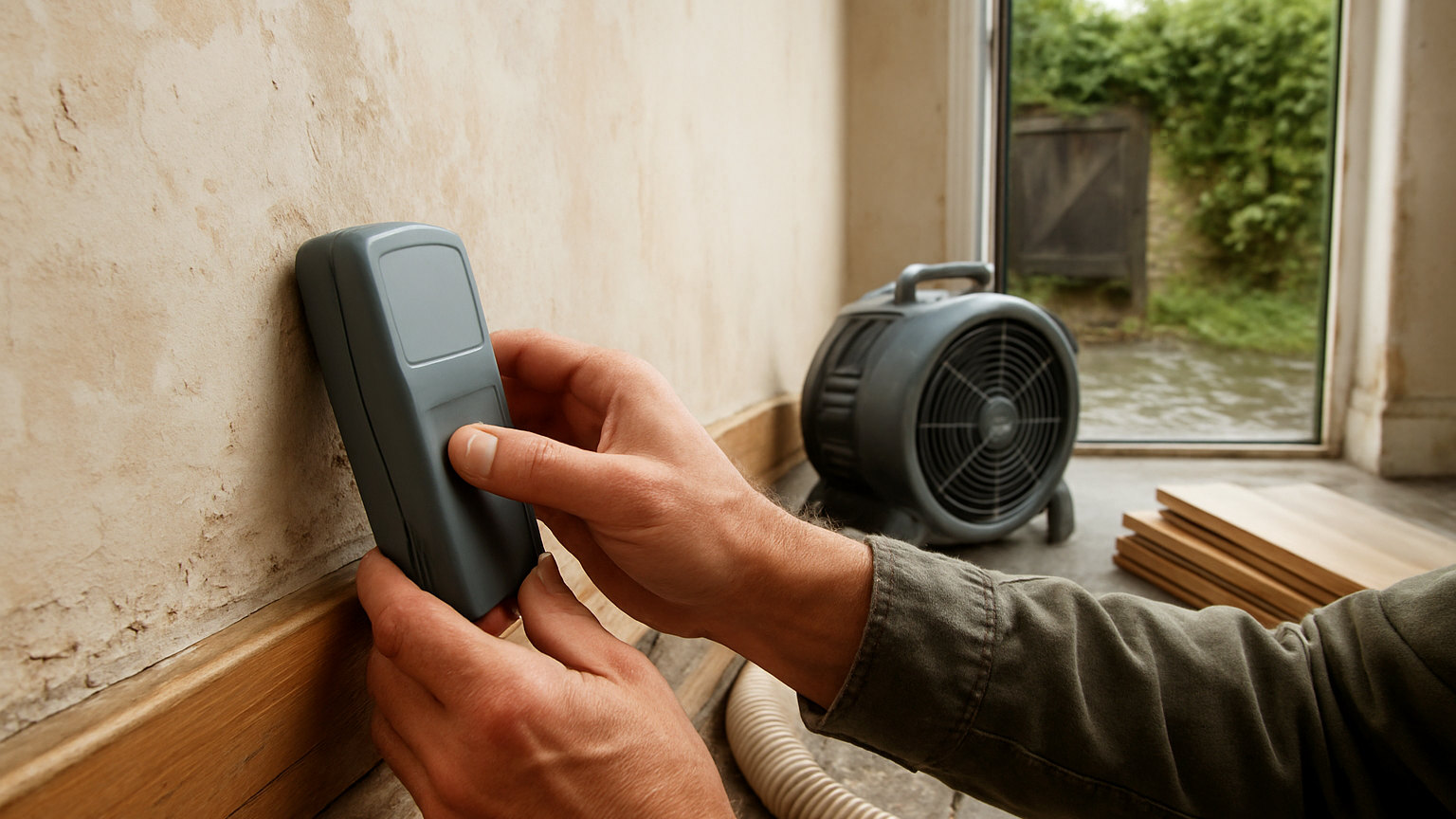
Dehumidifiers, air movers and heating, monitored over weeks. Contractors take moisture readings at intervals through the structure and continue until the readings reach an agreed target rather than until the walls look dry. Removing wet plaster, skirting, insulation and floor coverings first exposes the structure and dramatically shortens the process, which is why strip out happens early.
Why not just open the windows?
Because natural drying is far slower and depends entirely on the weather. Ventilation helps and is worth doing, and British winters have limited drying capacity. Professional equipment can reduce a drying period of a year to a matter of months, which is why insurers deploy it. If you are drying without help, ventilate constantly, keep gentle background heat, and expect it to take a long time.
What happens if you redecorate too early?
The moisture is trapped and reappears. Plastering and painting over a wall that is still wet seals the moisture in, which then causes the new plaster to blow, paint to peel, timber to rot and mould to grow behind the finish. It is the most common and most expensive mistake in flood recovery, and it means doing the work twice.
How do you know when it is dry?
By measurement. A drying contractor uses moisture meters, and some use invasive probes into the fabric rather than surface readings, since surfaces dry first and mislead. There is no reliable way to judge by touch or appearance. If you are managing it yourself, an inexpensive moisture meter used consistently in the same spots over weeks shows the trend, which is the useful information.
What about mould?
It is likely and needs managing rather than ignoring. Mould grows on damp surfaces within days and can affect health, particularly for anyone with asthma or a respiratory condition. Keep the property ventilated, remove affected materials rather than cleaning them where they are porous, and wear a mask during clean up. Professional treatment is usually part of the reinstatement.
Where do you live meanwhile?
Elsewhere, in most cases. Most buildings insurance includes alternative accommodation cover, and it is worth checking the limit and duration in your policy, since flood displacement frequently exceeds what people assume is covered. Contact the insurer early about it, since arrangements take time and rental properties in a flooded area become scarce quickly.
Should you use your own dehumidifier?
It helps and it is not equivalent. A domestic dehumidifier removes moisture from the air and will contribute, particularly in a small room, and it is far less powerful than the commercial units contractors deploy alongside air movers and monitored heating. If you are drying without insurer support, run domestic units continuously, empty them regularly, and accept that the timescale will be considerably longer.
Expect months, get professional drying started early, strip out wet materials, judge by moisture readings, and do not redecorate until it is genuinely dry.