Being trapped is rare even in serious earthquakes, and the actions that improve the outcome are specific and worth knowing in advance because they are counterintuitive under stress.
What is the first priority?
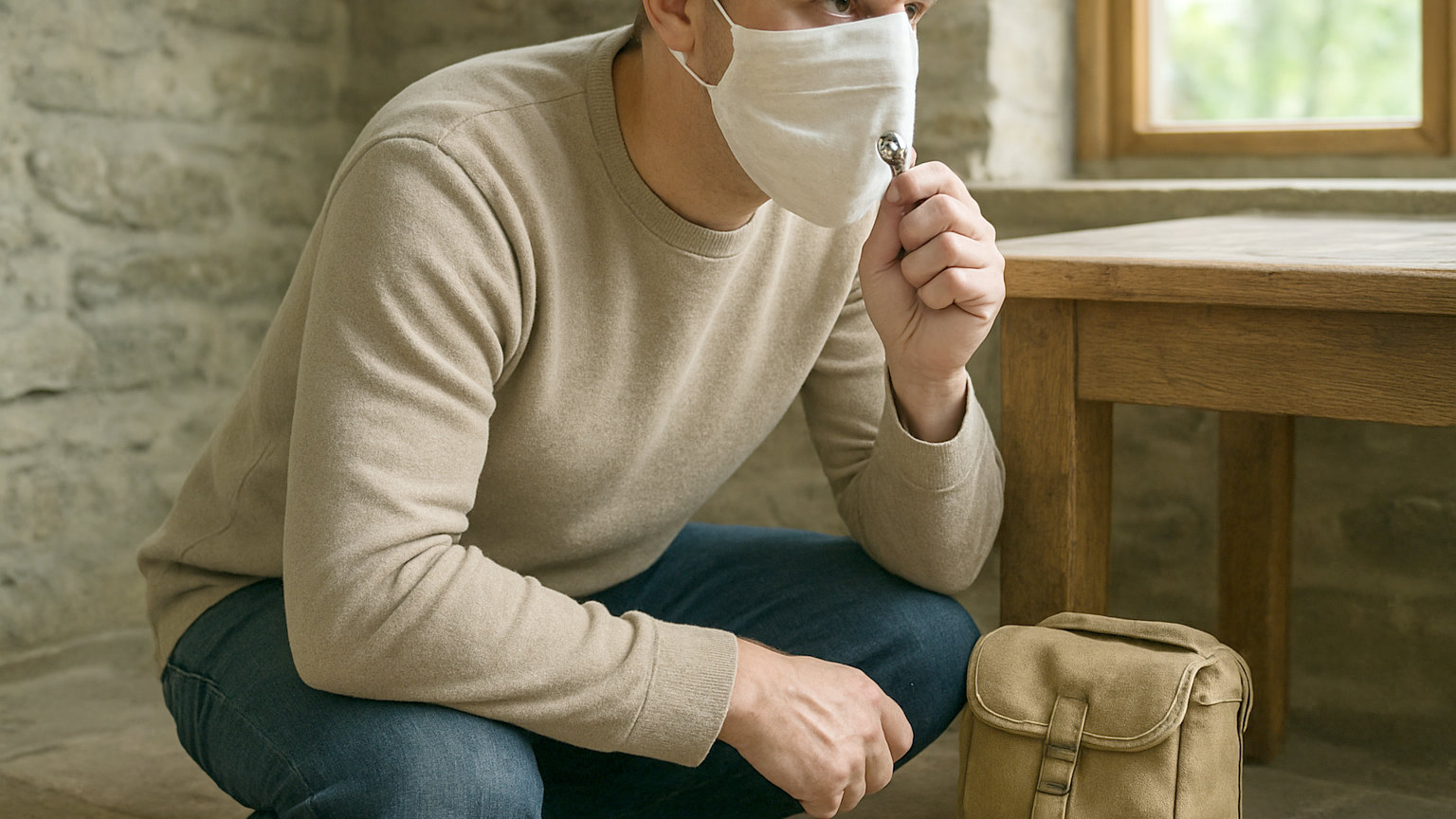
Your airway. Collapsed buildings produce enormous quantities of fine dust, and inhaling it damages the lungs and causes coughing that exhausts you. Cover your mouth and nose with a cloth, a sleeve or anything to hand, and breathe slowly through it. This matters more in the first minutes than anything else you could do.
Should you shout?
Sparingly, and only when you have reason to think someone is near. Shouting is exhausting, dries the throat and draws dust deep into the lungs, and the human voice carries poorly through rubble. Tapping on a pipe, a wall or anything solid produces a sound that travels far better through structure, and it costs almost no energy.
- Cover your mouth and nose against dust
- Tap on pipes or masonry rather than shouting
- Use a whistle if you have one, in short bursts
- Conserve energy and avoid unnecessary movement
- Do not light a flame, since gas may be present
- Signal at intervals rather than continuously
Why is a whistle so valuable?
Because it produces a loud, distinctive, unmistakably human sound for almost no effort, and it can be sounded for hours where a voice would fail within minutes. Rescue teams use listening equipment and periods of enforced silence to detect survivors, and a whistle is far more likely to be picked up than a weak voice. This is the reason it belongs on a bedside kit.
How should you pace signalling?
In bursts with listening pauses. Sound a pattern, then stay silent and listen. Rescue operations include organised quiet periods specifically for listening, so continuous noise is less useful than regular intervals with gaps. Six blasts across a minute followed by a minute of silence is the international distress pattern and serves well here.
Should you try to move?
Only if you can do so without disturbing anything above you. Debris is frequently in a fragile equilibrium and shifting one element can bring more down. Move slowly if you must, avoid pulling at anything structural, and prioritise creating a small clear space around your head and chest so you can breathe rather than attempting to escape.
What should you avoid?
Naked flames, entirely. Ruptured gas lines are common after earthquakes and an enclosed void is exactly where gas accumulates. Use a torch rather than a lighter or a match. Also avoid kicking or thrashing, which raises dust, wastes energy and can destabilise debris.
How long can people survive?
Longer than most people expect, and it depends on injuries, water and the space available. Survivors have been recovered after several days and occasionally longer. Conserving energy, staying calm, protecting the airway and signalling intermittently all extend that. Panic and exertion shorten it considerably.
What if you are helping someone trapped?
Call for professional help before attempting a rescue. Untrained people entering damaged structures cause secondary collapses and become casualties themselves. Talk to the person, tell them help is coming, and keep them calm. Note exactly where they are and pass that to rescuers. Only attempt to move light debris from someone you can reach safely without going under anything unsupported.
What about water?
Ration what you have and look for what is around you. Dehydration is the limiting factor over days, and small quantities sipped at intervals go considerably further than drinking to comfort. Water may be available from a heater tank, a cistern or intact pipework nearby. Do not drink anything that smells of chemicals or fuel, since contaminated water in an enclosed space is worse than thirst.
How do you manage the fear?
By focusing on small controllable actions. Regular signalling at intervals, controlled breathing, keeping still between attempts and marking the passage of time all give structure to a situation with none. Panic raises breathing rate, consumes oxygen and water and exhausts you, and survivors consistently describe deliberate calm rather than heroics as what carried them through.
Cover your airway, tap rather than shout, use a whistle in bursts, stay still, avoid flames, and let trained teams do the digging.