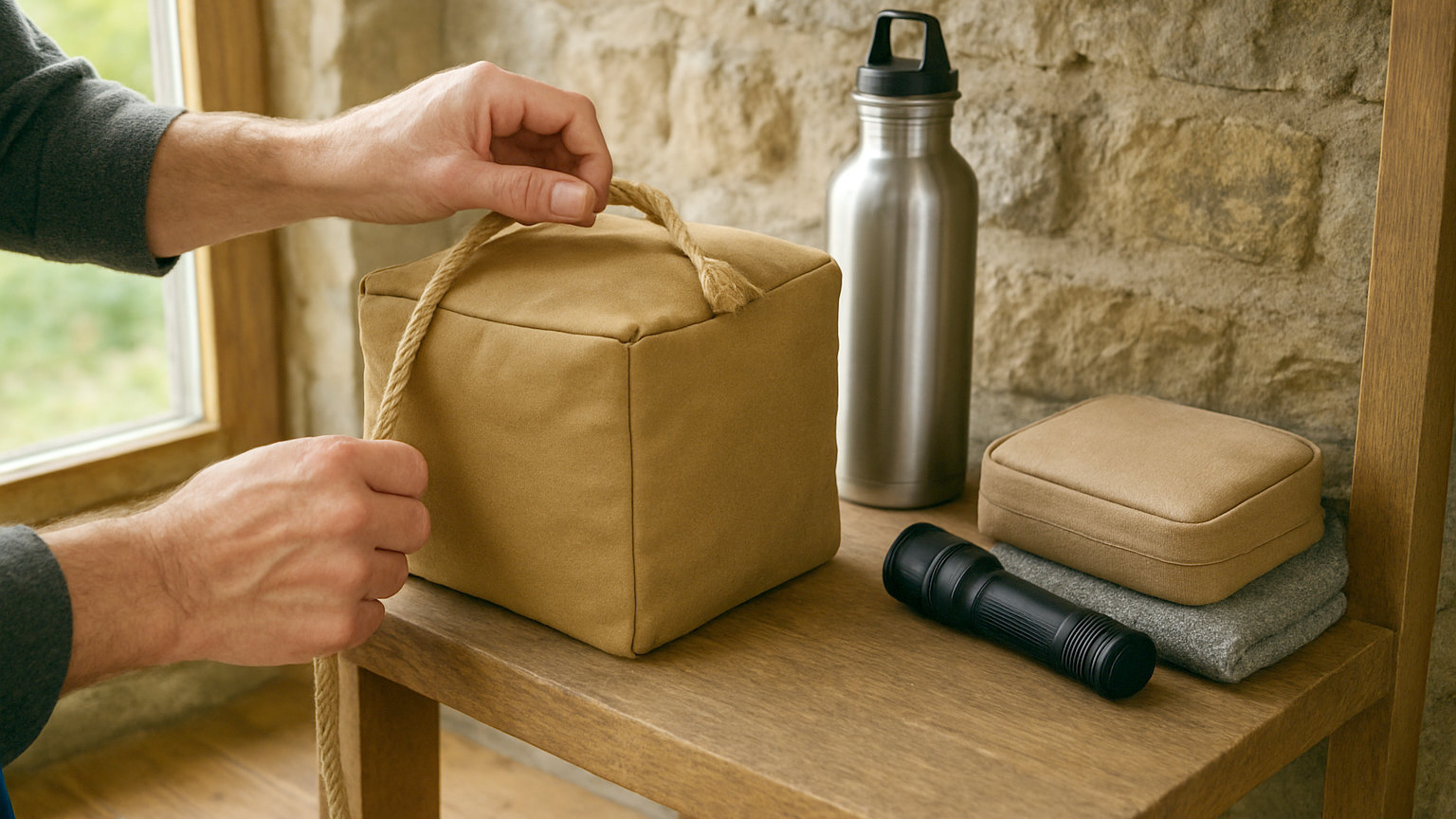
An earthquake kit is mostly the standard household emergency kit, with a small number of additions that reflect the particular hazards of broken glass, dust and being trapped.
What is the same as any emergency kit?
Water, food needing no cooking, a torch and spare batteries, a battery or wind up radio, a power bank, a first aid kit, prescription medication, cash, copies of documents and warm clothing. Those cover the aftermath of any disruption and they are the foundation here as much as anywhere.
What is specific to earthquakes?
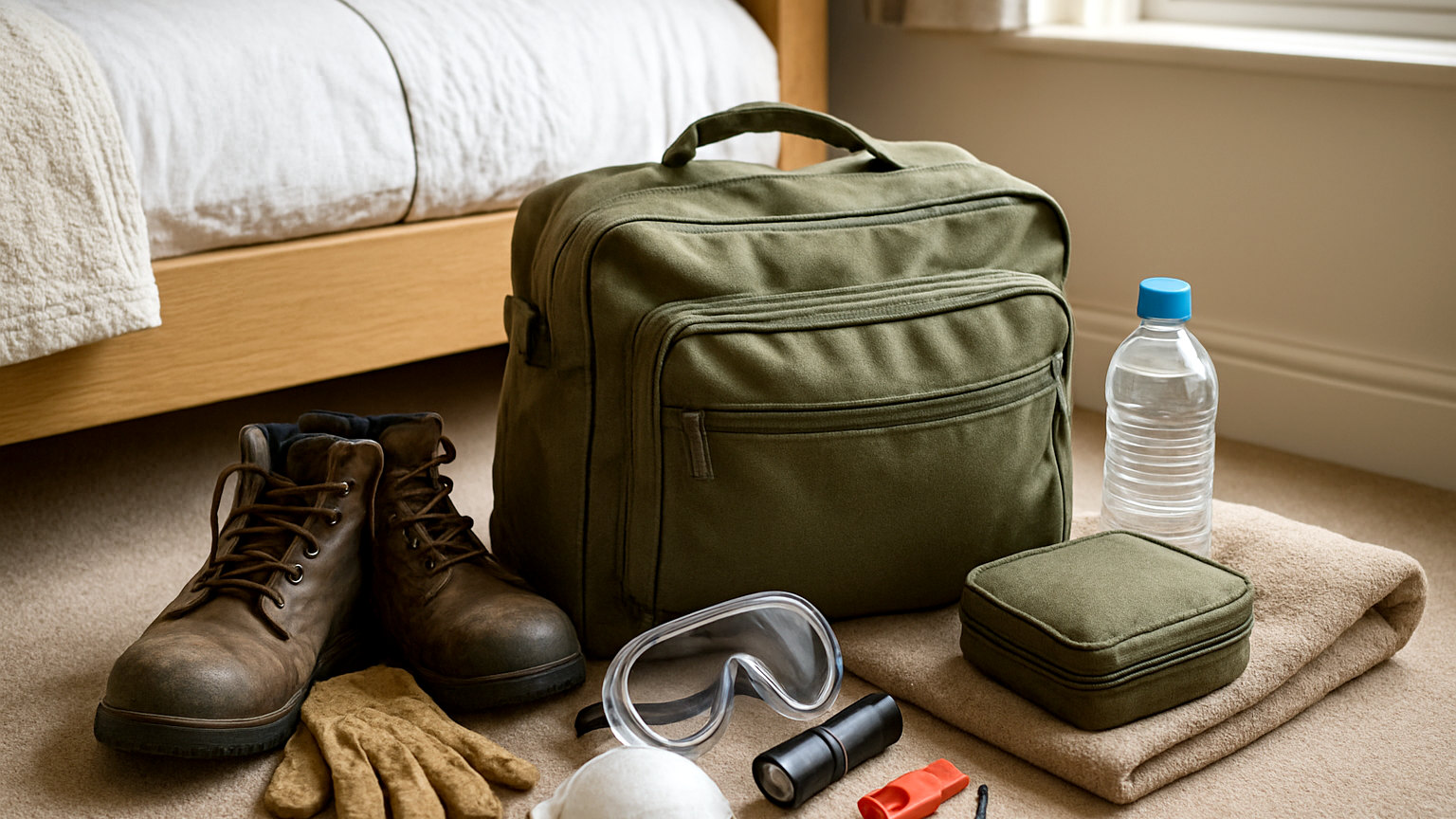
Sturdy shoes and a torch beside every bed, work gloves, a dust mask and a whistle. Shoes because broken glass covers the floor and foot injuries are the most common consequence. Gloves for moving debris. A dust mask because collapsed material produces fine dust that is unpleasant and harmful to breathe. A whistle because it is how you signal if trapped.
- Sturdy shoes and a torch beside every bed
- Work gloves for handling debris and glass
- A dust mask, ideally rated rather than a cloth covering
- A whistle on a cord, kept accessible or worn
- A pry bar or heavy tool for jammed doors
- A supply of water and food that survives being shaken
Why shoes beside the bed?
Because a night time earthquake leaves broken glass across every floor and you will be moving in the dark. Shoes should be closed and sturdy, tied or fastened so they cannot be lost, and stored where they cannot slide away, which usually means in a bag tied to the bed leg. This is the single most specific and most useful earthquake preparation there is.
Why a whistle?
Because shouting for help while trapped exhausts you and fills your lungs with dust, and because a whistle carries far further through rubble than a voice. Rescue teams listen for sounds during search operations. A whistle on a cord kept with the bedside kit, or worn, weighs nothing and is the difference between being heard and not.
Where should the kit be?
Split across locations, since you may not be able to reach one of them. A bedside set with shoes, torch and whistle. A main kit near an exit. A small kit in the car and one at work. An earthquake may leave part of a building inaccessible, and a kit inside a collapsed room is no help.
What about outside storage?
Worth considering in seismic countries. A container in a garden shed, a garage or a garden store means supplies remain accessible if the house cannot be entered. Some households keep water and basics in a secured outdoor box for exactly this reason. Fasten it so it does not topple and keep the contents rotated.
What about the water heater and mains?
Know how to turn things off and keep the tools with the kit. A spanner for the gas meter, kept beside it, means anyone can isolate the supply. Know where the water stopcock and consumer unit are. A water heater or storage tank also represents a substantial emergency water supply if the mains fails, provided the tank has not been contaminated.
Does any of this apply in Britain?
The general kit does, entirely, and the earthquake specific items do not. British households should build the standard kit for power cuts and flooding. The additions here matter for people living in or travelling to seismic countries, where shoes beside the bed is worth adopting as a habit rather than a preparation.
How often should you check it?
Twice a year, alongside everything else, with one addition specific to this hazard. Check that nothing in the kit has been shaken off a shelf or buried behind other things, since a kit that has migrated to the back of a cupboard behind boxes is not accessible in the dark with glass on the floor. Store it where it can be reached in seconds rather than merely where it fits.
Build the standard emergency kit, add shoes and a torch beside every bed, carry a whistle, keep gloves and a dust mask, and split it across locations.