Most British exposure to earthquakes is on holiday or working abroad, and the preparation that matters takes about ten minutes rather than any equipment.
What should you check before going?
Foreign Office travel advice for the country, which covers natural hazards alongside everything else and is updated as circumstances change. Whether the region is seismically active, which the British Geological Survey and equivalent agencies publish. Whether your travel insurance covers natural disaster, including cancellation, medical treatment and repatriation, since some policies exclude or limit it.
What should you know on arrival?
The local emergency number, which varies by country and is not always the one you expect. The address of your accommodation written down in the local language. The location of the nearest British embassy or consulate. Whether the country operates an earthquake early warning system and how to enable alerts on your phone.
- Check Foreign Office advice and your insurance cover
- Learn the local emergency number before you arrive
- Check the hotel escape route and count doors to the stairs
- Note anything heavy above the bed and move if you can
- Keep shoes, a torch and a phone beside the bed
- Agree a family contact plan using an out of country relay
What about the hotel room?
Two minutes on arrival covers it. Find the fire escape route and count the doors to the stairwell so you could find it in the dark. Note whether the room has heavy fittings, mirrors or artwork above the bed, and move a pillow to the other end if it does. Keep shoes and a torch beside the bed. This is standard fire advice and it applies equally here.
What should you carry?
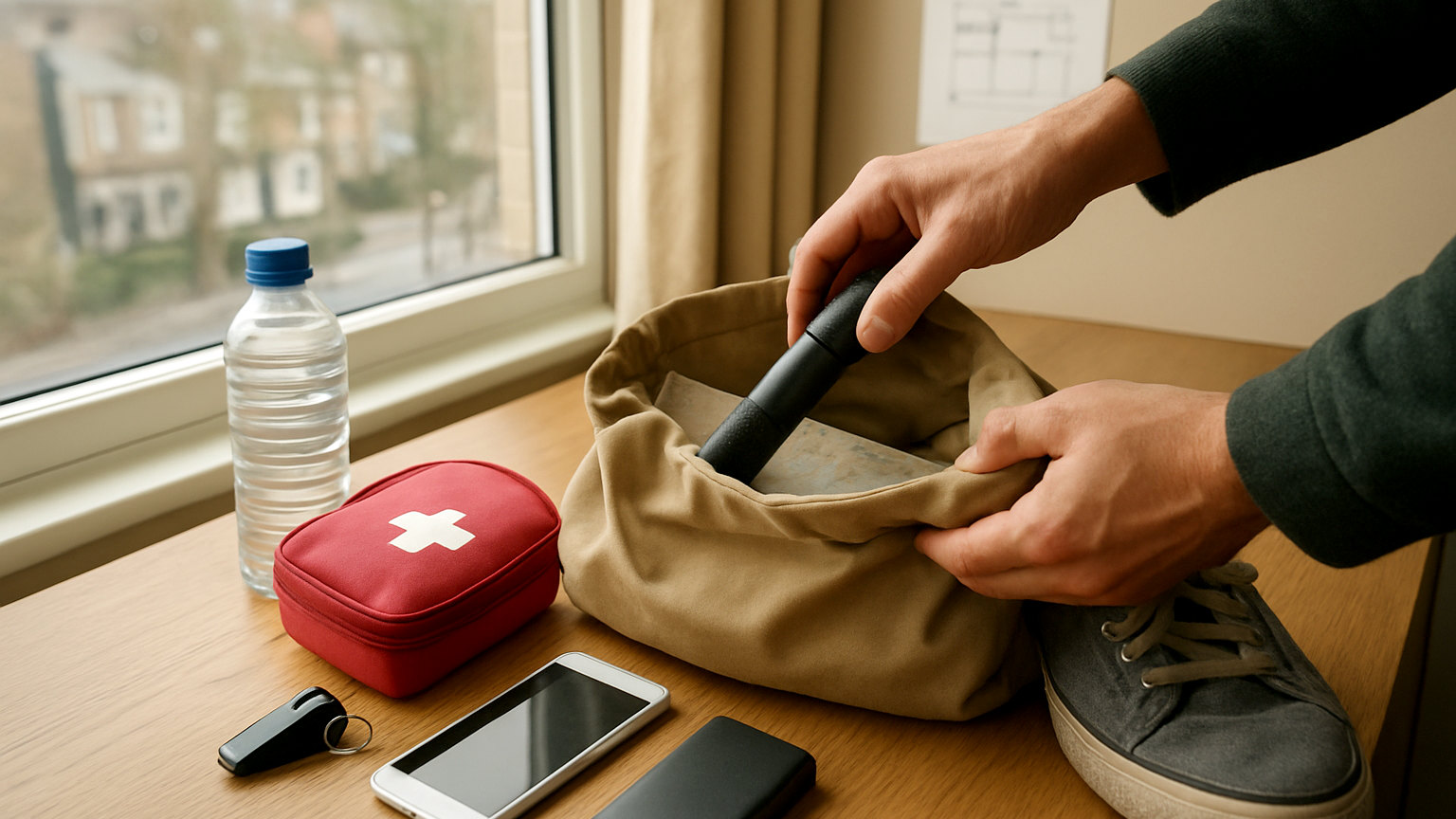
Very little beyond ordinary travel sense. A small torch, a whistle, a power bank, some cash in local currency, copies of your passport and insurance, and any medication in sufficient quantity. Sturdy shoes rather than only sandals, which matters if you are walking on broken glass. None of that is earthquake specific and all of it helps.
What should you tell people at home?
Where you are staying and how to reach you, and agree a contact plan. After a significant earthquake, local networks congest immediately and international calls may fail. Agree that everyone contacts a single out of country relay who passes messages on, and that a text is preferred over a call. Register with your insurer or employer if they operate a traveller tracking system.
Should you register with the embassy?
Practice has changed and it is worth checking the current position. Many countries have moved away from registration schemes toward travel advice subscriptions and social media updates. Subscribing to Foreign Office alerts for the country means you receive updates automatically, which is the practical equivalent and takes a moment.
What should you do if one happens?
Drop, cover and hold on, then follow local instructions. Local authorities and hotel staff will know the procedures and the safe areas. Do not head for the coast, do not sightsee, and expect aftershocks. Contact your relay at home briefly by text to say you are safe, since families watching news coverage from a distance become extremely distressed without word.
What about getting home?
Expect disruption and contact your insurer and airline early. Airports may close, roads may be blocked and flights heavily oversubscribed. Consular staff can help with lost documents and information and cannot generally transport you or pay costs. This is what the insurance is for, which is why checking that it covers natural disaster before you travel matters.
What should you do about children?
Teach them drop, cover and hold on before you go, briefly and as a game. Make sure they know the name and address of the accommodation and carry a card with your mobile number and the out of country contact. Agree that if separated they stay where they are and find a member of staff or someone in uniform, which is the same rule that applies anywhere and is worth repeating on arrival.
Check the advice and your insurance, learn the local emergency number, look at the hotel escape route, keep shoes by the bed, and agree a contact relay.