In countries where buildings survive earthquakes, the remaining hazard is the contents. Securing them is inexpensive, unobtrusive and by far the highest value preparation available to a household.
What matters most?
Tall furniture that can topple: bookcases, wardrobes, chests of drawers, display cabinets and tall shelving. Anything heavy stored high up. Televisions and computer monitors. Water heaters, which can topple, rupture gas or water connections and cause fires. Anything hanging above a bed or a sofa where people spend hours motionless.
How do you secure furniture?
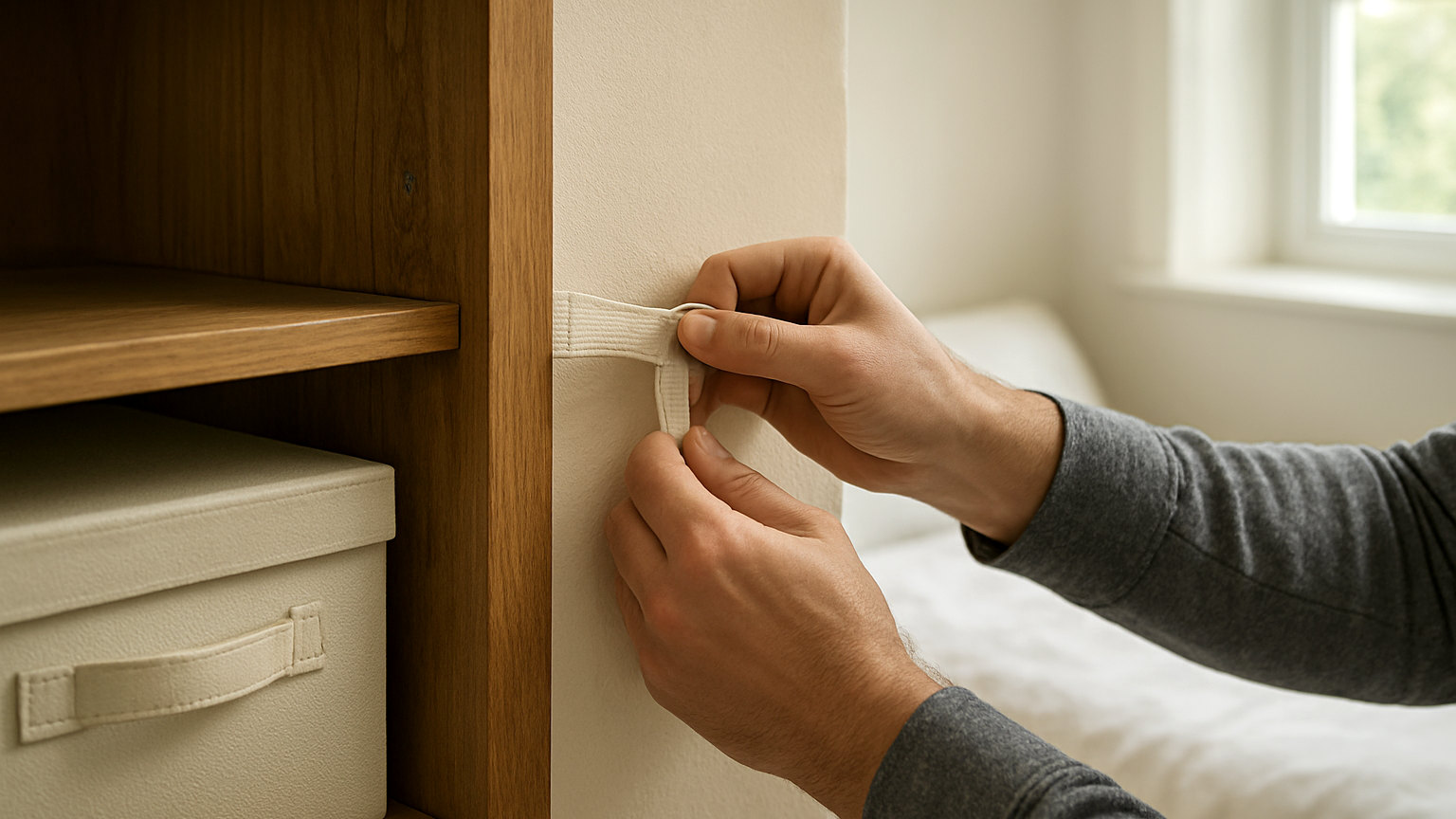
With straps or brackets fixed into a wall stud or masonry rather than into plasterboard alone. Anti tip kits sold for child safety are widely available, inexpensive and equally effective for this purpose. Two fixings across the top of a bookcase take fifteen minutes and remove one of the most common causes of injury and blocked exits.
- Strap bookcases, wardrobes and tall units to the wall
- Store heavy items low and light items high
- Hang nothing heavy above beds or seating
- Fit latches on cupboards containing glass or heavy items
- Secure televisions and water heaters
- Use flexible connectors for gas and water where permitted
Why does the layout matter?
Because where things fall determines whether they hurt anyone. Heavy items on high shelves become projectiles. A wardrobe positioned so it would fall across a doorway blocks the exit. Glass fronted cabinets beside a walkway shower the route out. Moving the heaviest things to the lowest shelves costs nothing and reduces both hazard and breakage.
What about above beds?
Nothing heavy at all. Mirrors, framed pictures, shelves and light fittings above a bed are a specific and avoidable hazard, since anyone asleep cannot react and is directly beneath them. In seismic countries this is standard advice and it is worth following even where it feels excessive, because the cost of moving a picture is nothing.
What about cupboards?
Fit simple latches, particularly in kitchens. Cupboard doors swing open during shaking and the contents come out, which produces broken glass across the floor exactly where people will be walking barefoot. Child safety latches cost very little and work perfectly for this. The same applies to anything storing chemicals, which should be low down and latched.
What about water heaters and appliances?
Strap them where local practice requires it. A toppling water heater can rupture gas and water connections, causing fire and flooding, and in seismic countries strapping them is standard and sometimes mandated. Flexible rather than rigid connectors for gas and water absorb movement, and any such work should be done by a qualified person.
What can renters do?
A good deal without fixing anything permanently. Move heavy items to low shelves. Remove anything hanging above beds. Use non slip matting under televisions and ornaments. Fit removable adhesive latches on cupboards. Position furniture so nothing would fall across an exit. Ask the landlord about strapping tall furniture, which most will permit since it also addresses child safety.
Is it worth doing in Britain?
For earthquake reasons, no. For child safety reasons, absolutely, and the measures are identical. Furniture tipping onto small children causes serious injuries and deaths in Britain every year, and anti tip straps are recommended for exactly that reason. A household that secures tall furniture has addressed a real British hazard and would incidentally be well prepared abroad.
What about fixing into plasterboard?
Find the studs rather than relying on a plug. A strap fixed only into plasterboard will pull out under the load of a toppling bookcase, which is exactly the moment it needs to hold. Use a stud detector or tap along the wall to locate the timber, and fix into that. For masonry walls, use proper wall plugs rated for the load rather than the lightest fixing supplied in the kit.
How long does it take?
An afternoon for a whole house, which is the point worth making. Strapping half a dozen tall units, moving heavy items down a shelf, taking the mirror off the bedroom wall and fitting latches to the kitchen cupboards is a single session with a drill and a few pounds of hardware. It is the highest return preparation available anywhere in this subject.
Strap the tall furniture, keep heavy things low, hang nothing above beds, latch the cupboards, and do it for child safety even in Britain.