Dense crowds behave like a fluid rather than a collection of individuals, and the techniques for dealing with them are counterintuitive. Understanding them before you need them is what makes them usable.
What is the danger?
Compression, not trampling. In a densely packed crowd, pressure from behind and the sides squeezes the chest so that breathing becomes impossible, which is why the deaths are described as compressive asphyxia. People do not need to fall to be at risk. The critical factor is density, and it rises without anyone intending it.
How do you protect yourself?
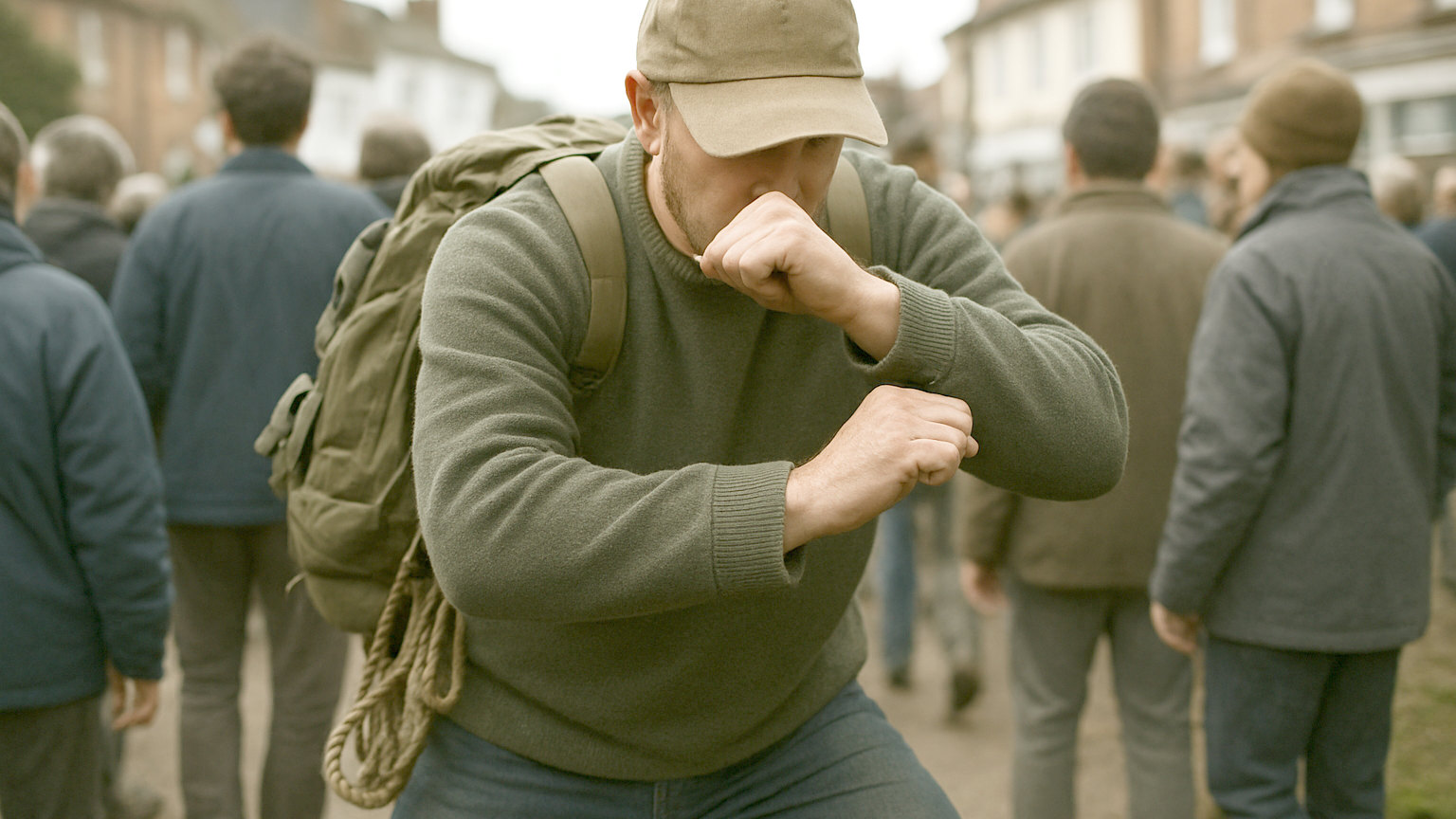
Get your arms up in front of your chest, elbows out, hands loosely clasped, in something like a boxer guard. That creates a small space in front of your ribcage which lets you keep breathing when the crowd compresses. It is the single most useful thing to know, and it costs nothing to remember.
- Arms up in front of your chest to protect your breathing
- Stay upright, since going down is the main danger
- Move diagonally with the flow rather than against it
- Do not push back, which wastes energy and adds pressure
- Keep away from walls, barriers and solid obstacles
- If you drop something, leave it
How should you move?
With the crowd and at an angle, not against it. Fighting directly toward an exit exhausts you and increases the pressure on everyone. Instead, move diagonally, taking advantage of gaps as the crowd surges and pauses, working gradually toward the edge. It takes patience and it works, and it is how experienced crowd users get out of dense areas.
Why avoid walls and barriers?
Because pressure has nowhere to dissipate against a solid object. The crowd behind continues pushing and people against a wall, a fence or a crush barrier take the full load with no relief. Deaths in crowd incidents concentrate against solid boundaries and in bottlenecks. Stay toward the middle of a flow rather than the edges when density is rising.
What if you fall?
Get up immediately if you can, and if you cannot, curl onto your side with your knees up and your arms protecting your head and chest, in a recovery style position rather than face down. This protects the airway and creates space for the lungs. Ask people nearby for help, since crowds do respond to a clear call from someone on the ground.
What if someone else falls?
Try to help them up immediately and call out to those around you. A person on the ground in a dense crowd is in serious danger within a very short time. Shouting clearly that someone is down, and having those nearest brace to create space, has saved lives. This depends entirely on people close by acting quickly.
What should you do before it gets dense?
Leave early. The most effective response happens before you are in trouble, and that means noticing density rising and moving out while movement is still possible. If you can no longer choose your own direction, or you are being carried by the crowd, the situation is already serious and your options have narrowed considerably.
What should you avoid carrying?
Large bags, pushchairs and anything on your back that adds bulk. Pushchairs in particular are extremely difficult in dense crowds and cannot be protected, which is why event organisers frequently exclude them. If you have children with you, carry small ones and keep older ones physically linked to you rather than holding hands, which breaks under pressure.
How do you stay together?
By linking rather than holding, and by agreeing a plan first. Hands come apart under pressure, so link arms or hold onto clothing, and accept that in a genuinely dense crowd staying together may not be possible. Agree a meeting point outside the area before you go in, so that becoming separated is an inconvenience rather than an emergency.
Arms up in front of your chest, stay upright, move diagonally with the flow, avoid walls, and get out before the density rises.