Severe bleeding kills within minutes and is one of the few things a bystander can genuinely reverse. This is general information and no substitute for proper training, which is widely available and worth doing.
What is the first priority?
Your own safety, then pressure. Do not approach if the scene is dangerous, and wait for the emergency services if there is an ongoing threat. Once you can safely reach the casualty, the single most effective action is firm direct pressure on the wound, hard enough to be uncomfortable, using both hands and your body weight if needed.
How do you apply pressure?
Directly onto the bleeding point with whatever you have: a dressing, a cloth, clothing or your hands. Press hard and keep pressing without lifting to check, since releasing pressure restarts the bleeding. If blood soaks through, add more material on top rather than removing what is there. Sustained firm pressure controls the majority of severe bleeding.
- Check the scene is safe before approaching
- Call 999 or get someone else to call immediately
- Apply firm direct pressure and do not release it
- Add material on top rather than removing soaked dressings
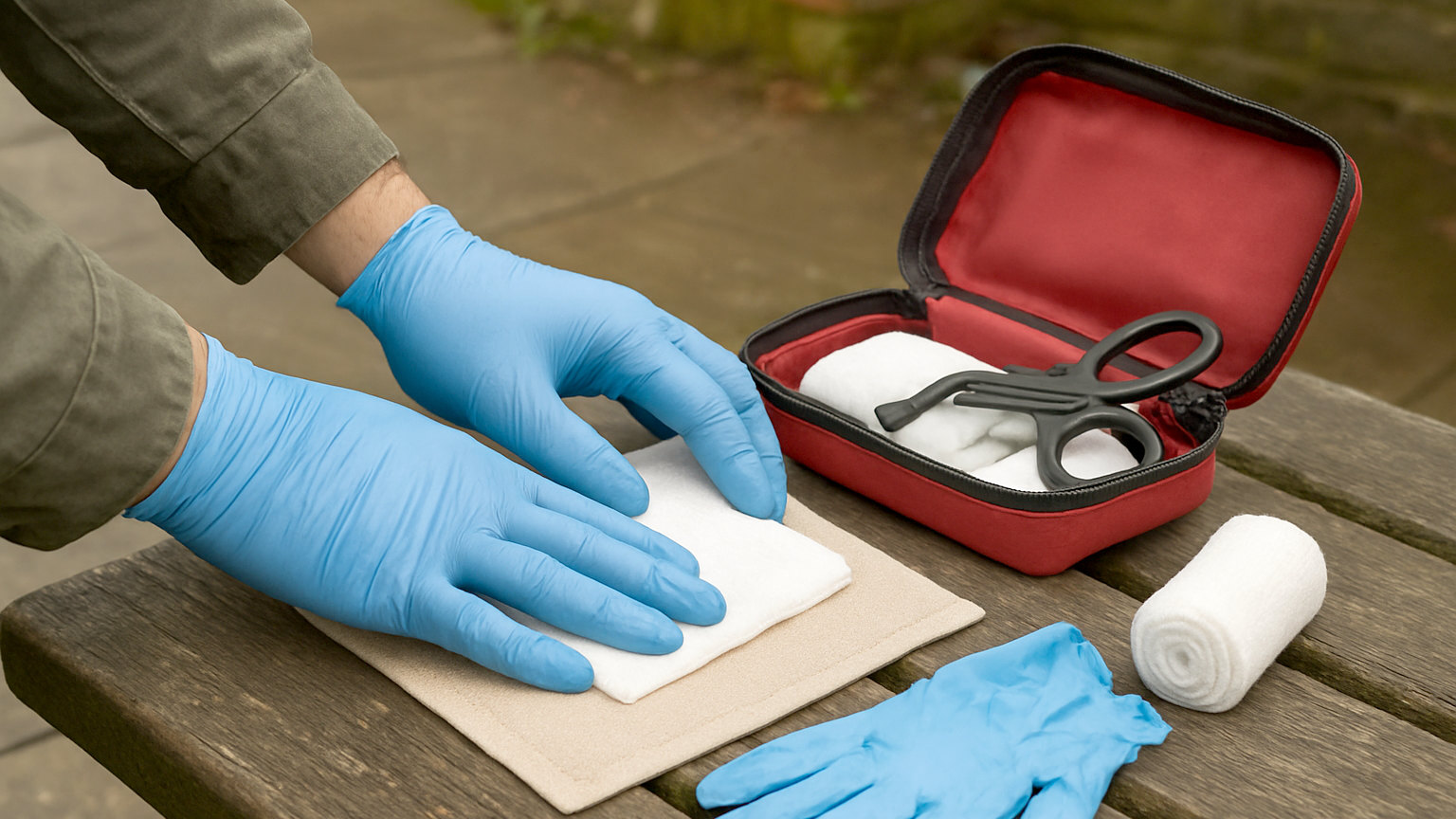
- Use a bleed control kit if one is available nearby
- Keep the casualty warm and talk to them
What about tourniquets?
They save lives when used correctly on limb bleeding that pressure cannot control, and they should be applied by someone who has been trained or is being talked through it. Commercial tourniquets in public access kits are designed to be applied by untrained people with the instructions provided. Improvised tourniquets from belts and similar are generally ineffective and can cause harm. Note the time of application.
What are public bleed control kits?
Cabinets containing dressings, gloves, a tourniquet and instructions, installed in an increasing number of public places, transport hubs, venues and town centres across Britain. They are intended for exactly this situation and are frequently unknown to the public. Noticing whether one exists where you spend time takes a moment and could matter.
What should you tell 999?
Location, that there is severe bleeding, roughly where on the body, whether the person is conscious and breathing, and whether the scene is safe. The call handler can talk you through what to do, so put the phone on speaker and keep both hands on the wound. Do not hang up.
What else matters?
Keeping them warm and keeping them still. Significant blood loss causes rapid cooling, which worsens the situation, so cover them with a coat or blanket. Lay them down. Talk to them, since reassurance genuinely helps and their responses tell you how they are doing. Do not give anything to eat or drink.
What should you not do?
Remove anything embedded in a wound, which may be preventing worse bleeding. Instead, press around it rather than on it. Do not lift dressings to check progress. Do not use a tourniquet on the neck or torso. And do not delay calling for help while trying to sort the wound out first.
Where can you learn properly?
Through a first aid course, which every household would benefit from having someone attend. St John Ambulance, the British Red Cross and other providers run short courses, and specific bleed control training is available in many areas. Free public awareness material exists, and an afternoon of proper instruction is worth considerably more than any amount of reading.
What if there are several casualties?
Deal with catastrophic bleeding first, across everyone, before anything else. Someone bleeding heavily will die in minutes while someone with a broken limb will not, so a quick pass applying pressure or a tourniquet to the worst bleeding does more good than treating one person thoroughly. Direct bystanders to help by giving specific instructions to named individuals rather than general appeals.
Check the scene, call 999, press hard and keep pressing, add material rather than removing it, use a bleed kit if there is one, and get trained properly.