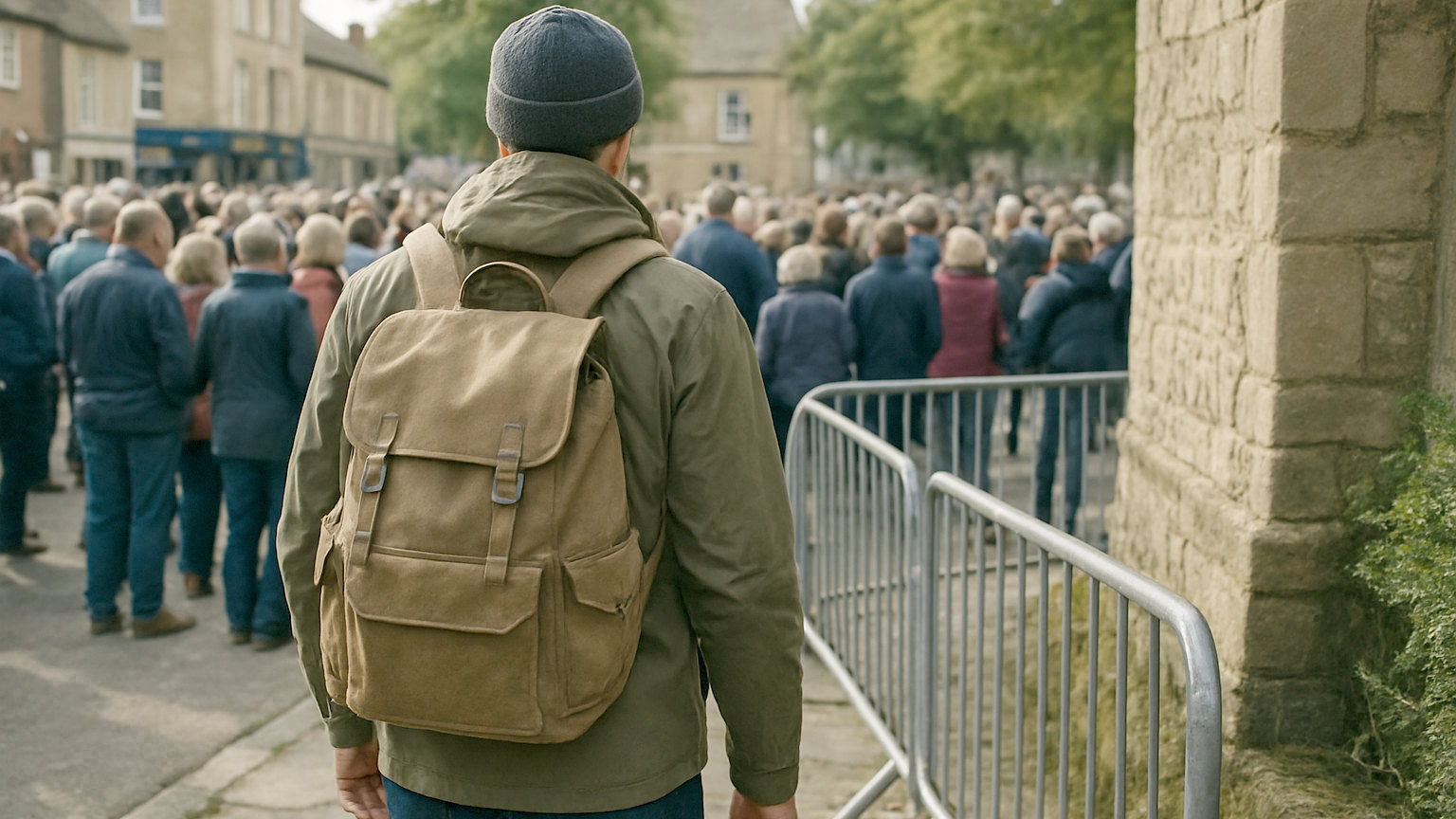
Crowd crushes are avoidable, and the avoidance happens well before the dangerous moment. The signs are recognisable and most people have never been told what they are.
What are the warning signs?
Three, in escalating order. You are touching people on all sides continuously rather than occasionally. You can no longer choose your own direction and are being moved by the crowd. And you cannot raise your arms or reach into a pocket. Any of these means density has reached a dangerous level and you should be working toward the edge immediately.
What else indicates trouble?
Waves or surges travelling visibly through the crowd, which indicate pressure being transmitted through bodies rather than people moving voluntarily. A sudden change in noise, either shouting or an unusual quiet. People calling out or trying to climb. Heat and a sense of the air becoming close. Any of these should prompt an immediate effort to get out.
- Continuous contact on all sides is the first sign
- Losing control of your own direction is the second
- Being unable to lift your arms is the third and most serious
- Visible waves through the crowd indicate dangerous pressure
- Identify exits when you arrive, not when you need them
- Avoid the front, the barriers and any bottleneck
Where do crushes happen?
At bottlenecks. Narrowing corridors, gateways, stairs, tunnels, entrances and exits, and anywhere a wide flow is funnelled into a narrow one. Also at the front of standing areas against barriers, where pressure from thousands behind concentrates on the people at the front. Historic disasters share this pattern with striking consistency.
What should you do on arriving somewhere?
Find the exits, including the ones nobody is using. People instinctively leave by the way they came in, which is what creates the bottleneck. Note at least two alternatives and roughly where they are relative to you. This takes a minute and is the single most useful thing you can do at any crowded venue, exactly as it is on an aircraft.
Where should you position yourself?
Toward the edges of a crowd rather than the middle, near an exit route, and away from barriers. At standing events, the front may offer the best view and it is where pressure concentrates and where you cannot leave. Being slightly back and to one side costs a little of the experience and leaves you able to move.
When should you leave?
Earlier than feels necessary, and before the end. Leaving a few minutes before everyone else avoids the exit surge entirely, which is when many incidents occur. If density is rising and you feel uncomfortable, that instinct is worth acting on. Nobody regrets leaving a crowded event slightly early.
Whose responsibility is this?
Primarily the organiser and the authorities, and that does not help you at the time. Crowd safety is a professional discipline with established standards, and well managed events control density, monitor flows and manage exits actively. Poorly managed ones do not, and an individual attending has no way to know in advance which they are at.
What about children at events?
Think carefully about whether to bring them into standing areas at all. Small children cannot be protected in a dense crowd, are at greater risk from compression, and cannot be seen by people around them. Carry small children rather than having them walk, agree a meeting point with older ones, and stay well away from the front and from barriers.
What should you do if you feel uneasy?
Act on it rather than talking yourself out of it. People consistently override an early sense that something is wrong because leaving feels socially awkward or because they have paid for a ticket. That instinct is frequently reading the density and the atmosphere accurately before conscious analysis catches up, and the cost of leaving unnecessarily is trivial compared with the alternative.
Watch for continuous contact, loss of direction and being unable to lift your arms, find exits on arrival, avoid the front and bottlenecks, and leave early.