Lock standards are dull, well defined and directly relevant to both security and insurance. Knowing the small number of markings that matter lets you assess what you have in about five minutes.
What should a wooden front door have?
A five lever mortice deadlock conforming to British Standard 3621, usually marked with the kitemark and the standard number on the faceplate. This is the specification most insurers refer to, and a door without it may affect a claim. It should be fitted alongside a nightlatch rather than instead of one, and the deadlock should be used whenever the house is empty.
What about uPVC and composite doors?
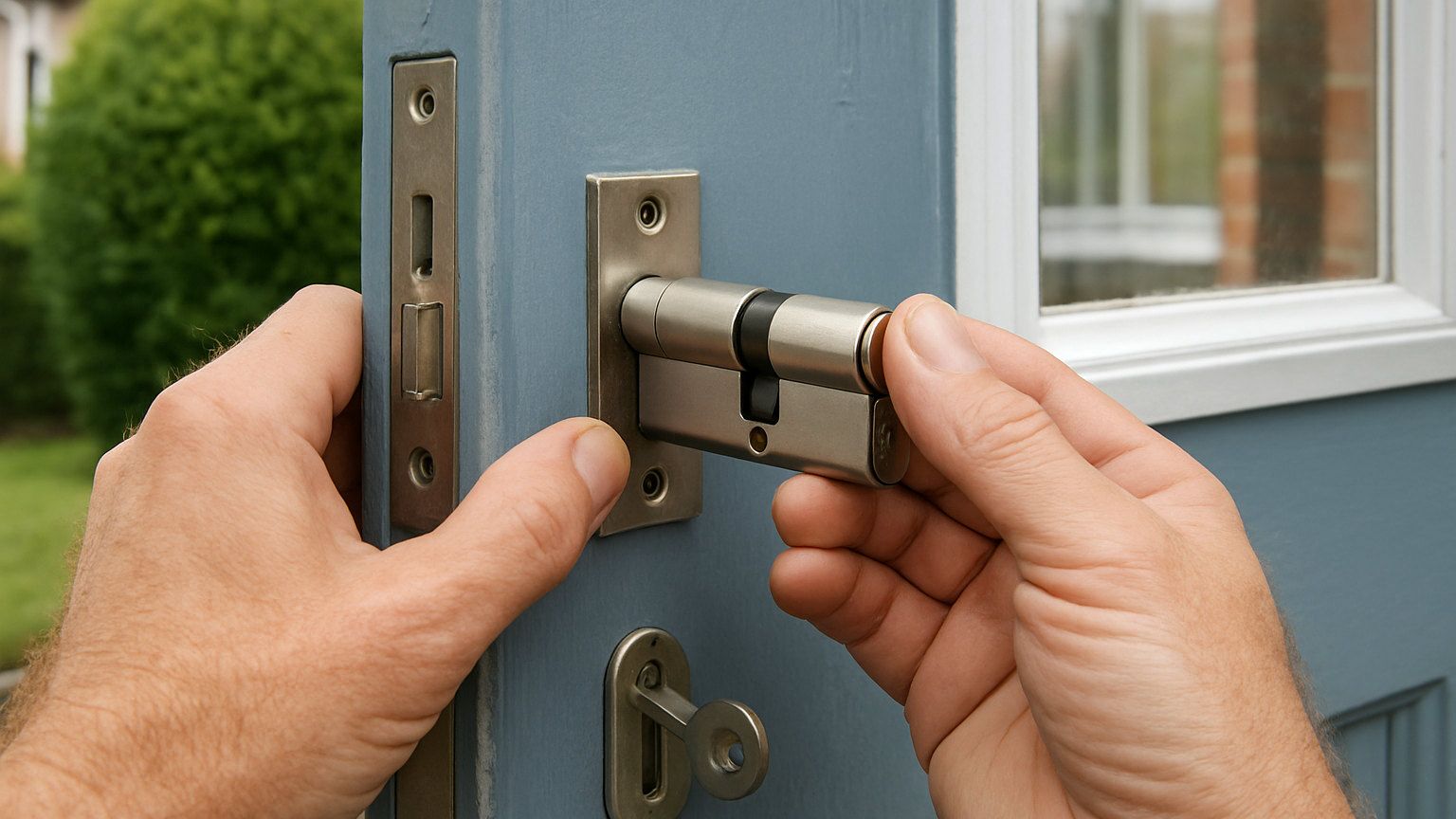
They use a multipoint mechanism operated by a euro cylinder, and the cylinder is the weak point. Look for a three star rating under TS007, or a one star cylinder combined with two star security handles, which achieves the same overall rating. Sold Secure Diamond is an equivalent marking. These are designed to resist snapping, drilling, picking and bumping, and they cost very little.
- Wooden doors: BS3621 five lever mortice deadlock
- uPVC and composite: TS007 three star or Sold Secure Diamond cylinder
- Check the cylinder does not protrude more than a few millimetres
- Windows: key operated locks on all accessible openings
- Patio doors: anti lift blocks and additional locks
- Keep spare keys away from the door and out of sight
Why does cylinder protrusion matter?
Because a cylinder sticking out beyond the handle gives something to grip and lever. It should sit close to flush, protruding no more than a few millimetres. If yours projects noticeably, replacing it with a correctly sized anti snap cylinder addresses both problems at once. Measuring is straightforward: the cylinder is sized from the central screw hole to each end, and the two halves are frequently different.
Which windows need locks?
Any that could be reached, which usually means all ground floor windows and any upper window accessible from a flat roof, a garage, a bin store or a drainpipe. Key operated locks are the standard requirement, and insurers commonly specify them. Locking handles alone are not the same thing. Keep the keys nearby but not visible from outside and not in the lock.
What about patio and French doors?
They deserve particular attention because they are often out of sight at the rear. Sliding patio doors should have anti lift blocks fitted in the top track so the door cannot be lifted out, plus a secondary lock. French doors need bolts at top and bottom on the non opening leaf, and a decent cylinder on the operating one. Laminated glazing is worth considering for any large accessible pane.
Do insurers actually check?
They rarely check in advance and they frequently ask after a claim. Most policies require specified minimum lock standards and require them to have been in use at the time. A claim can be reduced or refused where a property was left insecure or where locks did not meet the stated specification, so it is worth reading the policy wording and matching it rather than assuming.
What about smart locks?
They are convenient and vary enormously in physical security. Some are excellent and some prioritise the app over the mechanism. Look for the same physical certifications rather than the technology claims, check whether the insurer accepts them, and consider what happens in a power cut or if the phone is lost. A smart lock on a snappable cylinder is still a snappable cylinder.
Who should fit them?
Anyone competent for a cylinder swap, which is genuinely a five minute job with a screwdriver once you have measured correctly. Mortice locks and multipoint mechanisms are better left to a locksmith. Use one registered with the Master Locksmiths Association, since the trade is unregulated and standards vary considerably.
Check for BS3621 on wooden doors and a three star cylinder on uPVC, fit key operated window locks, and match whatever your policy specifies.