The law on defending yourself at home is more permissive than commonly assumed in one respect and stricter in another. This is general information about how the law is framed and is not legal advice.
What is the basic position?
You may use reasonable force to defend yourself, another person or your property, and to prevent crime. This comes from the common law and from the Criminal Law Act 1967. Reasonable is judged on the circumstances as you honestly believed them to be at the time, even if that belief later turns out to have been mistaken. The law explicitly recognises that a person acting in the heat of the moment cannot weigh their response precisely.
What is the householder defence?
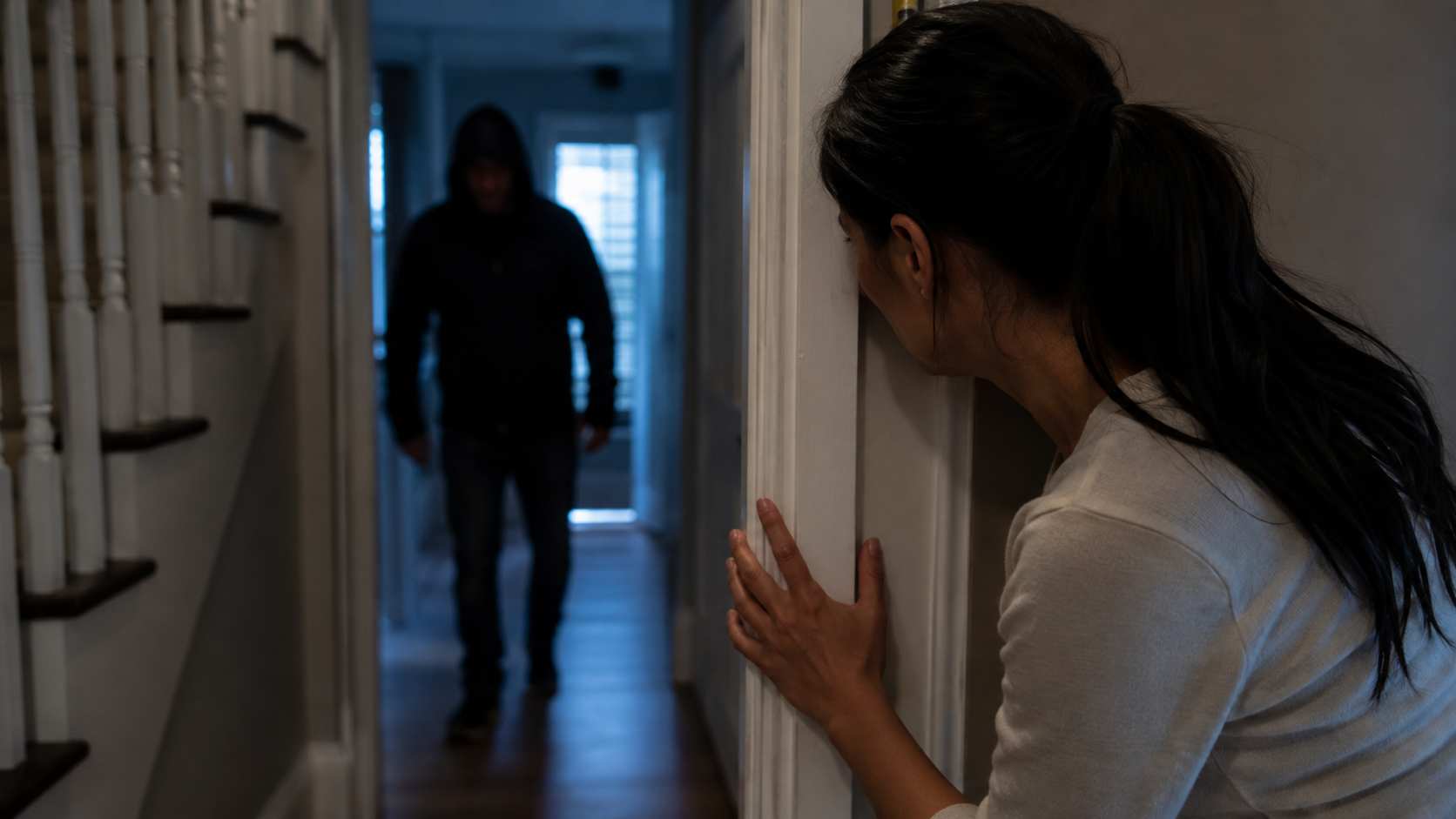
A higher threshold applying specifically to people defending themselves in their own home against an intruder. Under provisions introduced by the Crime and Courts Act 2013, force used by a householder in a dwelling is not unlawful unless it was grossly disproportionate, which is a more generous test than the disproportionate standard applying elsewhere. It applies to defending yourself or others, not to defending property alone.
- Reasonable force is permitted for self defence and preventing crime
- Judged on your honest belief at the time, not hindsight
- Householders are judged against a grossly disproportionate test
- There is no duty to retreat, though retreating is still sensible
- Force used after a threat has ended is not self defence
- Keeping a weapon for defence is a separate criminal offence
Do you have to retreat?
No. There is no legal duty to retreat before defending yourself, and the fact that you did not is only one factor in assessing reasonableness. That said, retreating to safety and calling the police remains the sensible course in nearly every situation, because it is far safer and because it removes any question about your conduct.
What is not covered?
Force used once the danger has passed. If an intruder is fleeing, unconscious or no longer a threat, continuing to use force is not self defence and can amount to a serious offence. Similarly, pursuing someone down the street moves you outside the householder provisions entirely. The defence covers protecting yourself in the moment, not punishment or retrieval afterwards.
Can you keep something for defence?
No, and this is where people most often misunderstand the position. Carrying an offensive weapon in a public place is an offence, and an item made or adapted for causing injury, or intended for that use, is an offensive weapon regardless of what it is. Keeping a bat or similar by the bed specifically for defence creates evidence of intent that can itself be prosecuted, and it introduces a weapon into a confrontation you would rather avoid.
What about using something to hand?
The position differs. Using an object that happens to be available, in genuine self defence, is assessed under the same reasonable force test as anything else. The distinction the law draws is between an item kept in readiness as a weapon and an item picked up in the moment. This is a fine distinction and another reason why avoiding confrontation is the strongly preferable course.
What happens afterwards?
The police will investigate, which is normal and not an indication that you are suspected of wrongdoing. Serious injury to an intruder will always be examined, and the Crown Prosecution Service applies the householder test when deciding whether any prosecution is in the public interest. Prosecutions of householders acting genuinely in self defence are rare, and cooperating fully and describing honestly what you believed at the time is the right approach.
Does the position differ across the UK?
Somewhat, and the principle is broadly consistent. The householder provisions introduced by the Crime and Courts Act 2013 apply in England and Wales. Scotland and Northern Ireland operate their own frameworks, with self defence recognised under similar reasonable force principles derived from common law and their own legislation. In all four nations the underlying test turns on what you honestly believed and whether your response was reasonable in those circumstances.
Retreat and call 999 wherever possible, understand that the law protects a genuine defensive response, and do not keep anything specifically as a weapon.