Outbuildings are the softest target on most properties and are attacked disproportionately often. They also frequently supply the tools used to get into the house afterwards, which makes securing them doubly worthwhile.
Why are sheds targeted so often?
Because they are out of sight, weakly built and contain valuable portable items. Bicycles, power tools, garden machinery and fuel are all attractive and easily sold. The construction is typically thin timber with lightweight hinges and a cheap hasp, and many are secured with a padlock that can be defeated in seconds. Their position at the rear of a property also removes the risk of being seen.
What should you fit?
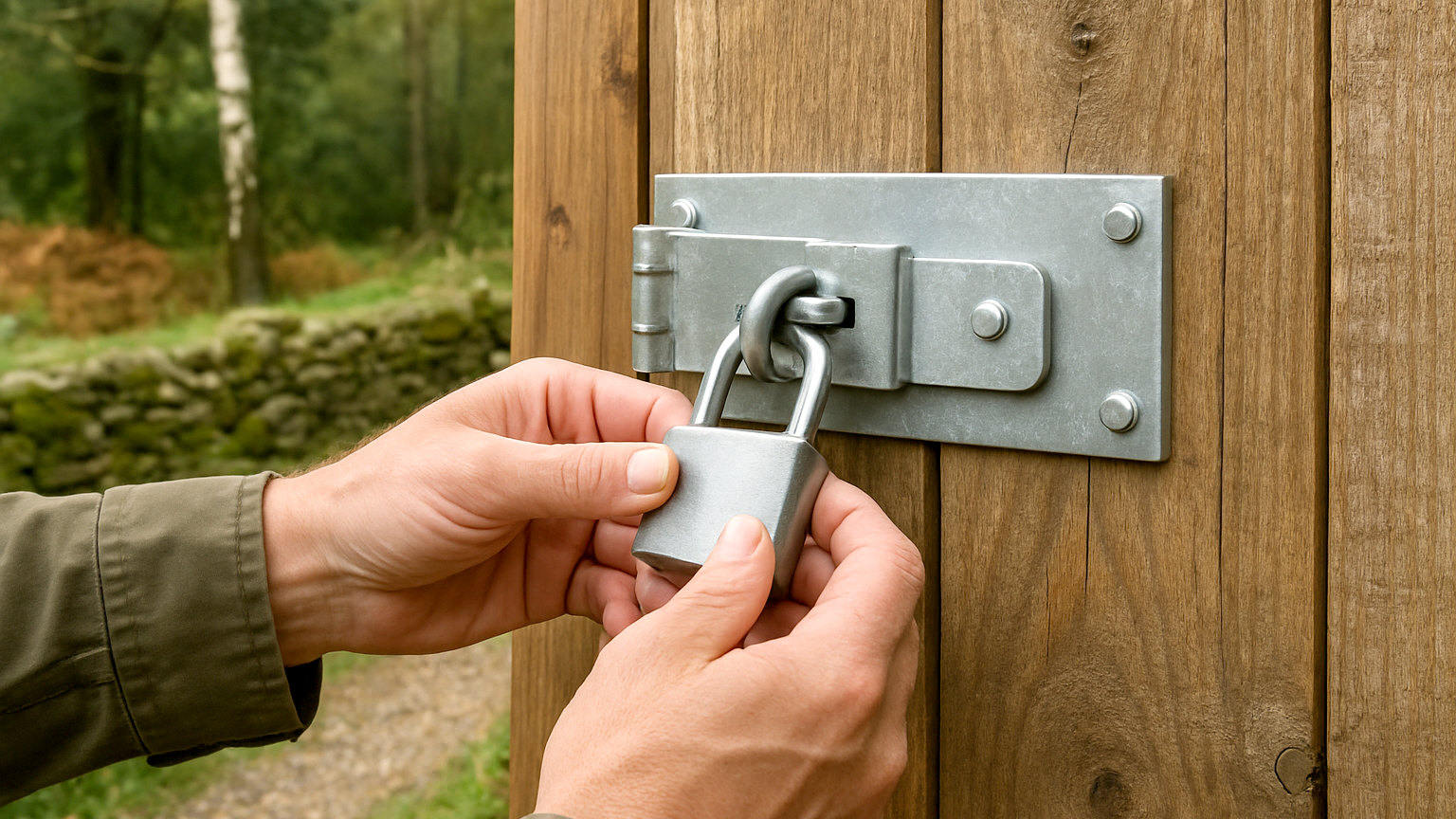
A closed shackle padlock with a Sold Secure rating, on a heavy duty hasp and staple bolted through the door with coach bolts and backing plates rather than screwed on. Screws can be removed or pulled out of thin timber, which defeats an expensive padlock entirely. Fit hinge bolts or replace hinges with the type that cannot be unscrewed from outside.
- Closed shackle padlock with a Sold Secure rating
- Heavy hasp bolted through, not screwed on
- Coach bolts with backing plates or penny washers inside
- Hinge bolts or security hinges
- Window film, mesh or obscured glazing so contents are not visible
- Ground anchor for bikes and mowers, bolted to a solid base
What about garages?
Up and over garage doors are a known weak point, particularly older ones where the centre latch can be defeated by levering the door corner. Fit additional locks at each side, or a garage defender bar in front of the door. If the garage connects to the house, treat that internal door as an external one and fit a proper lock, because an offender inside a closed garage can work unseen.
Why does an integral garage matter so much?
Because it provides cover. Once inside with the door closed, someone can take as long as they need on the internal door without any risk of being observed. Many households leave that internal door unlocked or fitted with a simple latch. It should have the same standard of lock as a back door, and it should be locked whenever the house is empty and overnight.
How do you protect the contents?
By marking and recording. Mark tools, bikes and machinery with a UV pen or a proprietary marking system, photograph everything, and record serial numbers. Register items on a national property database so that recovered goods can be traced back to you. This does little to prevent theft and considerably improves the chance of recovery and of a successful insurance claim.
Is a shed alarm worth it?
For a modest sum, yes. Battery powered shed alarms are inexpensive, easy to fit and effective, since the noise in an otherwise quiet garden at night is exactly what an offender wants to avoid. Some link to a receiver in the house. They are not a substitute for a proper hasp and padlock, and they are a useful addition once the physical security is sound.
What about the garden itself?
Remove what helps. Ladders should be locked away or chained, since a ladder left out gives access to upper windows. Wheelie bins should not sit against fences or beneath windows. Tools left out provide the means to force a door. A secure side gate with a lock at the top, out of reach through the gap, prevents casual access to the rear entirely.
Does insurance cover outbuildings?
Usually with limits and conditions. Contents cover for sheds and garages is commonly capped at a lower figure and may require specified locks, and bikes often need to be listed separately. Read the wording before assuming a stolen mower or bicycle is covered, and check whether the policy requires items to be locked to an anchor rather than merely inside a locked building.
Bolt the hasp through, use a rated closed shackle padlock, lock the internal garage door, mark everything, and put the ladder away.