The front door is where a surprising amount of household crime happens, and almost all of it depends on the occupier opening it. You are entitled not to.
What is the basic rule?
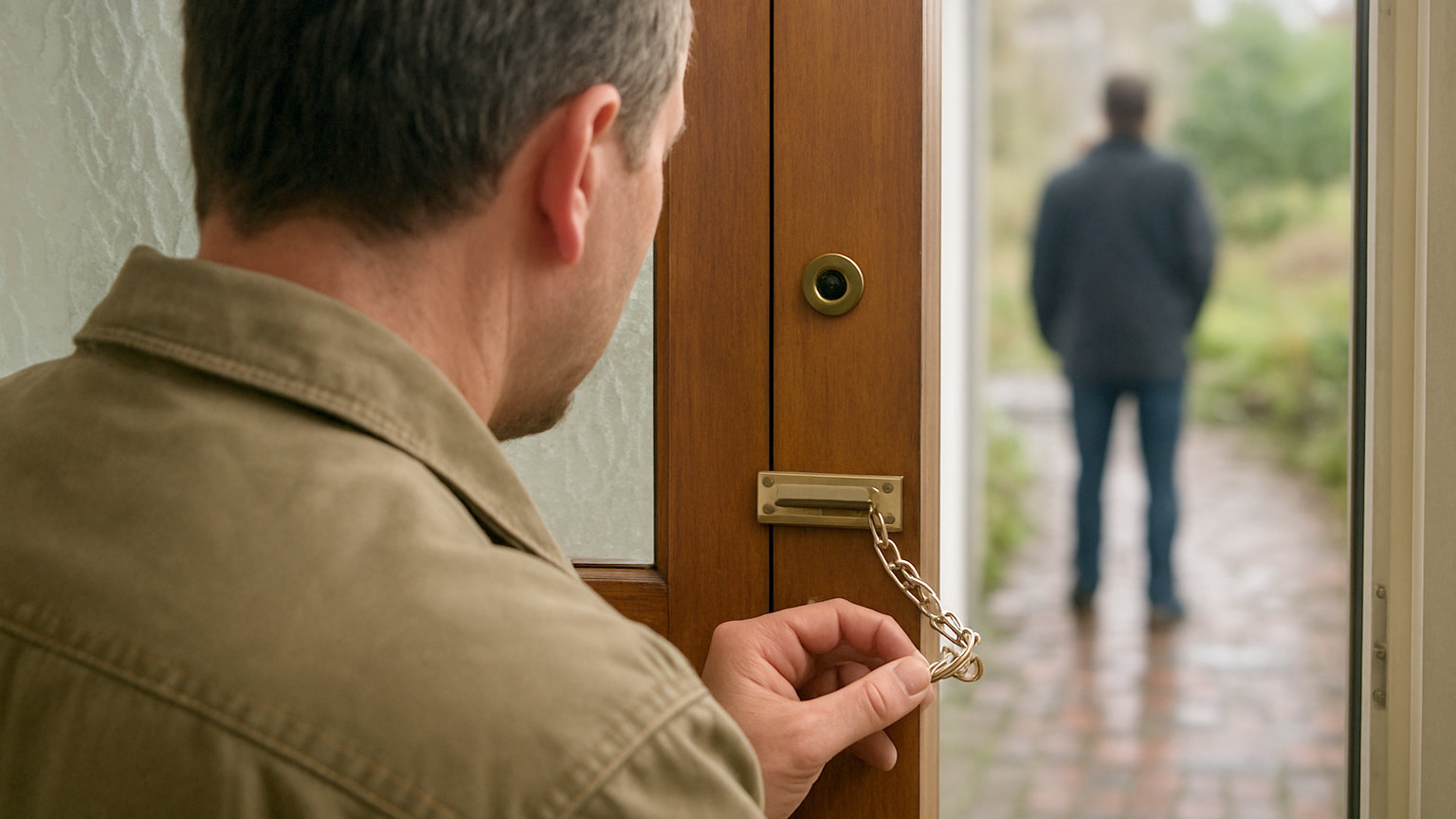
Do not open the door to anyone you are not expecting until you know who they are. There is no social obligation that outweighs this, and the discomfort of appearing unfriendly is the price of a straightforward defence. Use a spyhole or a window, put the chain on before opening at all, and speak through the door if you prefer.
How do you verify a caller?
By checking independently rather than by looking at what they show you. Genuine callers from utilities, councils and services will wait while you telephone the organisation on a number you have found yourself, from a bill or the official website rather than from a card they hand you. Anyone who objects to that, or who creates urgency, is telling you something.
- You are never obliged to open the door
- Use a chain and a spyhole before opening at all
- Verify callers by phoning a number you found yourself
- Genuine callers will wait and will come back another time
- Set up a password scheme with utilities for vulnerable relatives
- Report doorstep incidents to the police on 101
What is distraction burglary?
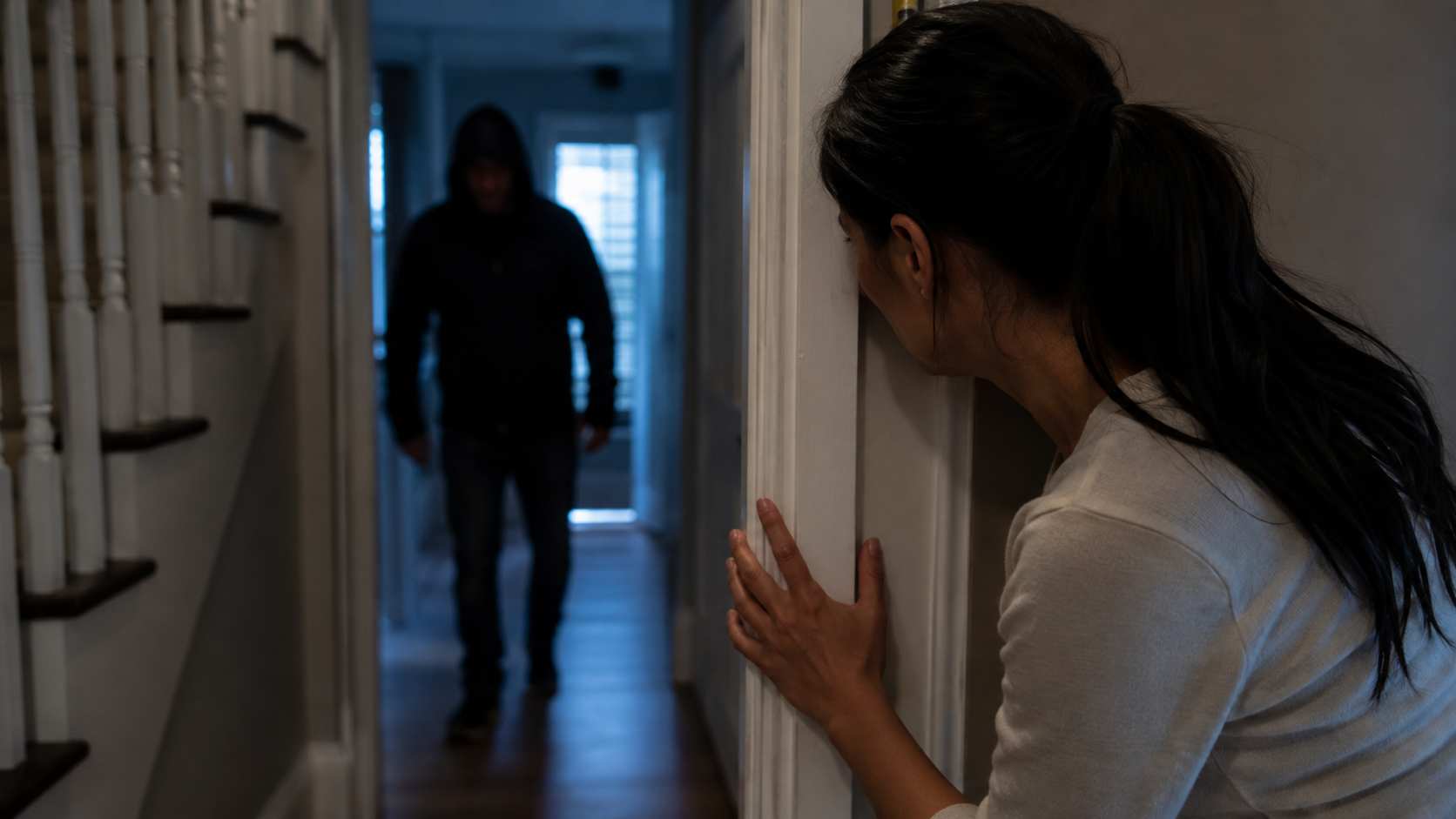
An approach where someone talks their way in on a pretext, frequently as a workman, official or neighbour with an urgent problem, while an accomplice searches the house. It targets older people disproportionately and it relies entirely on politeness and on the occupier not wanting to cause offence. The defence is simply not letting anyone in.
What about doorstep sellers and traders?
Do not agree to anything on the doorstep, do not pay in advance and do not let anyone start work immediately. Legitimate traders will provide written quotes and will wait. Pressure to decide now, offers of a discount for immediate agreement, or a claim to have spotted urgent damage to your roof are all recognised patterns rather than coincidences.
What if they become aggressive?
Close the door, lock it, and call the police. Do not argue through the door and do not step outside to continue the conversation. If they refuse to leave, are threatening or attempt to force entry, call 999. For anything less immediate, report it on 101, since patterns across a neighbourhood are exactly what police need to see.
How do you protect an older relative?
Practical arrangements more than advice. Fit a chain and a spyhole, or a video doorbell. Set up a password scheme with their utility suppliers, which many operate free of charge, so a genuine caller can quote an agreed word. Agree that they never let anyone in without checking with you first, and make clear that being thought rude does not matter.
What about deliveries?
They are the common pretext now. A delivery you are not expecting, a parcel for a neighbour, or a request to sign for something are all reasonable and all used. You can accept a parcel through a chained door or ask for it to be left. You do not need to open the door fully for any legitimate delivery.
Should you keep a record?
It helps. Note the date, time, description, any vehicle and registration, and what was said. Report it even when nothing happened, because doorstep crime works across an area and one report frequently connects to several others. Neighbourhood schemes and local police alerts exist largely on this information.
What about video doorbells?
They help considerably and they change the interaction. Being able to see and speak to a caller without opening the door removes the pressure entirely, and the recording is genuinely useful evidence for police where doorstep crime is occurring. Be aware of the privacy considerations where a camera covers a shared space or a neighbour property.
Never open to anyone unexpected, use a chain and spyhole, verify by ringing a number you found yourself, and report doorstep incidents on 101.