Alarms occupy an odd position in home security. They are widely believed to be essential and widely dismissed as ignored noise, and the reality sits between the two and depends heavily on the type.
Do they deter?
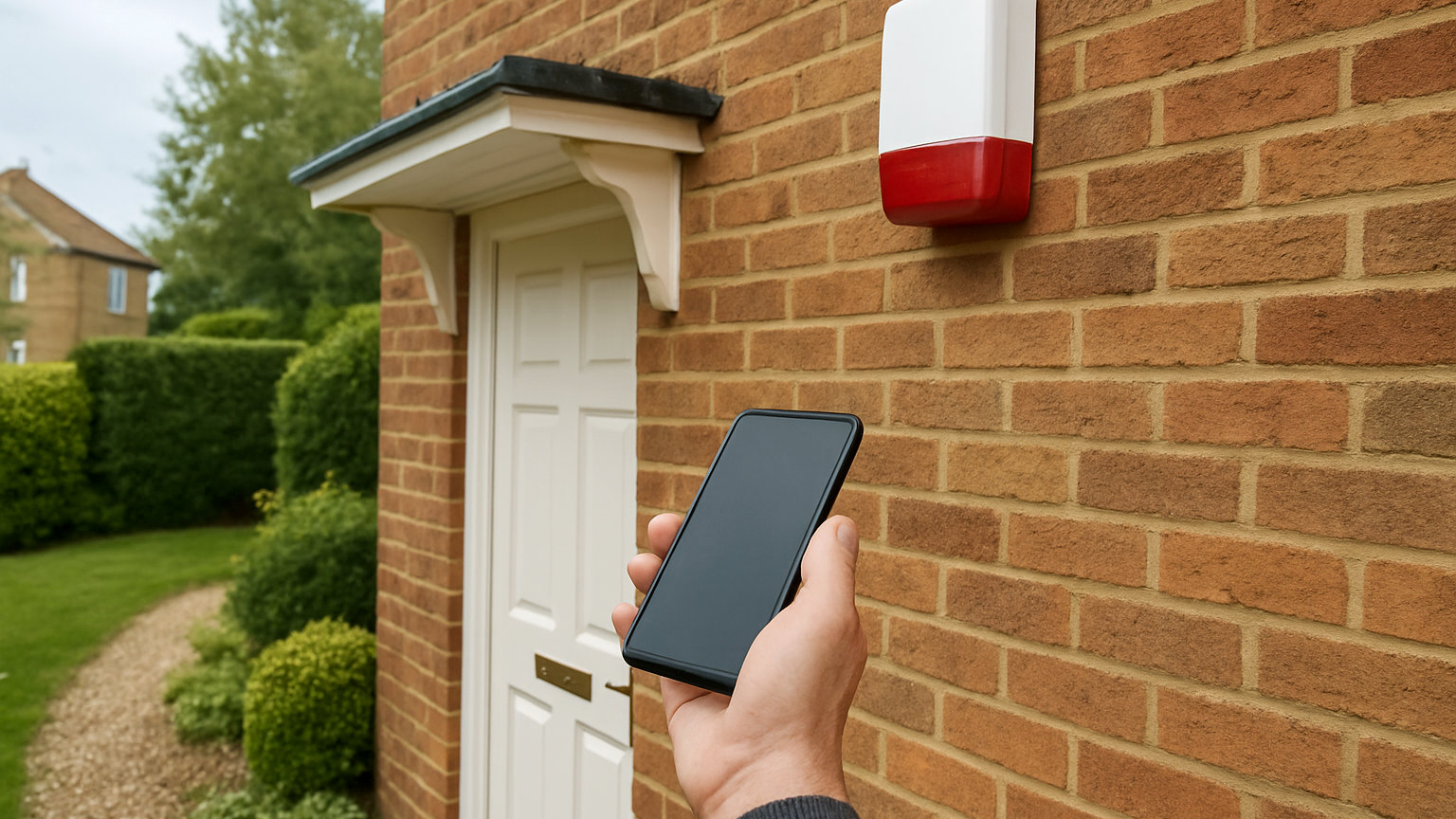
Yes, measurably. Studies of residential burglary consistently find that homes with visible alarms are burgled less often, and offender interviews describe alarms as a reason to choose a different property. The deterrent effect comes largely from the box on the wall rather than the siren, since the decision is made before entry. That is why the external sounder should be clearly visible from the street.
What is the difference between bells only and monitored?
Bells only systems make a noise locally and nothing more. Monitored systems notify an alarm receiving centre, which verifies the activation and can contact keyholders or the police. The practical difference is whether anything happens when it goes off while you are away. Bells only relies entirely on a neighbour hearing it and acting, which is why knowing your neighbours makes such a difference to whether a system is useful.
- Make the external sounder clearly visible from the street
- Bells only works if a neighbour will actually respond
- Monitored systems require a professionally installed setup
- Police attendance requires a URN and a compliant system
- False alarms can lose you police response entirely
- Check whether your insurer requires maintenance certification
Will the police attend an alarm?
Only under specific conditions. Police response to intruder alarms in the United Kingdom follows a national policy requiring the system to be professionally installed and maintained to recognised standards, monitored by an approved centre, and issued with a unique reference number. Repeated false alarms result in that response being withdrawn. A bells only alarm sounding in an empty street does not generate a police attendance.
What about self installed systems?
They are considerably cheaper, straightforward to fit and increasingly capable, and they cannot obtain police response. Many now notify your phone directly, which effectively makes you the monitoring centre. That works well if you can act on it and less well if you are abroad. For most households the deterrent value plus a phone notification is a reasonable compromise, provided the expectations are clear.
Does an alarm affect insurance?
Sometimes, and less than people expect. Some insurers offer a small discount for a professionally installed and maintained system, and some higher value policies require one. Crucially, if a policy requires an alarm, it usually requires it to be set and maintained, and failing to set it can affect a claim. Always tell your insurer what you have, since a system installed and not declared achieves nothing on the policy.
Is a dummy box worth fitting?
It provides some deterrent and it has limits. Experienced offenders can often identify dummy boxes, particularly ones that are obviously new, unweathered or of a recognisable pattern. A cheap real system is generally a better use of money, since it also does something when triggered. Do not claim to an insurer that you have an alarm when the box is decorative.
What else should the system cover?
The routes people actually use, which means ground floor doors and windows, and any accessible upper window. Internal movement sensors covering hallways catch anyone who gets in regardless of route. Consider a separate shed or garage sensor, since outbuildings are frequently targeted first. Whatever you fit, use it consistently, because an unset alarm is an ornament.
What should you do if you hear one?
Look rather than ignore it, because an alarm everyone assumes is faulty is an alarm doing nothing. Check whether anything is visibly wrong, look for unfamiliar vehicles, and call 999 if a break in appears to be in progress. This is the part of the system that fails most often, and it costs nothing to fix.
How long should the siren sound?
Twenty minutes at most, which is the limit set by the relevant environmental protection legislation for audible alarms in England and Wales. Systems should be configured to cut out at or before that point, and local authorities have powers to act on alarms that sound persistently. Nominating a keyholder who can silence the system prevents a faulty alarm running for hours while you are away.
Fit something visible, set it every time, be realistic about whether anyone would respond, and tell your insurer exactly what you have.