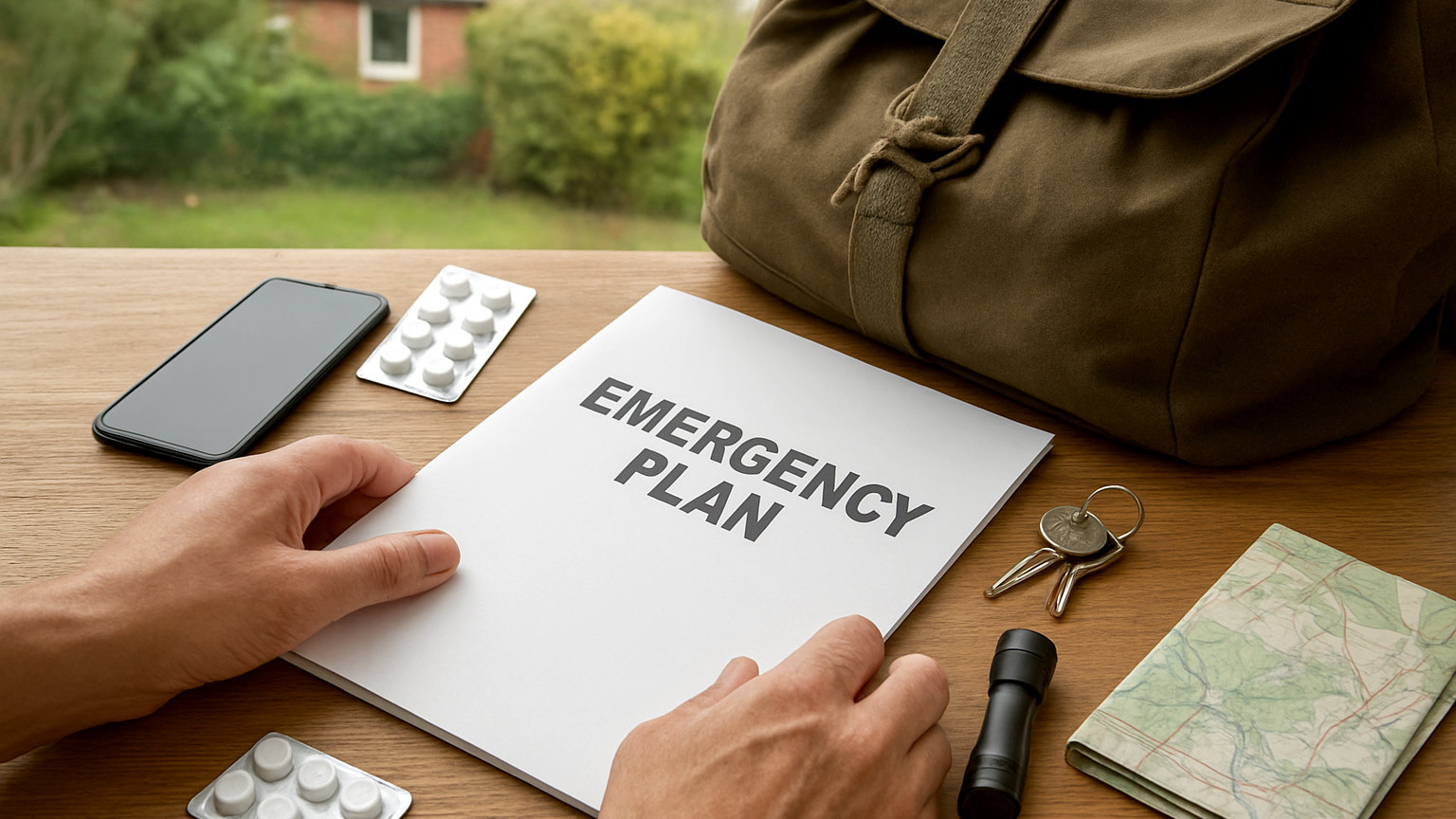
The content of a household plan is unglamorous, which is precisely why it needs writing down. Nobody forgets to be worried in an emergency, and everybody forgets a policy number.
Which contacts belong on it?
Emergency services numbers, which are 999 or 112, 111 for urgent medical advice, 101 for non urgent police, 105 for power cuts and 0800 111 999 for a suspected gas leak. Then your GP surgery, your utility suppliers, your insurer, your landlord or letting agent, the school, and at least two neighbours. Finally an out of area contact who can act as a relay if local networks are congested.
What medical information should be recorded?
For each household member: NHS number, GP details, current medication with doses, allergies, and any condition responders should know about such as epilepsy, diabetes, asthma or a heart condition. Note where medication is kept and how much spare exists. If anyone uses equipment requiring power, such as a nebuliser, home oxygen or a stairlift, that belongs on the plan alongside the supplier contact.
- Emergency and utility numbers, including 105 and Floodline
- NHS numbers, GP details, medication and allergies
- School and workplace emergency procedures
- Location of stopcock, fuse box and gas shut off valve
- Insurance policy numbers and claim lines
- Two meeting points and an out of area contact
- Arrangements for pets and for anyone needing assistance
What do you need to know about schools?
What the school does in an emergency, and who they will release your child to. Most schools keep children on site until collected by an authorised adult, and the list of authorised people is one you should check and update. Know the school emergency contact number and whether they communicate by text or app. Agree in advance which parent collects, and add a second person the school will release to, since the obvious collector may be the one stuck on a closed road.
Where are the shut offs?
Find them now rather than in the dark with water coming through a ceiling. The internal stopcock is usually under the kitchen sink or near where the main enters. The fuse box or consumer unit is often in a hallway or cupboard. The gas emergency control valve sits by the meter. Photograph each one, note its location on the plan, and make sure more than one person in the house can operate them.
Which documents should be listed?
Insurance policies for buildings, contents and vehicles, with policy and claim line numbers. Mortgage or tenancy details. Passports, birth and marriage certificates. Bank details. Note where the originals are and keep scanned copies in secure cloud storage plus a copy on an encrypted memory stick in the grab bag. After a flood or fire, having these accessible substantially speeds up everything that follows.
What about neighbours?
Include two, with numbers, and make sure the arrangement is reciprocal. Neighbours are the people who will actually be there first, who can check on your house while you are away, and who can help an elderly relative. Households that know their neighbours consistently fare better in emergencies than those that do not, and that relationship is built beforehand rather than during.
What should be excluded?
Anything that will not be true in six months, and anything requiring judgement in the moment. Do not write elaborate decision trees. Do write numbers, addresses, locations and names. The plan is a reference sheet for facts that are hard to recall under pressure, not a manual for how to think.
How do you keep sensitive details safe?
By separating the useful from the exploitable. A plan pinned by the front door listing bank details, passport numbers and when the house is empty is a gift to a burglar. Keep the operational information visible, meaning numbers, meeting points and shut off locations, and keep identity and financial details in the secure document store instead, referenced by location rather than reproduced. The visible plan should be useful to a neighbour helping you and useless to anyone else.
Write down the numbers, the locations and the arrangements, and leave the judgement to whoever is holding the paper.