The part of an emergency that lasts longest is rarely the event itself. It is the weeks afterwards spent proving who you are, what you owned and what you were insured for, and that process is far faster for households that prepared.
Which documents matter most?
Insurance policies above all, for buildings, contents and vehicles, with policy numbers and the twenty four hour claim line. Then identity documents: passports, driving licences, birth and marriage certificates. Then property papers, whether mortgage documents or a tenancy agreement. Then financial details, medical information, and anything difficult or slow to replace such as qualifications, immigration documents and pet records.
How should you store copies?
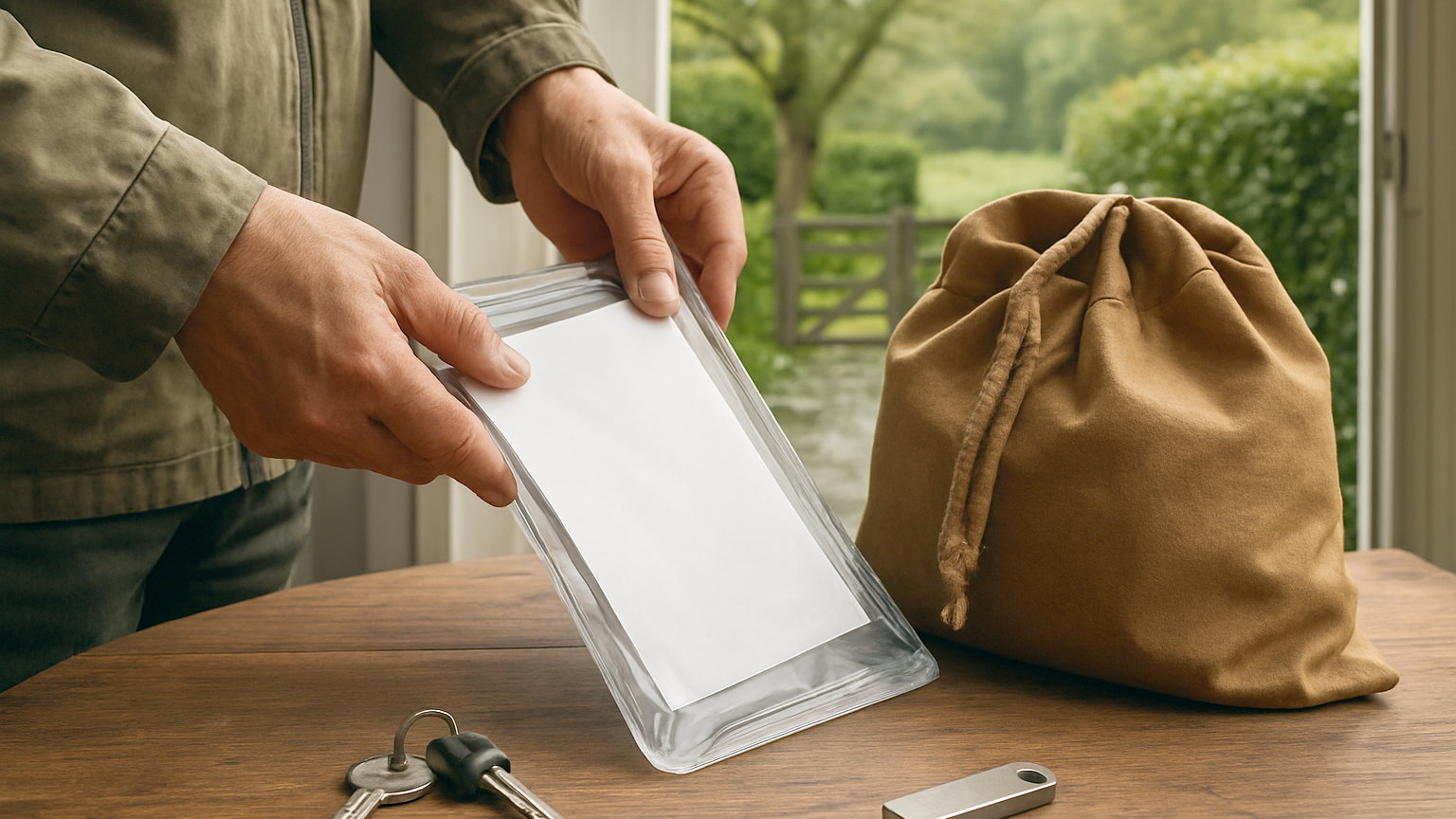
In more than one form and more than one place. Scan or photograph everything, store it in encrypted cloud storage, and keep a copy on an encrypted memory stick in the grab bag. Keep a printed set of the most critical items, chiefly insurance and contact numbers, in a waterproof wallet. A copy held by a trusted relative outside the area covers the case where your home and your local storage are both affected.
- Insurance policies with numbers and claim lines
- Passports, driving licences and birth certificates
- Mortgage or tenancy documents
- Bank and building society details
- Medical records, prescriptions and NHS numbers
- Photographs of each room and of valuable items
- Vehicle registration and service records
Why photograph your rooms?
Because contents claims are settled on evidence, and almost nobody can list the contents of their own home accurately from memory. Walk through each room filming or photographing, open cupboards and wardrobes, and capture serial numbers on larger items. It takes twenty minutes and transforms a contents claim from an argument into an administrative process. Update it after any significant purchase and store it with the other copies.
Where should the originals live?
Somewhere you can reach quickly and somewhere protected. A fire resistant document box or a small safe is worth considering, though the practical minimum is a single labelled folder that one person can pick up on the way out. Keeping originals scattered across several drawers is the arrangement most households actually have and the one that fails, because nobody can gather them in ten minutes.
How do you keep digital copies secure?
By encrypting them and by being deliberate about access. A folder of scanned passports in an unprotected cloud account is a serious identity theft risk. Use a reputable provider with two factor authentication, encrypt the memory stick, and use a strong unique password stored in a password manager. Note that the password manager itself needs a recovery route that does not depend on a device you might lose.
What about passwords and accounts?
Include a way in, since much of modern life is locked behind accounts. A password manager with a documented emergency access arrangement, or a sealed written record held securely, means a partner or executor can reach insurance portals, banking and utilities. Households routinely discover after an incident that the only person who could log in to anything is the person who is unavailable.
How often should you review it?
Annually, and after any change. Policies renew, passports expire, tenancies change and people move. Tie it to something you already do, such as insurance renewal or the clocks changing, so it happens rather than being intended. Reviewing also prompts you to notice documents you have acquired and not copied.
What do insurers actually ask for?
Less than people fear and more than most can produce quickly. A claim typically starts with the policy number, the date and nature of the loss, and a description of what was damaged. What slows things down is proving ownership and value for contents, which is where receipts, photographs and bank statements matter. Keeping digital receipts for anything substantial, filed in the same place as the document scans, converts a difficult conversation into a straightforward one.
Scan everything once, store it in three places, film your rooms, and diarise a yearly check.