Pets cause more evacuation refusals than almost anything else. People will not leave animals behind, which is entirely understandable and entirely predictable, which means it can be planned for.
Why does this need planning at all?
Because rest centres often cannot accept animals, for reasons of hygiene, allergies and space, and hotels frequently will not either. A household arriving at a rest centre with two dogs may be turned away or separated from their animals at a bad moment. Knowing in advance where animals can go removes a decision that would otherwise be made under pressure, badly.
What should you arrange in advance?
At least two options outside your immediate area. A relative or friend who would take the animals, a boarding kennel or cattery, and a veterinary practice that offers emergency boarding all work. Ask them explicitly rather than assuming, and note the numbers in the plan. Having somewhere for the animals to go frequently determines whether a household evacuates promptly or hesitates.
- Two people or facilities outside the area who would take your animals
- A carrier or crate for each animal, kept accessible
- Several days of food, water and any medication
- Up to date microchip details and a recent photograph
- Vaccination records and your vet contact details
- A collar with a tag showing a mobile number
What goes in a pet grab bag?
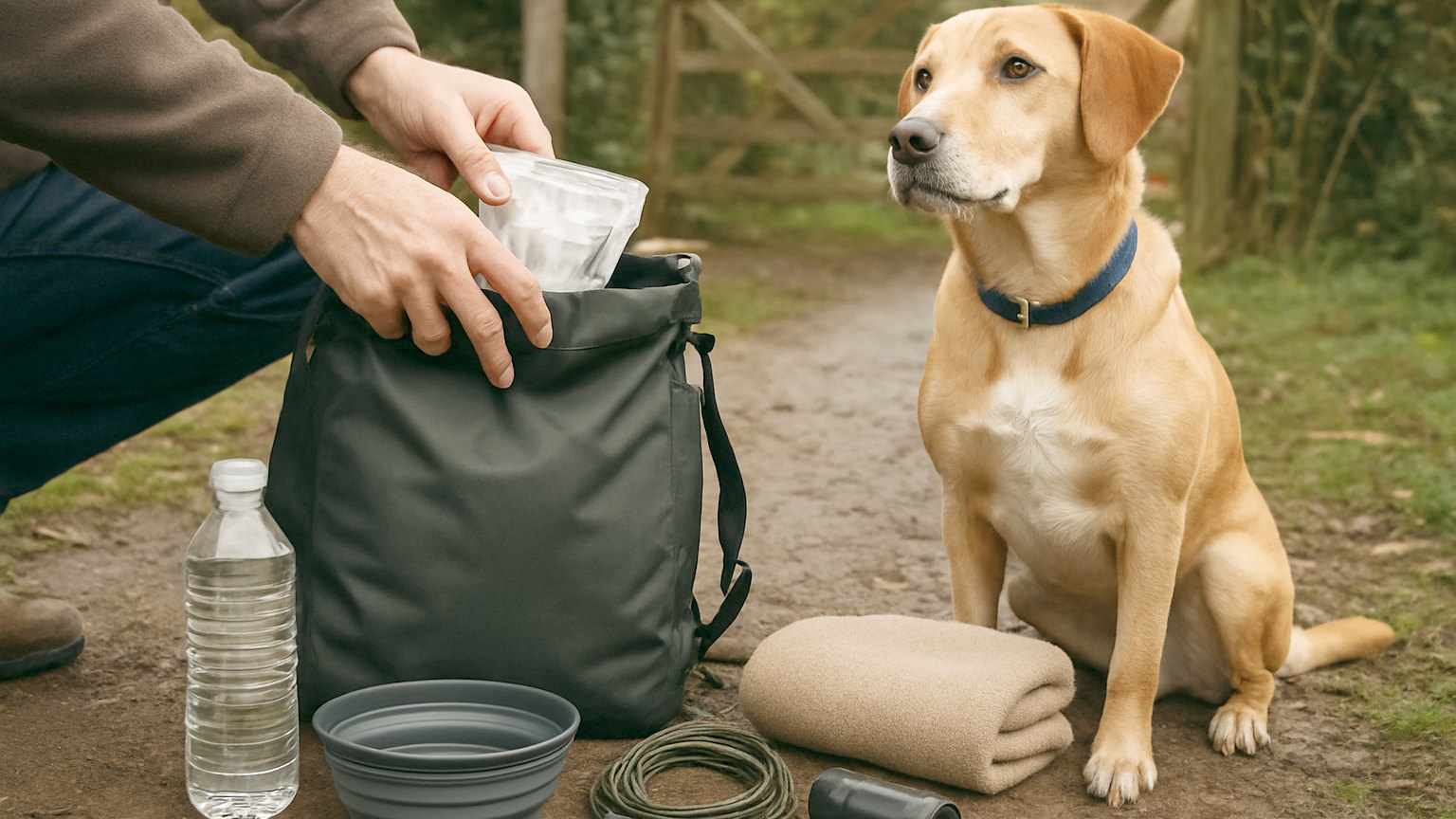
Food for several days and a means of serving it, water and a bowl, any medication, a lead and a spare, waste bags or litter and a tray, a blanket or bed that smells of home, and a favourite toy. Add copies of vaccination records and a photograph of you with the animal, which proves ownership if you become separated. Keep it beside the household grab bag so that both leave together.
Why does the microchip matter so much?
Because separation is the most likely outcome for a pet in a chaotic situation, and a microchip is what reunites them. Microchipping is a legal requirement for dogs and, since 2024, for cats in England, and the crucial detail is that the registered contact details must be current. An enormous number of chips are registered to old addresses and dead phone numbers. Check yours today, and add a collar tag with a mobile number as a faster route.
What if you cannot take them?
Leave them the best chance rather than confined. If evacuation is immediate and the animals cannot come, leave them loose inside the house rather than shut in a room or a crate, with access to water in multiple containers and food. Leave a note on the door stating what animals are inside and where, which fire and rescue services and animal welfare organisations act on. Never leave an animal tethered outside.
What about livestock and horses?
They need their own plan, made well in advance, because moving them takes transport, time and somewhere to go. Identify higher ground for flood risk, arrange transport before you need it, and know which neighbours have trailers. Flooding in particular gives limited warning, and horses left in a low lying field are a recurring and avoidable tragedy.
How do animals behave in an emergency?
Unpredictably, including animals that are normally calm. Frightened cats hide somewhere inaccessible and frightened dogs bolt. Practise getting each animal into a carrier so it is not a novel struggle, know their hiding places, and secure them early rather than when you are ready to leave. Keeping them in a carrier or on a lead throughout an evacuation is safer for everyone including them.
Are pets covered by insurance for this?
Sometimes, and it is worth checking rather than assuming. Some pet insurance policies include emergency boarding cover if the owner is hospitalised, and some home insurance includes alternative accommodation that may or may not extend to animals. Read the policy wording before you need it, and if boarding cover is not included, price it locally so that the cost is a known quantity rather than a shock at a difficult moment.
Arrange two places they could go, keep a carrier and a pet bag ready, and check the microchip details are current today.