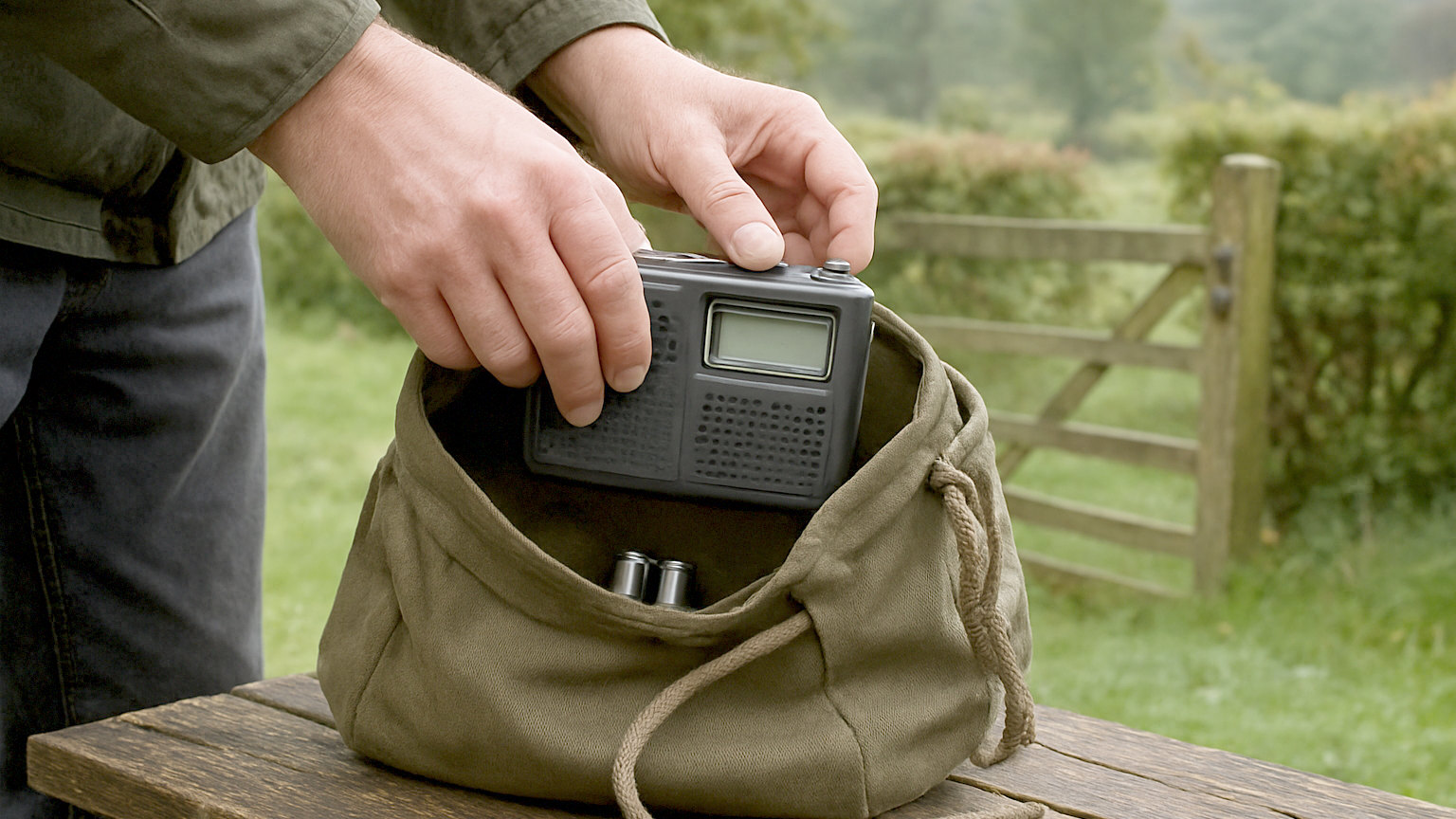
A radio feels like a relic until the evening when the power is out, the mobile network is congested, the router is dead and nobody in the house has any idea what is happening or how long it will last.
Why does radio keep working?
Because the resilience sits at the transmitter rather than with you. Broadcast transmitters have substantial backup power and are treated as critical national infrastructure, and the signal reaches a simple receiver that needs only batteries. Everything else you rely on for information requires a working router, a powered mobile mast, or a charged device with data, and those fail locally and early.
What will it actually tell you?
Local BBC radio is the traditional and still the primary channel for emergency information in Britain, carrying updates on flooding, road closures, school closures, power restoration, rest centre locations and official instructions. During significant incidents, stations carry announcements from emergency services and local authorities. National stations cover wider events. The value is not only information but the reassurance of knowing something is being done.
- Choose a set covering FM as well as DAB
- Wind up and solar models need no batteries at all
- Store spare batteries alongside, not inside
- Write your local station frequency on the radio itself
- Test it twice a year with the rest of the kit
- Combined torch, radio and power bank units are good value
Should you get DAB or FM?
Both, and FM matters more than people assume. DAB offers better choice and clarity, and it consumes more power and drops out entirely at the edge of coverage rather than degrading gracefully. FM continues to work weakly at long range, which is exactly what you want in a disruption. A set covering both, with FM as the fallback, is the sensible choice, and analogue FM remains widely available across the United Kingdom.
What about wind up models?
They remove the battery problem entirely, which is their main argument. A minute of winding typically gives a useful period of listening, and most also include a torch, a USB output for charging a phone, and often solar charging. They are the single most useful multi purpose item in a household kit for the money, and they are worth testing occasionally since the mechanisms can stiffen if never used.
Can a car radio do the job?
Yes, and with caveats. A car provides a good radio, a charging point and warmth, which makes it a genuinely useful resource during an outage. Never run the engine in a garage or any enclosed space because of carbon monoxide, and be mindful that idling to charge devices consumes fuel you may want for other purposes. Treat it as a supplement to a household radio rather than a replacement.
Why not just use a phone?
Because the phone is doing several jobs already and its battery is finite. Streaming radio over mobile data consumes power and depends on a network that may be congested or down. Some phones include an FM receiver that works without data, which is worth checking for. A separate radio preserves your phone battery for calls, texts and emergency alerts, which are the things only it can do.
Where should it live?
At the front of the emergency kit, with the frequency of your local station written on it. In an outage nobody wants to scan the dial in the dark trying to find something useful. A note with two or three frequencies taped to the back takes seconds to prepare and saves fumbling later.
What should you listen for?
Practical detail rather than general coverage. Useful broadcasts give road closures, school closures, which areas have lost supply, estimated restoration times, rest centre locations and any instruction from emergency services. Bulletins tend to be at the top of the hour with rolling updates between, so a set left on quietly at low volume catches them without draining batteries as fast as continuous attentive listening would suggest.
Buy a wind up set covering FM and DAB, write your local frequencies on it, and test it when you test the smoke alarms.