Lighting is the first thing you need in a power cut and the easiest to get right. It is also where a small amount of thought produces a disproportionate improvement over the usual arrangement of one dying torch in a kitchen drawer.
Why are head torches better?
Because they leave both hands free, which matters as soon as you are carrying something, cooking, changing a fuse, dealing with children or helping someone. A handheld torch occupies a hand permanently and gets put down and lost. Head torches are cheap, light and available everywhere, and a household with one per person is far better equipped than one with a single large lantern.
What should you look for?
LED output, multiple brightness settings, and a red light mode. Multiple settings matter because a low setting runs many times longer, and the low setting is adequate for most household tasks. Red light preserves night vision and is far less disruptive when someone is trying to sleep. Water resistance is worth having, since power cuts and storms tend to arrive together.
- One head torch per person, plus handheld torches
- A torch in every bedroom and one by the fuse box
- A lantern or two for lighting a room rather than a beam
- Spare batteries in every size you use
- A wind up or solar torch as a backstop
- Avoid candles as a primary light source
Why are candles a bad idea?
Because they are a significant fire risk in exactly the circumstances where a fire is hardest to deal with. Fire services report a rise in house fires during power cuts, and candles are a leading cause. In a dark house with children, pets, unfamiliar movement and possibly no working alarms if they are mains powered, an open flame is a poor trade for a light that is dimmer than a five pound torch. Keep a few for atmosphere and do not rely on them.
Which batteries should you store?
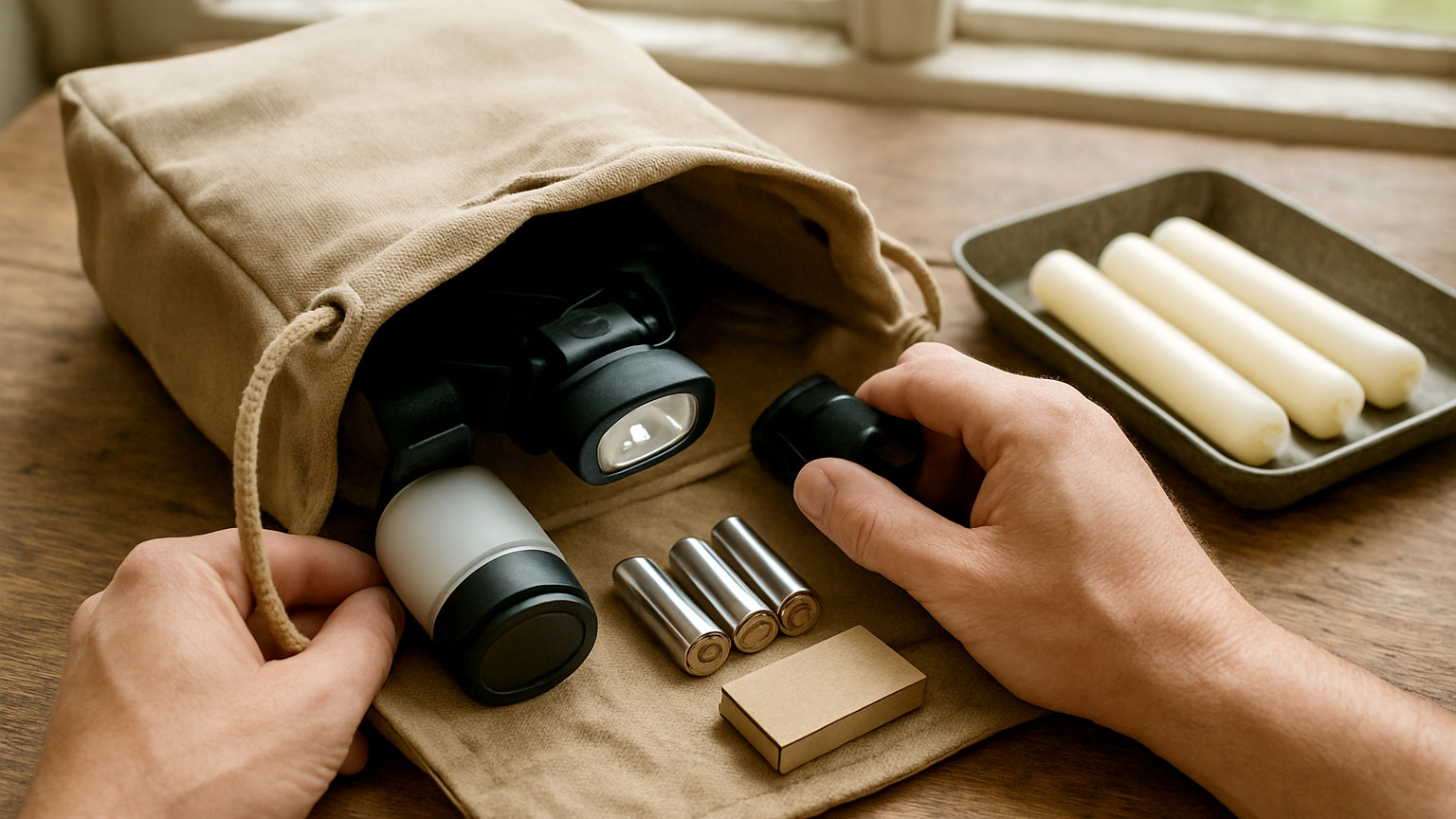
Lithium for long term storage and alkaline for routine use. Lithium cells hold their charge for a decade or more, perform far better in the cold, and do not leak, which makes them the sensible choice for anything sitting in a kit unused. Alkaline batteries are cheaper and leak over time, so remove them from stored devices and keep them alongside rather than inside. Rechargeables are excellent for daily use and hold charge poorly in storage.
What about lanterns?
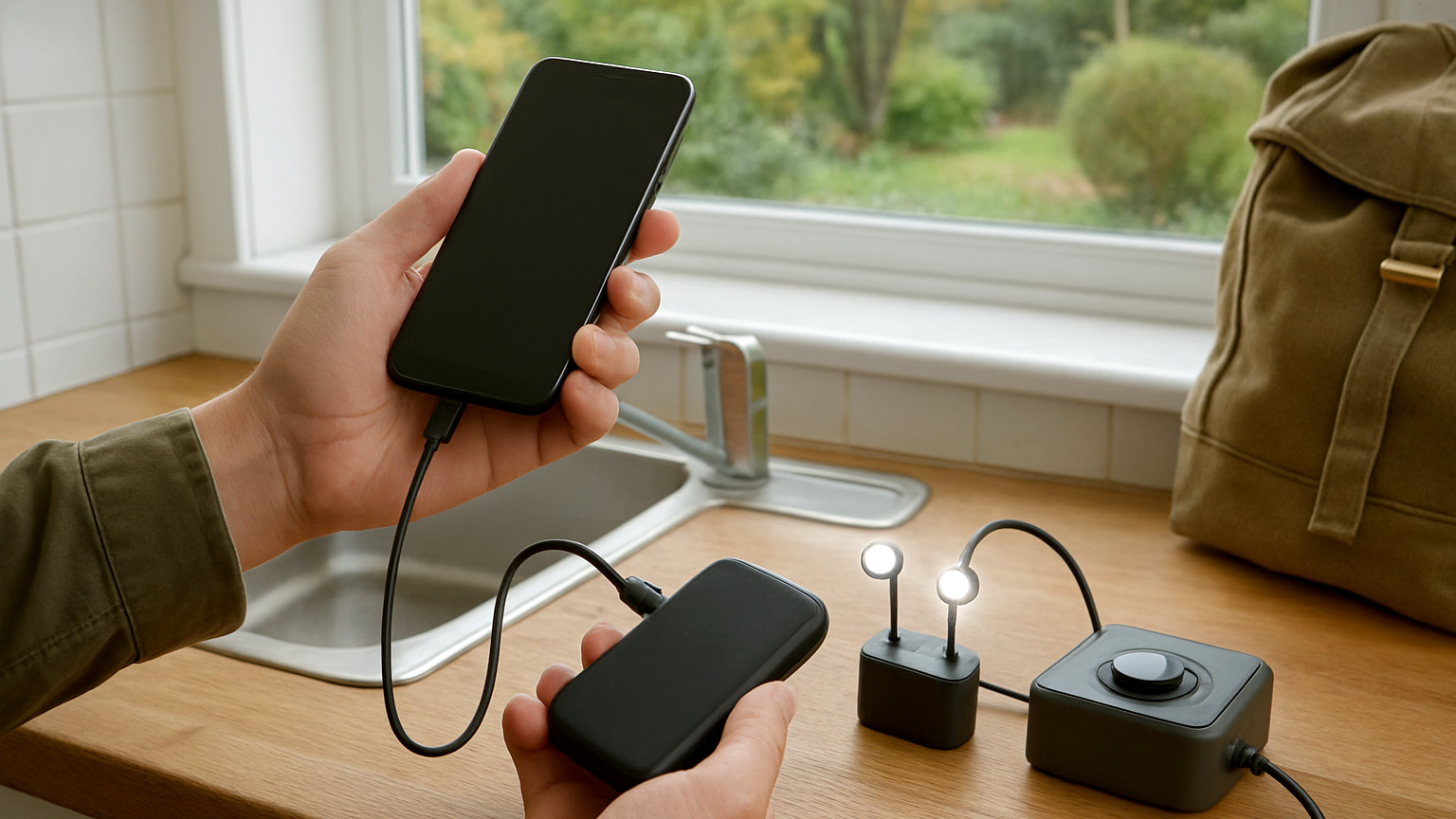
Worth having one or two, because a beam is poor at lighting a room. A battery lantern placed on a table makes a kitchen usable in a way a torch does not, and it reduces the sense of siege that a household in the dark otherwise develops. Some double as power banks. Rechargeable models should be topped up as part of your routine kit check.
Are wind up torches any good?
As a backstop rather than a primary. They produce modest light for a short period per winding, which is tedious for sustained use and invaluable when everything else has failed. A combined wind up torch and radio is a sensible single purchase, since it covers both light and information with no batteries at all.
How do you keep it all working?
Check it twice a year, alongside testing smoke alarms when the clocks change. Turn on every torch, replace anything weak, top up rechargeable devices, and confirm you have spares in the right sizes. Torches fail silently in drawers, and a kit check that takes ten minutes prevents the discovery that all three torches are dead at the moment you need them.
What about lighting for children?
Give each child their own, which does more for their state of mind than almost anything else in the kit. A small head torch or a colourful hand torch that belongs to them turns a frightening dark house into something closer to an adventure, and it means nobody is left in the dark while an adult carries the only light to another room. Cheap ones are fine for this, and letting children test theirs during the kit check keeps the whole exercise light.
A head torch each, a torch in every bedroom, a lantern for the kitchen, lithium spares, and no reliance on candles.