A well assembled kit stored badly is close to useless. The most common storage error is putting everything in the loft, which is the one place you cannot reach in the dark, in a hurry, or with a ladder you can no longer see.
What makes a good location?
Reachable in seconds, in darkness, by anyone in the household, and near an exit. A cupboard under the stairs, a hall cupboard or a utility room all work well. The kit should not require moving other things, climbing, or unlocking anything. If getting to it involves a ladder or shifting furniture, it will not happen at the moment it matters.
Why is the loft a bad choice?
Because it fails on every count. It is inaccessible in darkness, requires a ladder, is dangerous to enter in a hurry, and experiences the widest temperature swings in the house. Heat degrades batteries, medicines and food, and cold affects others. Lofts also flood from roof damage in exactly the storms that cause power cuts. Use it for genuine long term surplus and nothing you might need quickly.
- Near an exit, reachable in seconds and in the dark
- Known to everyone in the household including children
- Split across two or three locations rather than one
- Cool, dry and stable in temperature
- Off bare concrete floors, on a shelf or pallet
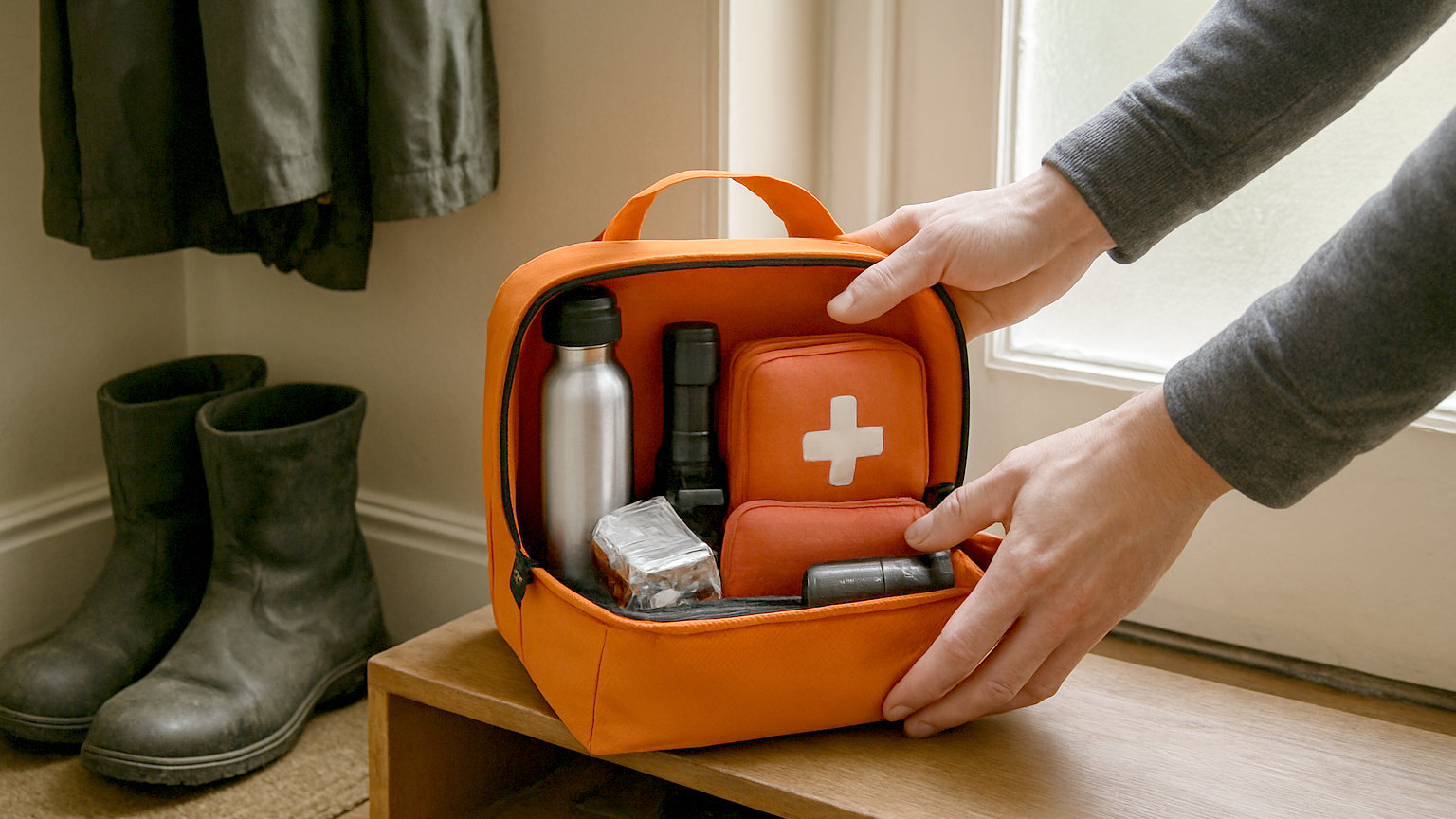
- Grab bag by the door, kept separate from the home store
Should you split the kit?
Yes, into three broad parts. A grab bag by the door for leaving quickly. A main home store for sheltering in place. And distributed items: a torch in every bedroom, a small kit in each car, and cash in more than one place. Splitting means a single problem, whether a fire in one room or an inaccessible cupboard, does not remove everything at once.
What conditions damage supplies?
Heat, damp and temperature swings, in that order. Garages and sheds are convenient and often damp, which rusts tins, softens cardboard and encourages mould. Concrete floors transfer cold and moisture, so keep boxes on a shelf or pallet. Sealed plastic boxes with lids protect against damp, dust and rodents, and are worth the modest cost for anything stored outside the house.
How should it be organised?
So that the most urgent items come first. Torch and radio at the top or in a clearly marked outer pocket, since those are needed within seconds of a power cut. Group items by purpose in labelled clear boxes rather than one large bin, so that nobody has to unpack everything to find a plaster. Label the outside of each box with its contents and the date it was last checked.
Who needs to know where it is?
Everyone, including children and anyone who stays regularly. A kit only one person can locate is a kit that fails whenever that person is out. Walk through it with the household during the twice yearly check, so that its location and contents are familiar rather than something to discover under pressure.
What about flats and small homes?
The same principles at smaller scale. Under the bed is a good option for water, since it is cool, dark and out of the way. A single labelled box in a hall cupboard covers the essentials. In a flat, knowing the building fire procedure and where the communal exits are matters as much as the kit, and any evacuation plan must assume the lift is unavailable.
What about renting or shared housing?
The principles hold with less storage to work with. In a shared house, keep a personal kit in your own room rather than relying on communal space, since anything shared tends to be used and not replaced. In rented property, find out where the stopcock and consumer unit are when you move in and note the letting agent emergency number, because those are the details tenants most often lack and most need during a leak or an electrical fault.
Keep it low, near a door, split across a few places, in sealed boxes off the floor, and make sure everyone can find it in the dark.