The best emergency food store is mostly food you already eat, bought a little ahead and rotated through the cupboard. It costs almost nothing extra, never goes to waste, and avoids the common outcome of a sealed bucket opened in a decade and immediately regretted.
What should the food actually do?
Provide calories without needing power. A power cut removes the cooker, the microwave, the kettle and the fridge simultaneously, so the store needs to work cold. Plan the first day around food requiring no preparation at all, and the following days around things that can be warmed on a camping stove or a gas hob lit with a match.
What are the useful items?
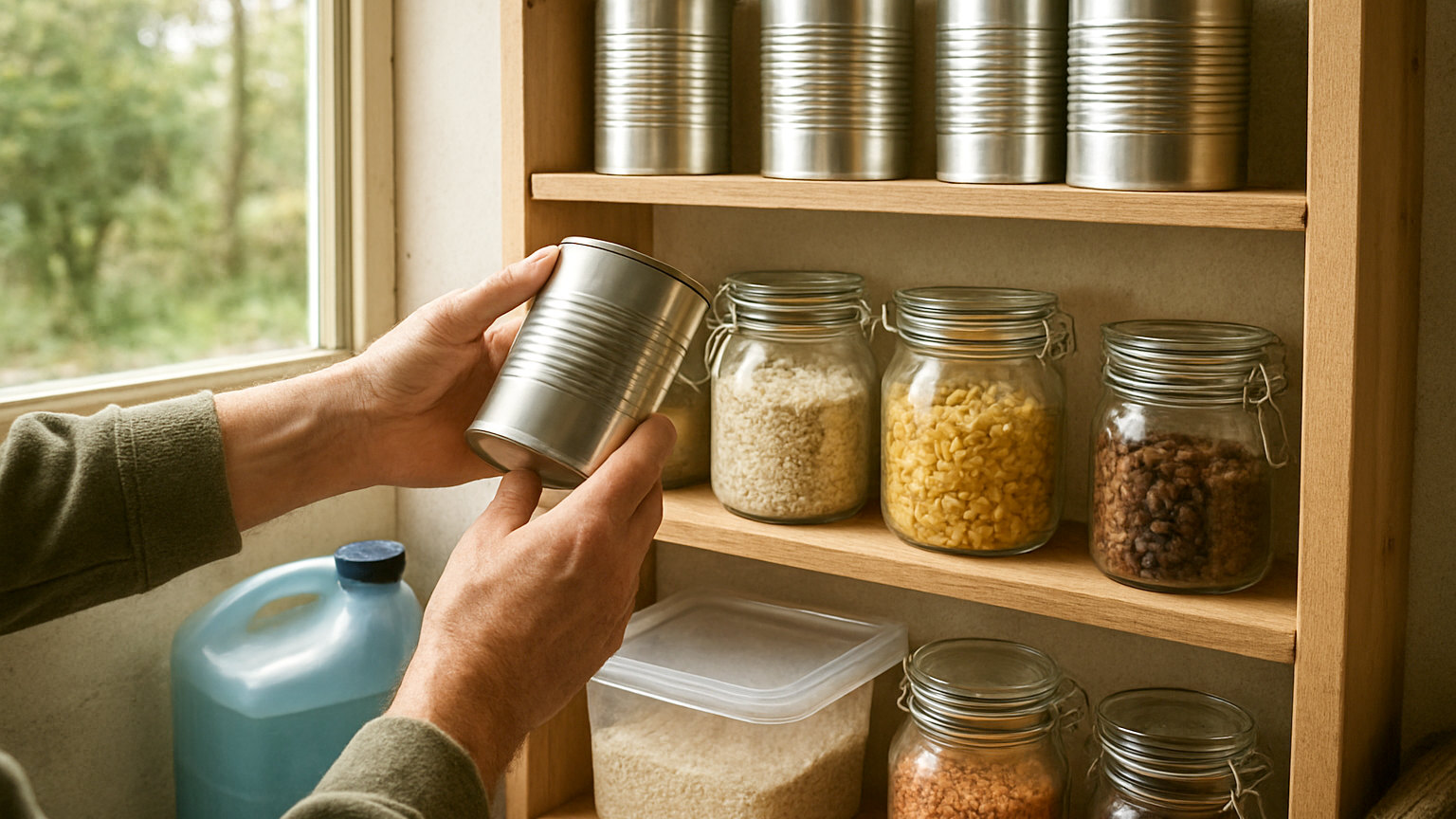
Tinned fish, meat, beans, vegetables, soup and fruit. Long life milk and juice. Cereal, oats and biscuits. Peanut butter, jam and honey. Dried pasta, rice and noodles for when heating is possible. Nuts, dried fruit and chocolate for concentrated energy. Crackers and long life bread products. Instant coffee and tea bags, which matter more to morale than their nutritional content suggests.
- Tinned protein and vegetables, plus a manual tin opener
- Long life milk and drinks
- Cereal, oats, biscuits and crackers
- Nuts, dried fruit and chocolate for energy and morale
- Dried staples for when heating is available
- Anything for babies, allergies or restricted diets
How many calories should you plan for?
Around two thousand per adult per day as a working figure, more for anyone active or in the cold. Being cold raises energy requirements noticeably, and a house without heating in January is cold. Aim for a store that would genuinely feed the household for a week rather than one that provides a few token meals, and remember that people eat more when anxious and bored, not less.
How do you rotate it?
By actually eating it. Keep the emergency items in the normal cupboard rather than separately, put new purchases behind older ones, and use the oldest first. This is the same first in first out approach shops use and it means nothing expires unnoticed. A store kept apart and untouched is a store that quietly goes out of date, which is the most common failure with emergency food.
What about specialist emergency rations?
They have a place and it is narrower than the marketing suggests. Freeze dried meals and long life ration packs store for decades and are genuinely useful for a grab bag, where weight and shelf life matter. For a home store they are expensive, need water and heat to prepare, and are food nobody will choose to eat, which means they never get rotated. A modest quantity as a backstop is reasonable.
What about children and special diets?
Plan for them specifically, because generic advice does not cover them. Babies need formula, ideally including ready to feed cartons that require no water. Anyone with coeliac disease, a nut allergy, diabetes or another dietary requirement needs their own provision, since a general store will not serve them. Familiar food matters more for children than adults, so include things they actually like.
How should you cook it?
Outdoors or with proper ventilation. A camping stove, a barbecue or a gas hob lit with a match all work, and none of them should be used in an unventilated room. Carbon monoxide from cooking equipment brought indoors kills people every winter. Planning a first day of food needing no cooking removes the temptation entirely.
What can you eat from the fridge and freezer first?
Work outward from the most perishable. Use fridge contents in the first few hours while they are still safely cold, then move to freezer contents as they begin to thaw, keeping the doors shut between each visit. A full freezer holds a safe temperature for roughly twenty four to forty eight hours, so a large amount of food remains usable well into a long outage. Eating in this order means the store in the cupboard is still intact when you actually need it.
Buy a little extra of what you already eat, keep it in the normal cupboard, rotate it, and make sure the first day needs no cooking at all.