Ready made emergency kits are appealing because they promise to solve the problem in one purchase. They are usually poor value, and understanding why makes it easier to assemble something better.
What is the underlying problem?
They are sold on item count. A kit advertising over a hundred pieces sounds comprehensive, and reaching that number requires padding with cheap high quantity items such as individual plasters, safety pins and single use wipes. The items that would genuinely help are expensive, so they are either omitted or included in a low quality version. The photograph looks impressive and the contents do not perform.
Which items are typically inadequate?
The torch, almost always, being dim, fragile and supplied with batteries already fitted and slowly leaking. The radio, where included, is often unable to hold a station. Water pouches provide a token amount well below any sensible daily requirement. Food is minimal and unfamiliar. Fire lighting equipment tends to be a tiny ferro rod with no tinder, difficult to use with cold hands and effectively useless in the wet.
- Item count inflated with cheap consumables
- Torches too dim and fragile to rely on
- Water provision far below daily requirements
- Food nobody would choose to eat, so never rotated
- No provision for prescription medication
- Nothing tailored to your household composition
What can no boxed kit include?
The parts specific to you, which are the parts that matter most. Prescription medication. Formula and nappies for a baby. Food for someone coeliac or allergic. Pet supplies. Copies of your documents. Your written household plan. Cash. Spare glasses and hearing aid batteries. A kit that ignores all of this is addressing the generic household rather than yours, and no household is generic.
Are they ever worth buying?
Occasionally, as a starting point. A cheap kit can provide a container, some dressings and a few basics that you then upgrade item by item, which suits someone who would otherwise never begin. Some workplace and vehicle kits are perfectly reasonable for their narrow purpose. The mistake is treating the purchase as completion rather than as a first step.
How does self assembly compare on cost?
Favourably, usually by a wide margin. Buying ordinary items from supermarkets and discount shops typically produces a better kit for less than the price of a mid range boxed one. The saving comes from not paying for packaging, branding and the survival premium applied to otherwise ordinary goods. It also spreads the cost across several weeks rather than one payment.
What about the survival branding premium?
It is substantial and rarely justified. Identical items marketed for preparedness routinely cost several times the price of the ordinary version. Ration packs cost many times what tinned food does per calorie. Water pouches cost far more than bottled water. Emergency blankets are the same foil sold at very different prices. Buying from ordinary retailers avoids nearly all of this.
What should you do if you already own one?
Open it and audit it, which most owners never do. Test the torch and the radio, check every date, and identify what you would actually rely on. Then upgrade the weak items and add the personal ones it cannot have included. That converts a disappointing purchase into a functioning kit for a modest additional spend.
Are workplace and vehicle kits different?
Somewhat, because their scope is narrower and better defined. A first aid kit meeting workplace requirements is designed against a standard and is generally competent at what it covers. Vehicle kits containing a warning triangle, hi vis and jump leads are similarly fit for purpose. The problems arise with kits marketed as general emergency or survival solutions, where the scope is vague and the item count becomes the selling point.
What does a good kit look like instead?
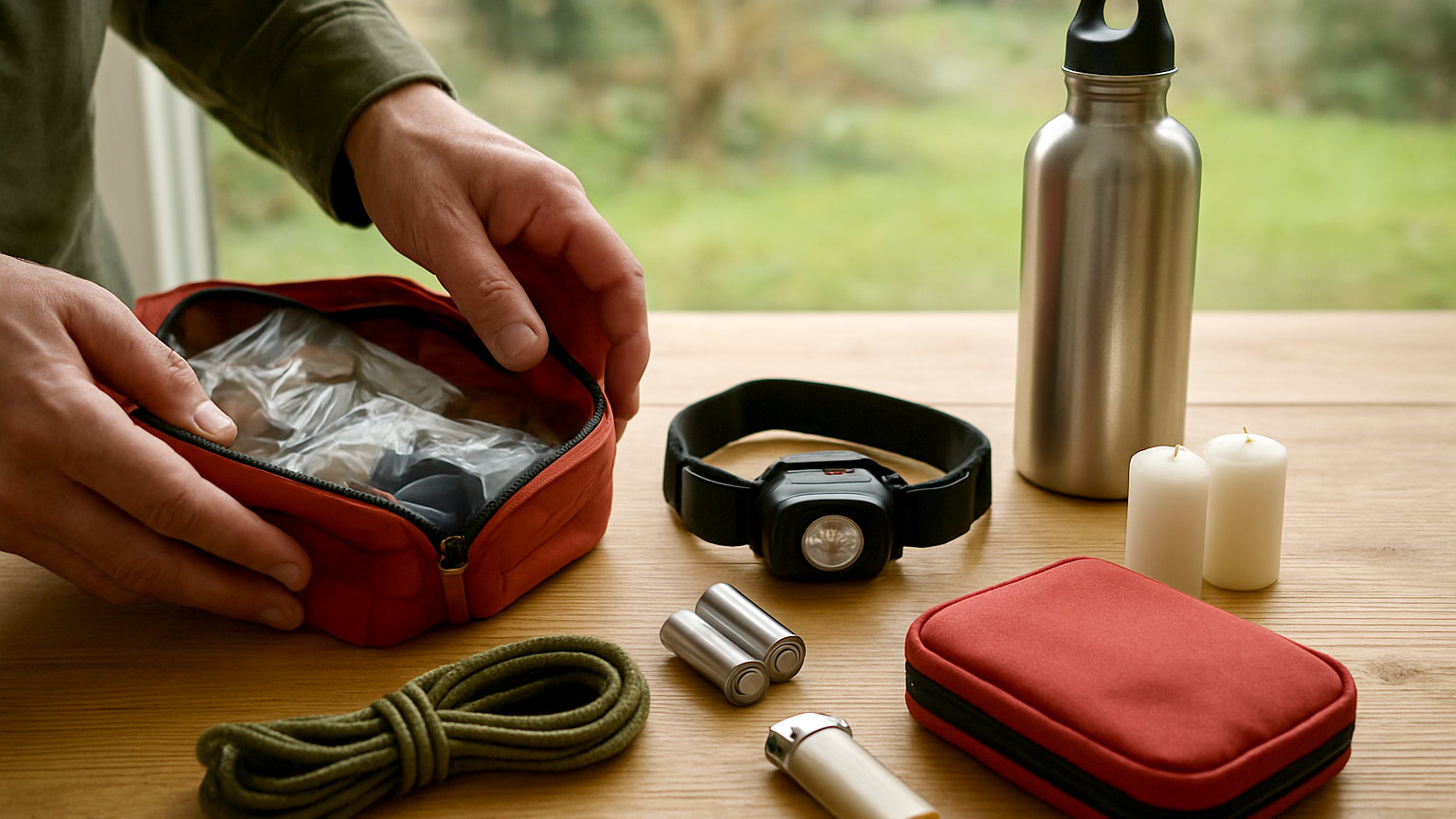
Fewer items, better chosen, and roughly half of them personal to you. Two decent head torches rather than four poor ones. Real food from a supermarket rather than sachets. Actual bottled water in useful quantity rather than pouches. Your medication, your documents, your cash and your plan. A kit assembled this way looks unimpressive laid out on a table and performs considerably better on the night the power goes.
Buy ordinary items from ordinary shops, add the parts specific to your household, and treat any boxed kit as a container rather than an answer.