A household first aid kit serves a different purpose from one carried in a rucksack. It handles the everyday, holds enough of each item to matter, and, crucially, sits alongside a supply of the medication people in the house actually depend on.
What should the basic kit contain?
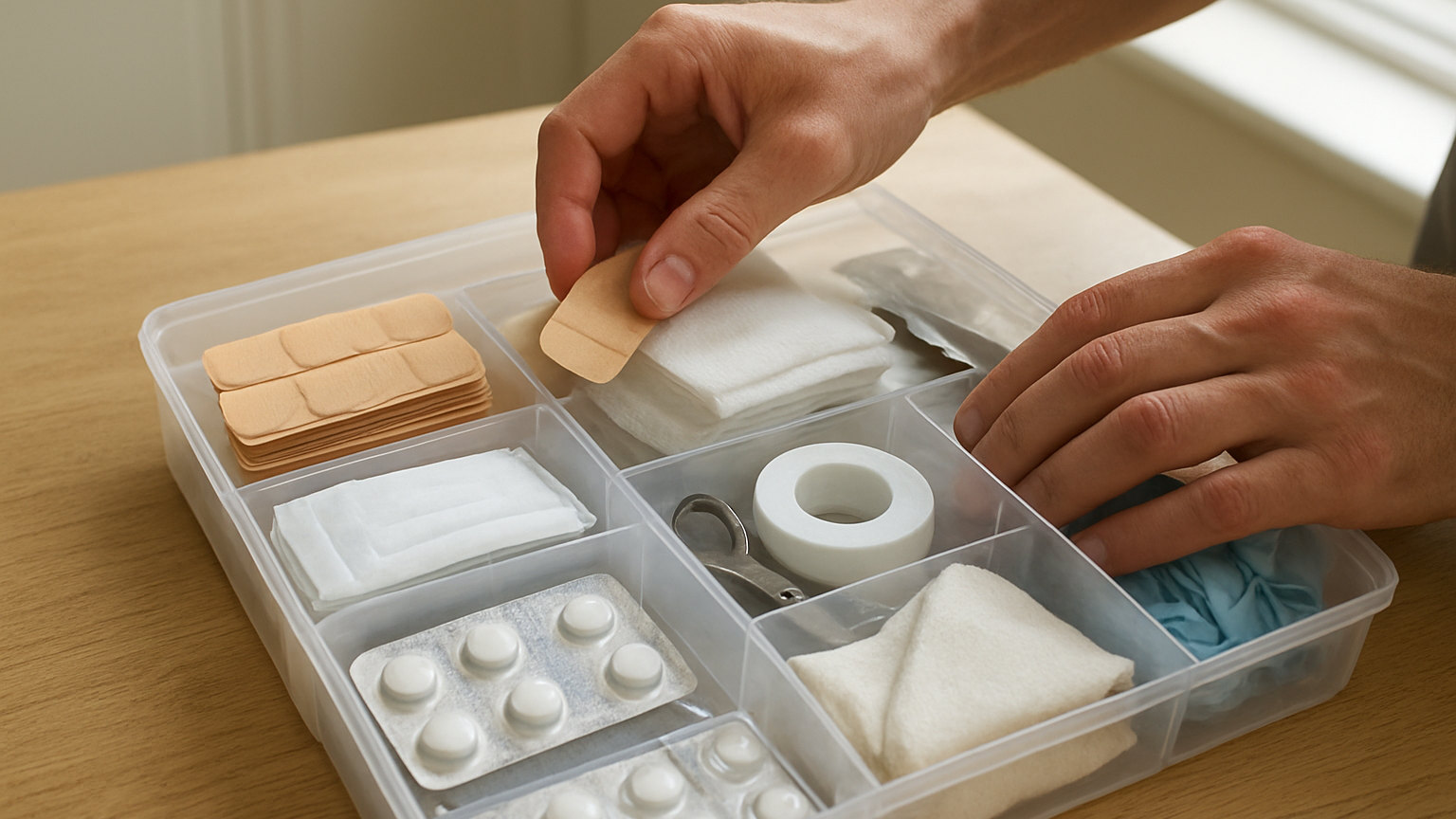
Plasters in several sizes and generous quantity. Sterile dressings and gauze. Roller bandages and a triangular bandage. Adhesive tape. Antiseptic wipes. Scissors and tweezers. Disposable gloves. A digital thermometer. Eye wash. Burn gel or cling film for covering burns. A resuscitation face shield. This handles the overwhelming majority of household incidents without needing anything specialised.
What over the counter medicines are worth keeping?
Paracetamol and ibuprofen in both adult and child formulations. Antihistamines for allergic reactions and hay fever. Rehydration sachets, which matter more than people expect during any illness involving vomiting or diarrhoea. Indigestion remedies. Antiseptic cream. Keep them together, check the dates annually, and note that liquid medicines for children have short shelf lives once opened.
- Plasters, dressings, bandages and tape in useful quantities
- Antiseptic wipes, gloves, scissors and tweezers
- Digital thermometer and eye wash
- Paracetamol and ibuprofen, adult and child
- Antihistamines and rehydration sachets
- A written list of every household prescription
Why is prescription medication the priority?
Because it is the part that cannot be improvised or bought in a shop. Anyone with asthma, epilepsy, diabetes, a heart condition or a serious allergy depends on medication that a first aid kit cannot substitute for. Ordering repeat prescriptions promptly rather than at the last moment naturally maintains a small buffer, and keeping a written list of everything with doses and the prescribing surgery is invaluable if you have to leave or if someone else needs to help.
How does a home kit differ from a travel one?
In volume and in emphasis. A rucksack kit is built around weight and around bleeding control far from help. A home kit can hold quantity, and its most common use is minor: cuts, burns, splinters, headaches and childhood scrapes. Having plenty of plasters and dressings is more useful at home than carrying a tourniquet, though a household with power tools, a workshop or a wood burner has a reasonable case for a trauma dressing too.
Where should it live?
Somewhere everyone knows, reachable without a stool, and not in a bathroom. Bathrooms are humid and warm, which degrades both dressings and medicines faster than a cool dry cupboard. Keep medicines out of reach of children, ideally locked, and keep the dressings and instruments accessible so that reaching them in a hurry is not a problem.
How often should you check it?
Twice a year, with the rest of the emergency kit, and after every use. The most common state for a household kit is missing the item you need because it was used and never replaced. Checking also catches expired medicines, dried out adhesive and split sterile packaging, all of which happen silently over a couple of years.
What is worth doing beyond buying a kit?
A first aid course, which does more for a household than any quantity of supplies. A few hours covering CPR, choking, bleeding and recognising a seriously ill child changes what you can actually do. Many organisations run short courses, and some are free. Equipment without training is only half of it, and the training half is the part that saves lives.
Should you keep a second kit somewhere?
Yes, and the obvious places are the car and wherever the household does its riskiest activity. A kitchen kit handles most incidents, and a workshop, garage or garden shed is where burns, cuts and eye injuries actually happen. Keeping a small kit at the point of risk saves a trip through the house while bleeding, and it means the main kit stays complete rather than being raided item by item and never replaced.
Stock the ordinary items generously, keep the prescriptions topped up, store it cool and accessible, and book a course.