Broadcast radio is the most resilient information channel available to a household, and its value depends entirely on knowing where to tune before you need it. Scanning a dial in the dark during an outage is a poor use of the moment.
Which station matters most?
Your BBC local radio station. These carry emergency information during incidents, including flooding, road closures, school closures, power restoration and rest centre locations, and they have a long standing role in emergency broadcasting arrangements with local authorities and emergency services. Commercial local stations also carry information and vary in how much they cover.
How do you find the frequency?
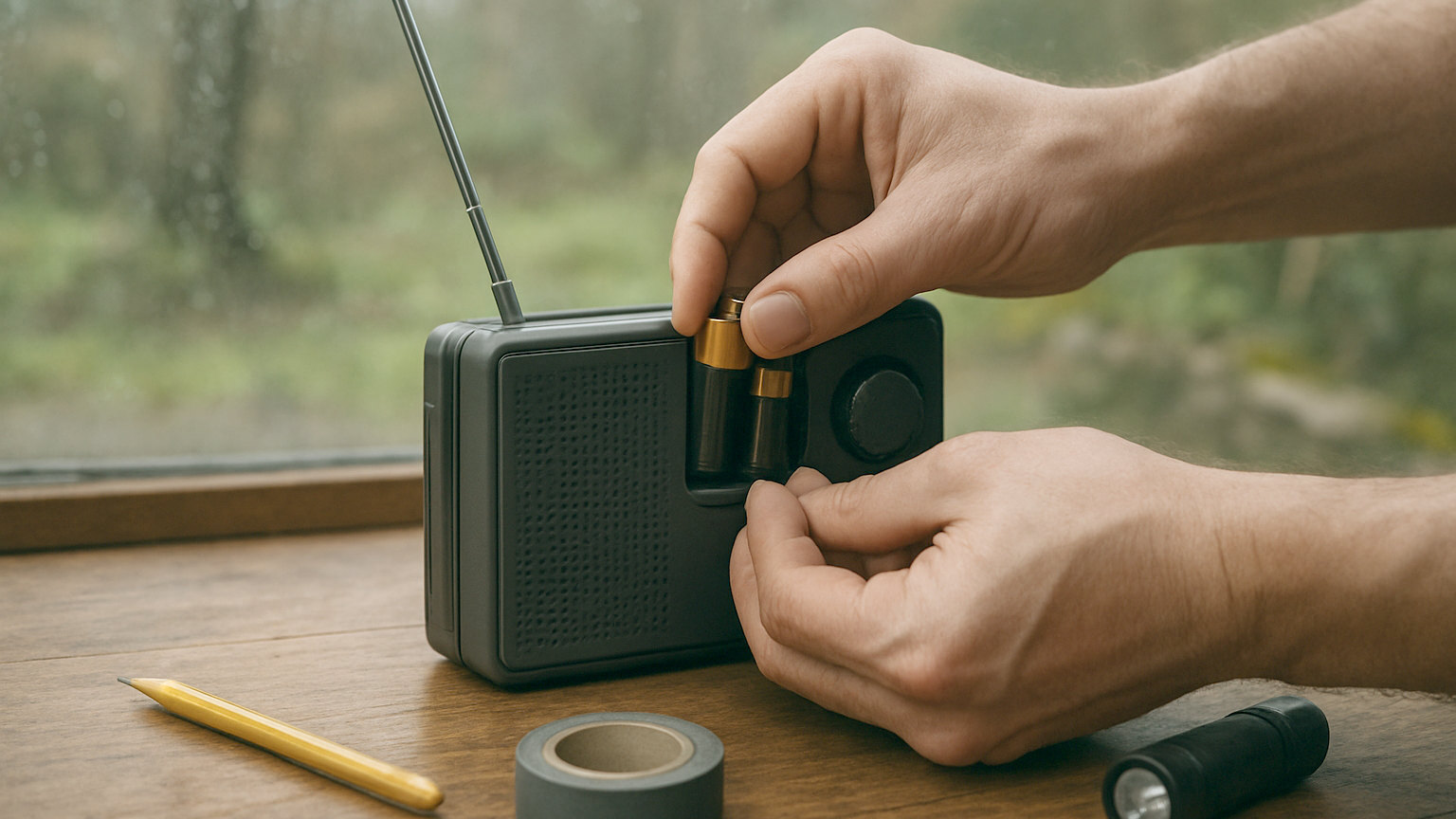
Look it up now and write it down. Your local BBC station frequency is on the station website and in radio listings, and it differs by area and by transmitter. Write it directly onto the radio with a marker or on a label, along with one or two alternatives. This takes a minute and removes the problem entirely.
- Write your local BBC frequency on the radio itself
- Note a second local station as a backup
- Include a national station for wider events
- Keep an FM capable set, not DAB only
- Test the radio twice a year with the rest of the kit
- Note the frequency in the written household plan too
Why does FM still matter?
Because it degrades gracefully. Digital radio offers better clarity and more choice, and it drops out entirely at the edge of coverage rather than fading. FM continues to produce something usable at long range and in poor conditions, which is exactly what you want during a disruption. It also consumes less battery. A set covering both, with FM as the fallback, is the sensible choice.
What about national stations?
Worth noting for wider events. National networks carry information on anything affecting the country as a whole and provide continuity where local stations have limited hours. Long wave transmission has historically provided very wide coverage from a single transmitter, though the long term future of long wave broadcasting has been under review, so it is worth checking what is currently available rather than assuming.
How do broadcasters get emergency information?
Through established arrangements with local authorities, emergency services and agencies. Local Resilience Forums include media liaison in their planning, and broadcasters carry official announcements during significant incidents. This is why radio information is reliable in a way that social media is not: it comes through a verified route rather than being repeated by whoever heard it first.
What should you listen for?
Practical detail rather than general coverage. Road closures, school closures, which areas have lost supply, estimated restoration times, rest centre locations and any instruction from emergency services. Bulletins usually come at the top of the hour with rolling updates between, so a set left on quietly catches them without draining batteries as fast as attentive listening suggests.
What kind of radio should you have?
A wind up or battery set covering FM and DAB, ideally with a USB output for charging a phone. Wind up models remove the battery problem entirely and many include a torch and solar charging. Keep spare batteries alongside rather than inside, since alkaline cells leak in storage and ruin the device.
Can a car radio substitute?
Partly, and with care. A car provides a good radio, a charging point and warmth, which makes it genuinely useful during an outage. Never run the engine in a garage or any enclosed space because of carbon monoxide, and be mindful that idling consumes fuel you may want. Treat it as a supplement rather than a replacement for a household set.
What if you cannot find a signal?
Move the radio and extend the aerial fully, since reception indoors is frequently poor and a window sill or an upstairs room can transform it. FM aerials work best extended and vertical, while a wire aerial should be run out to its full length. If a station will not hold, try a neighbouring frequency for the same network, since local services are often carried on more than one transmitter with slightly different coverage.
Look up your local BBC frequency today, write it on the radio, keep an FM capable set, and test it when the clocks change.