Amateur radio is the only widely available way for a private individual to communicate over long distances with no infrastructure at all. It also requires a licence, an exam and a real investment of time, which makes it a genuine commitment rather than a purchase.
What can it actually do?
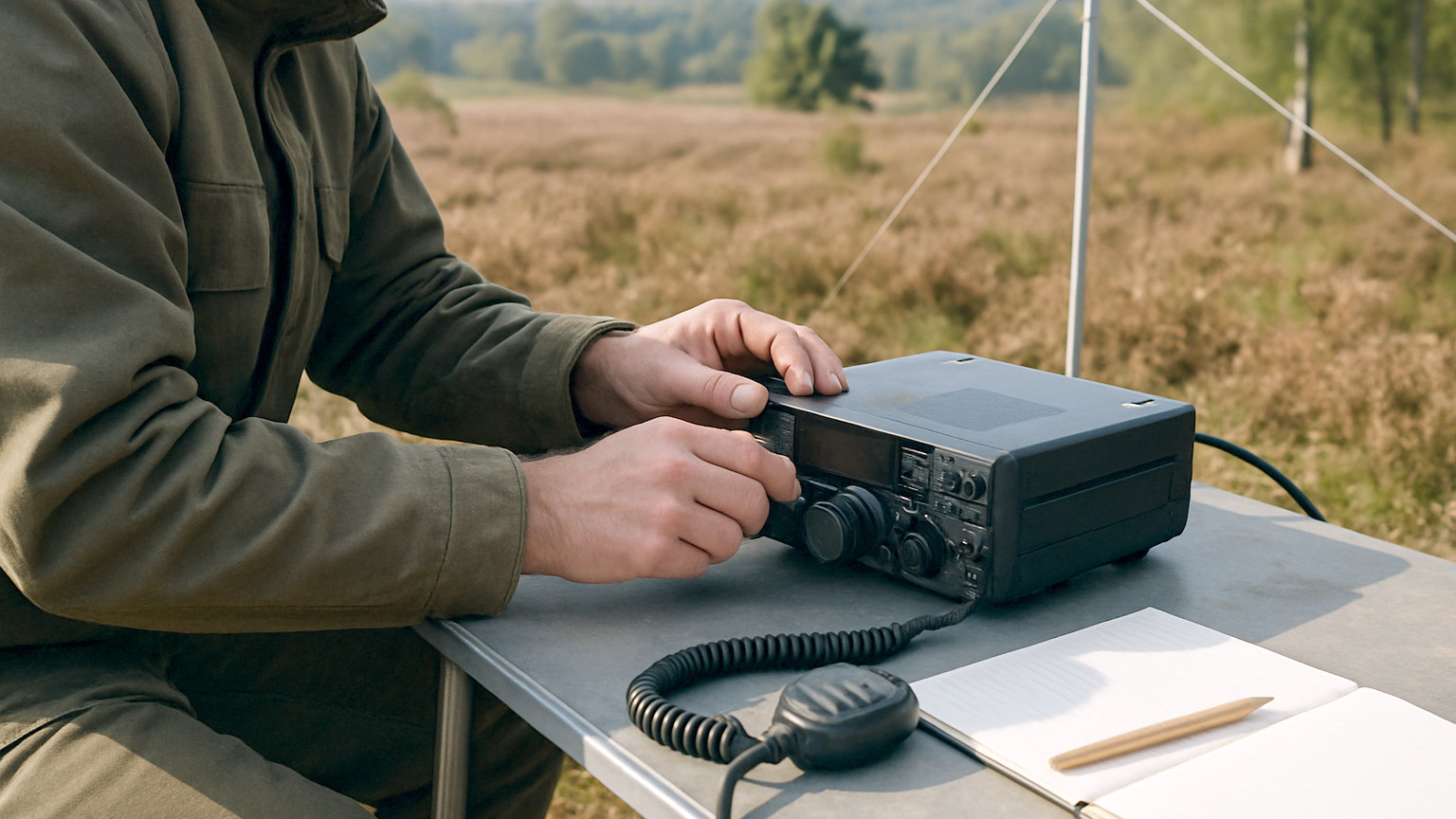
Communicate over distances from a few kilometres to, on the right bands and conditions, the other side of the world, entirely independently of any network, exchange or internet connection. Amateurs use repeaters, satellites and direct propagation, and the equipment can be run from batteries or solar. That independence is why amateur radio has a recognised role in emergency communications internationally.
Do you need a licence?
Yes. Transmitting on amateur frequencies in the United Kingdom requires a licence issued by Ofcom, obtained by passing an examination. The entry level is the Foundation licence, which covers basic theory, regulations and safe operating, and is achievable in a short course or through self study. Intermediate and Full licences follow, each allowing higher power and more privileges.
- A licence is required to transmit, obtained by examination
- The Foundation licence is the accessible entry point
- Receiving broadcasts requires no licence at all
- Local clubs run courses and provide equipment to try
- RAYNET provides volunteer emergency communications
- Equipment can be modest to begin with
How do you get started?
Through a local club, which is the route almost everyone takes. Clubs run Foundation courses, often over a weekend or a few evenings, provide equipment to try, and supply the experience that shortens the learning curve considerably. The Radio Society of Great Britain is the national body and maintains information on clubs, courses and examinations.
What is RAYNET?
The Radio Amateurs Emergency Network, a volunteer organisation providing communications support to emergency services, local authorities and other user services during incidents and at public events. Volunteers have supported responses to flooding and severe weather in Britain for decades. Joining requires a licence and a willingness to train, and it is the most direct way of turning the hobby into genuine emergency capability.
What can you do without a licence?
Listen, which requires nothing. A scanner or a software defined radio receiver lets you monitor amateur, aviation, marine and broadcast transmissions legally, and it is a good way of finding out whether the subject interests you before committing. You may not transmit, and you may not act on or disclose the content of transmissions not intended for you.
Is it worth it for preparedness alone?
Honestly, for most households, no. The time investment is substantial, the equipment needs practice, and the realistic British emergency is a power cut lasting a day. A battery radio, power banks and a written plan deliver far more preparedness per hour invested. Amateur radio is worth it if the hobby appeals in its own right, in which case the emergency capability is a genuine bonus.
Who should consider it seriously?
People in remote areas with poor mobile coverage. Anyone interested in the technical side for its own sake. People who want to volunteer, since RAYNET provides real service. And anyone in a community that has organised its own resilience arrangements, where having one or two licensed operators genuinely adds capability.
What does it cost?
Less than expected to start. The examination fee is modest, club membership is inexpensive, and a basic handheld transceiver costs little. Costs rise with ambition, particularly for antennas and higher frequency equipment. Many clubs let newcomers use club equipment initially, which removes the need to commit before knowing whether you enjoy it.
What can you receive with a scanner?
A good deal, legally, provided you do not act on or disclose what is not intended for you. Amateur transmissions, aviation, marine, weather broadcasts and shipping forecasts are all accessible with an inexpensive receiver or a software defined radio dongle. UK emergency services communications are encrypted and not receivable. Listening is a cheap way to find out whether the subject interests you before committing to an examination.
Worth it if the subject interests you, not the fastest route to preparedness, and RAYNET is the way to turn it into something useful.