Most households have no agreed protocol for contacting each other in an emergency, so everyone improvises simultaneously. Agreeing a short sequence in advance removes duplicated effort and the anxiety of not knowing whether silence means a problem.
What should the sequence be?
Something simple enough to remember under stress. A common arrangement is to text immediate family first, then text the out of area contact, then, if neither works within an agreed period, make your own way to the meeting point. Everyone follows the same order, so nobody is waiting for a call while someone else is waiting at a location.
Why does the order matter?
Because it prevents the situation where two people are each waiting for the other to make contact before acting. If everyone knows that failure to make contact within an hour means go to the meeting point, then silence stops being ambiguous. It becomes information rather than a cause for further delay.
- Agree a fixed order for who contacts whom
- Default to text rather than voice
- Set a time after which people act rather than wait
- Nominate one out of area relay everyone knows
- Agree meeting points that need no communication at all
- Make sure children know the sequence independently
What should the message actually say?
Short and factual, because brevity helps it send in congested conditions. Who you are, where you are, whether you are safe, and where you are going. Something like: safe, at work, heading to Grandmas, will text on arrival. Long messages are slower to send and no more useful. Agree this style in advance so nobody writes an essay.
How do children fit in?
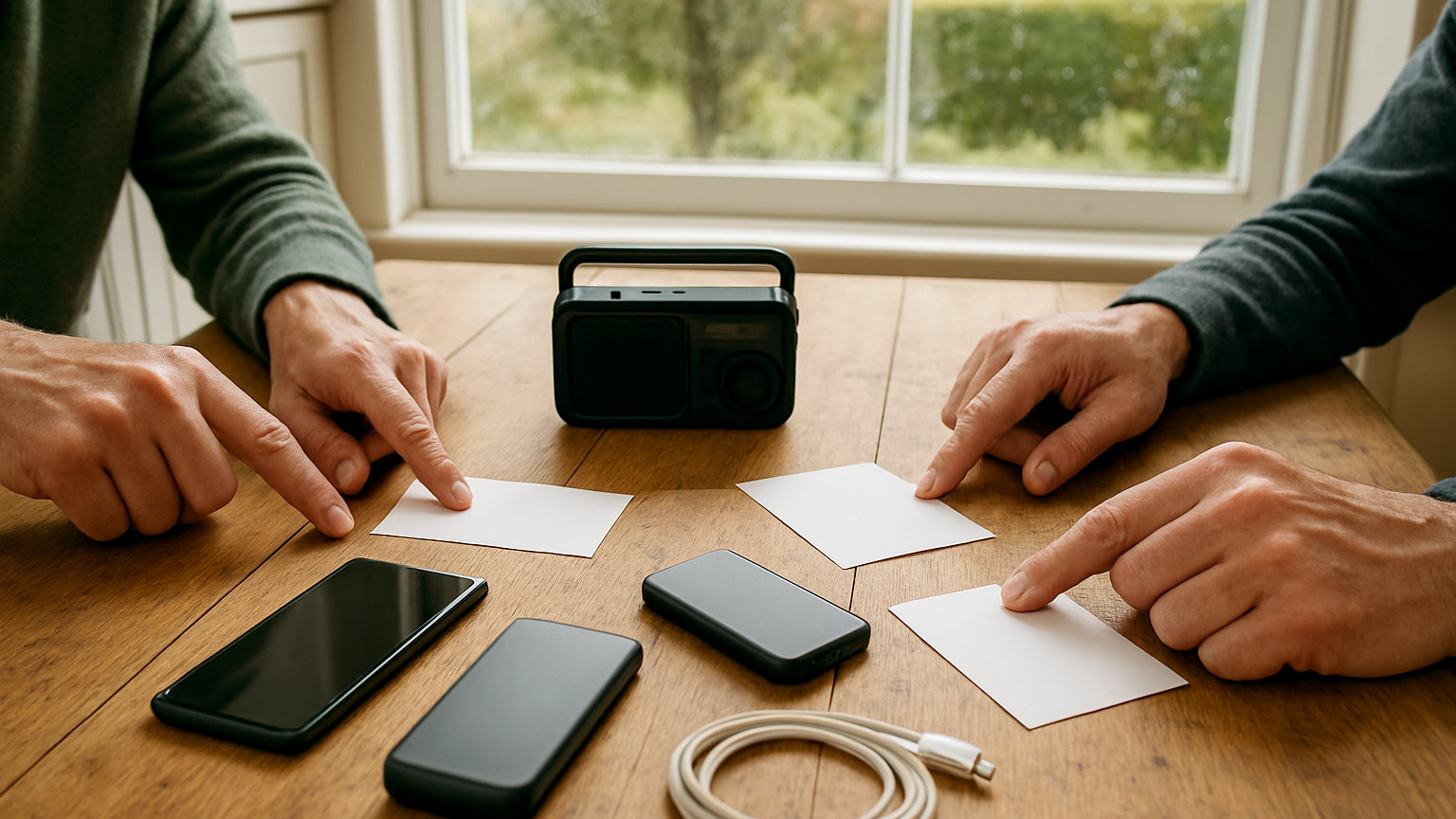
They need the plan independently of any adult, since they may be at school, with friends or out. Make sure they know the out of area number by heart, that they should text rather than call, and that they should go to a meeting point rather than home if they cannot reach anyone. Give them a card with the numbers, and check occasionally that they remember.
What about people at work?
Know their workplace arrangements as well as your own. Employers frequently have procedures for incidents, including holding people on site or releasing them early, and knowing which applies changes what you expect. Agree what happens if someone cannot get home, which is where the get home bag and the walking route come in.
What are the fallbacks?
Things needing no technology. Meeting points, notes left at home, and neighbours who know your arrangements. Write the note down as part of the plan: who left, when, where they went, and a number. These arrangements are what carry a household through the period when nothing electronic works, which is precisely when contact matters most.
How do you avoid wasting battery?
By agreeing a check in rhythm rather than constant attempts. Something like: text on the hour, keep the phone in flight mode between times. This preserves battery across the household and reduces network congestion, and it removes the anxiety driven repeated dialling that flattens phones within a few hours.
How do you keep it current?
Review it annually with the rest of the household plan, and update immediately when anything changes: a new number, a new school, a new job, the out of area contact moving. Photograph the written plan and put it on every household phone, so the sequence is available even when the paper copy is not.
What should you do if you cannot reach someone?
Work the plan rather than escalating immediately. Try the agreed relay, wait the agreed period, then go to the meeting point rather than searching. Repeated calling drains batteries and adds to congestion without improving the odds. If the agreed time passes with no contact and you have genuine reason for concern, the police can carry out a welfare check, which is a legitimate use of 101 rather than 999 unless there is immediate danger.
Should the plan cover ordinary disruptions too?
Yes, and that is what keeps it alive. The same sequence works for a cancelled train, a dead phone battery or a child late home from school, and using it routinely means everyone remembers it. A protocol only invoked during genuine emergencies is one nobody recalls under pressure, whereas one used a few times a year becomes automatic.
Agree the order, default to text, set a time after which people move to the meeting point, and make sure the children know it too.