The bag matters more than most of what goes in it, because it determines whether the load is carryable. A well chosen bag makes eight kilograms manageable and a poor one makes the same weight genuinely unpleasant within a mile.
What type works best?
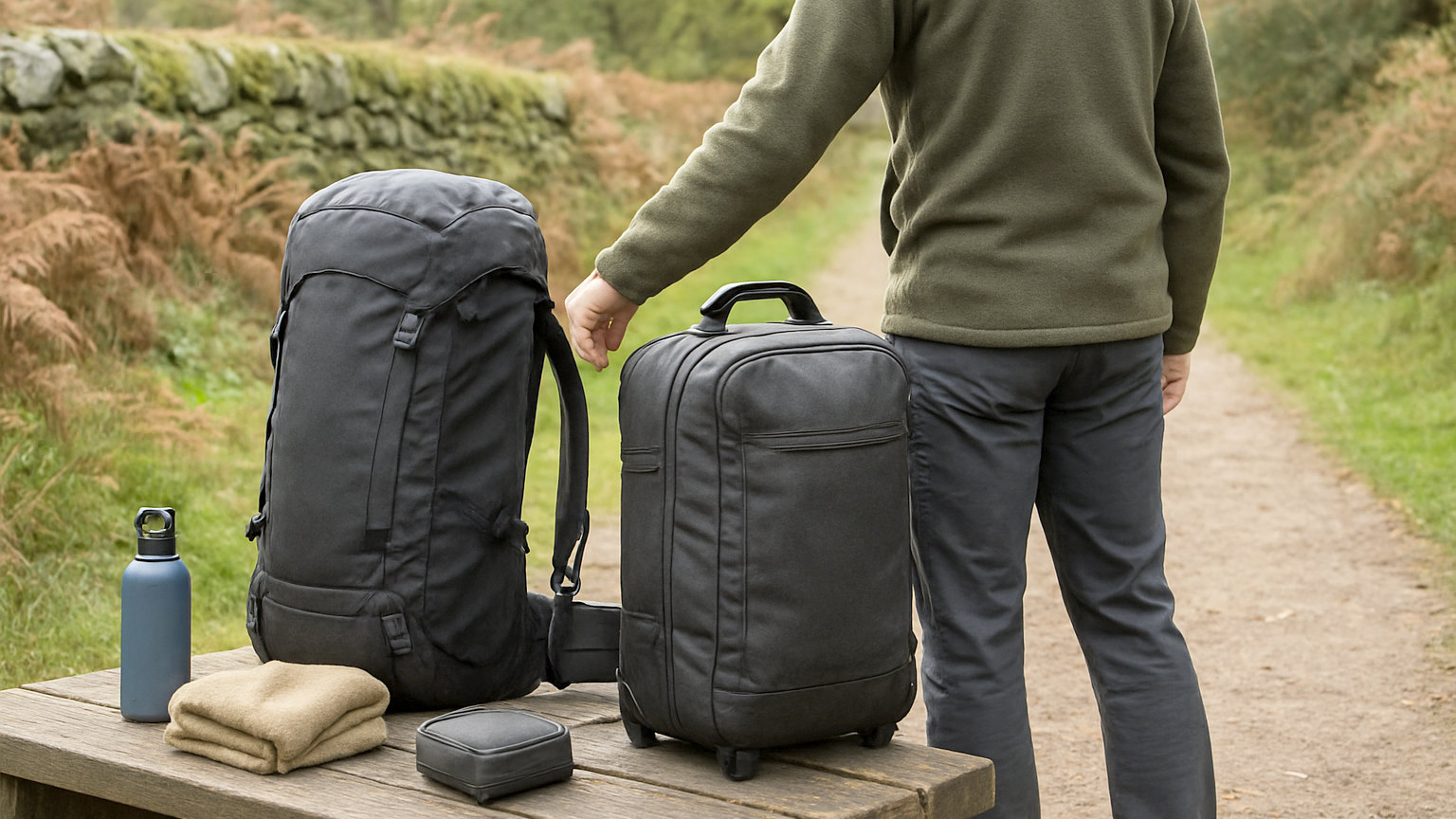
A walking rucksack of around thirty to forty five litres with a padded hip belt. The hip belt is the critical feature, transferring most of the weight onto your hips rather than your shoulders, and it is the single biggest difference between a comfortable and an uncomfortable load. Most households already own something suitable from camping, travelling or school.
How big should it be?
Thirty to forty five litres for an adult, twenty for a child, and less for anyone who will struggle. Resist buying larger, because capacity gets filled. A bag that is comfortably full at eight kilograms is better than a seventy litre one that invites you to add another five. If your bag looks half empty, that is a sign you have packed sensibly rather than a gap to fill.
- Thirty to forty five litres with a padded hip belt
- Twenty litres or less for children
- Wheeled bag or trolley for anyone with mobility issues
- Waterproof liner or dry bags inside, since covers blow off
- Ordinary appearance rather than military styling
- Front or side pockets for items needed quickly
What about wheeled bags?
Excellent for anyone who cannot comfortably carry a rucksack, and frequently overlooked. Wheeled luggage or a shopping trolley works well on pavements, which is where most British evacuations actually happen, and lets someone move a load they could not otherwise lift. The limitation is steps, rough ground and floodwater, so a household might sensibly have both.
How do you keep the contents dry?
With a liner rather than a cover. Rucksack rain covers blow off in wind and do nothing if the bag is set down in water. A heavy duty bin liner inside the bag, or a set of dry bags grouping items by category, keeps everything dry and also organises the contents. Documents, medication and spare clothing should be in sealed bags regardless of what else you do.
Why avoid tactical styling?
Because it works against you. A military patterned bag with webbing marks you out in a rest centre, a hotel lobby or a train station, suggests you are carrying equipment worth taking, and attracts attention you do not want during a disruption. An ordinary rucksack in a plain colour is cheaper, blends in and performs identically.
How should it be organised?
By urgency. Anything needed within the first few minutes should be in an outer pocket: torch, phone charger, cash, medication and documents. Heavier items go close to your back and centred, which improves balance considerably. Group the rest in labelled dry bags so nobody has to empty everything to find socks.
Does everyone need their own?
Everyone who can carry one, yes. Each person carrying their own clothing, water and comfort items spreads the load and means a separation does not leave anyone with nothing. Keep shared items such as documents and the first aid kit in the bag of a responsible adult, and consider duplicating the most critical items across two bags.
What if you have nothing suitable?
Use what you have and improve later. A school bag, a sports holdall or even a sturdy carrier bag with the essentials in it is far better than an empty hook by the door. The contents matter more than the container, and a modest rucksack bought second hand or in a sale covers it properly for very little.
Should you buy new or use what you have?
Use what you have, almost always. A camping rucksack, a travel pack or even a decent school bag sitting unused in a cupboard will do the job, and the money is better spent on contents. If you do buy, look second hand or in end of season sales, where walking rucksacks from reputable makers appear cheaply. The only feature genuinely worth paying for is a padded hip belt, and plenty of inexpensive bags have one.
Use a rucksack with a hip belt, line it with a bin bag, keep it plain, and put the urgent items in an outer pocket.