Open most grab bags assembled from online guidance and you will find several kilograms of equipment for sleeping outdoors, and almost nothing for spending three nights in a leisure centre with two hundred other people. The mismatch is worth examining, because that weight has a cost.
Why do the lists get it wrong?
Because most of them originate in a different context. American preparedness content assumes greater distances, sparser infrastructure, a different legal position on carrying equipment and a genuine possibility of being far from help. Copied wholesale into a British setting, where you are rarely more than a few miles from a town and rest centres are opened routinely, the list stops matching the situation.
Which items are rarely used?
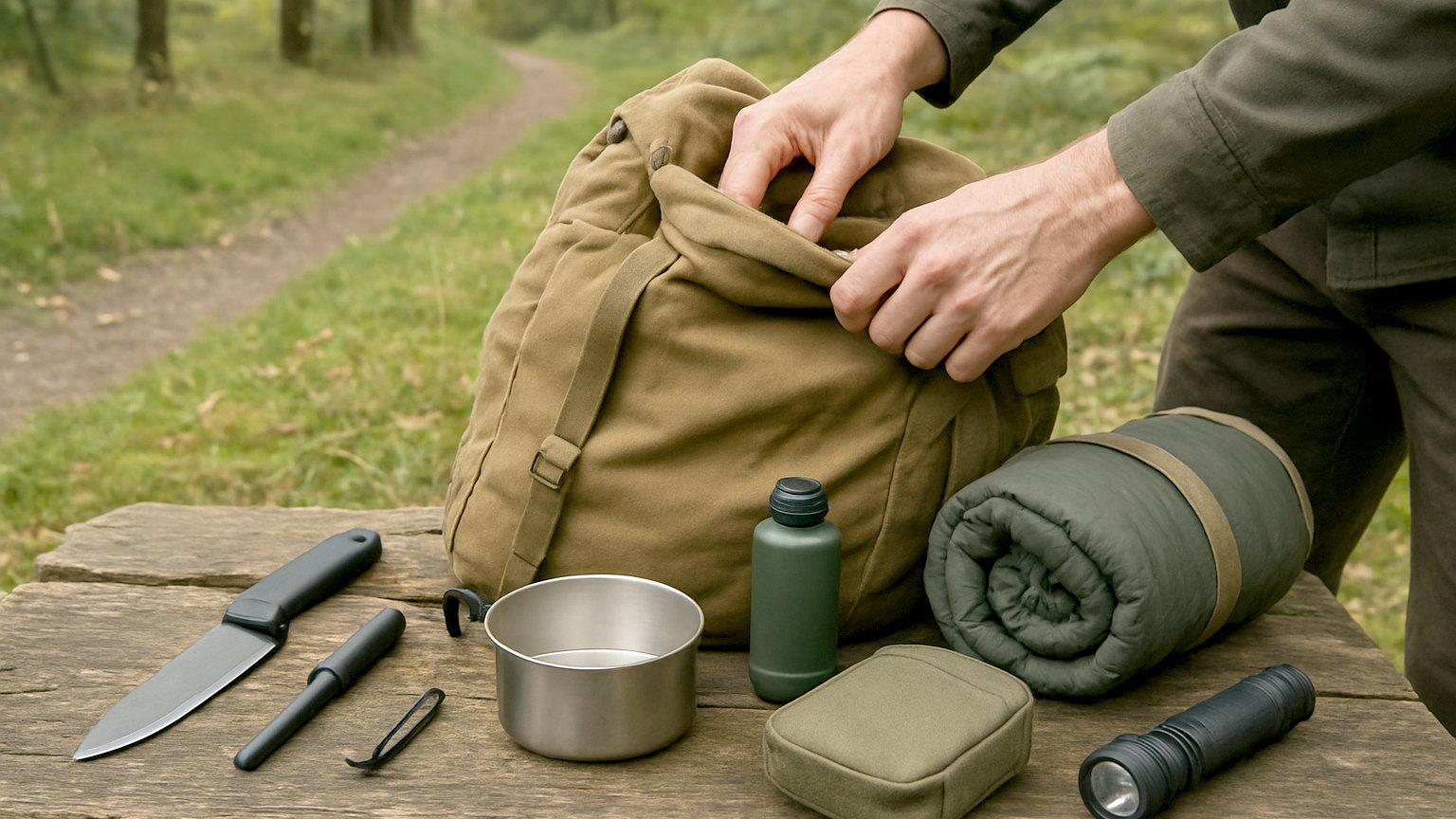
Large fixed blade knives, which are also legally awkward to carry in public. Multiple fire lighting methods. Water filters, in a country with functioning taps almost everywhere you would evacuate to. Tents, sleeping bags and cooking equipment. Paracord in quantity. Wire saws. Tactical pouches. Compasses, in an urban evacuation. Each has a legitimate use in a wilderness context and almost none in a flood evacuation.
- Large knives and multi tools beyond a small folding one
- Several redundant fire lighting methods
- Water filters where taps and bottled water exist
- Tents, sleeping bags and stoves
- Long life ration packs nobody will eat
- Bulk paracord, wire saws and tactical accessories
What gets forgotten instead?
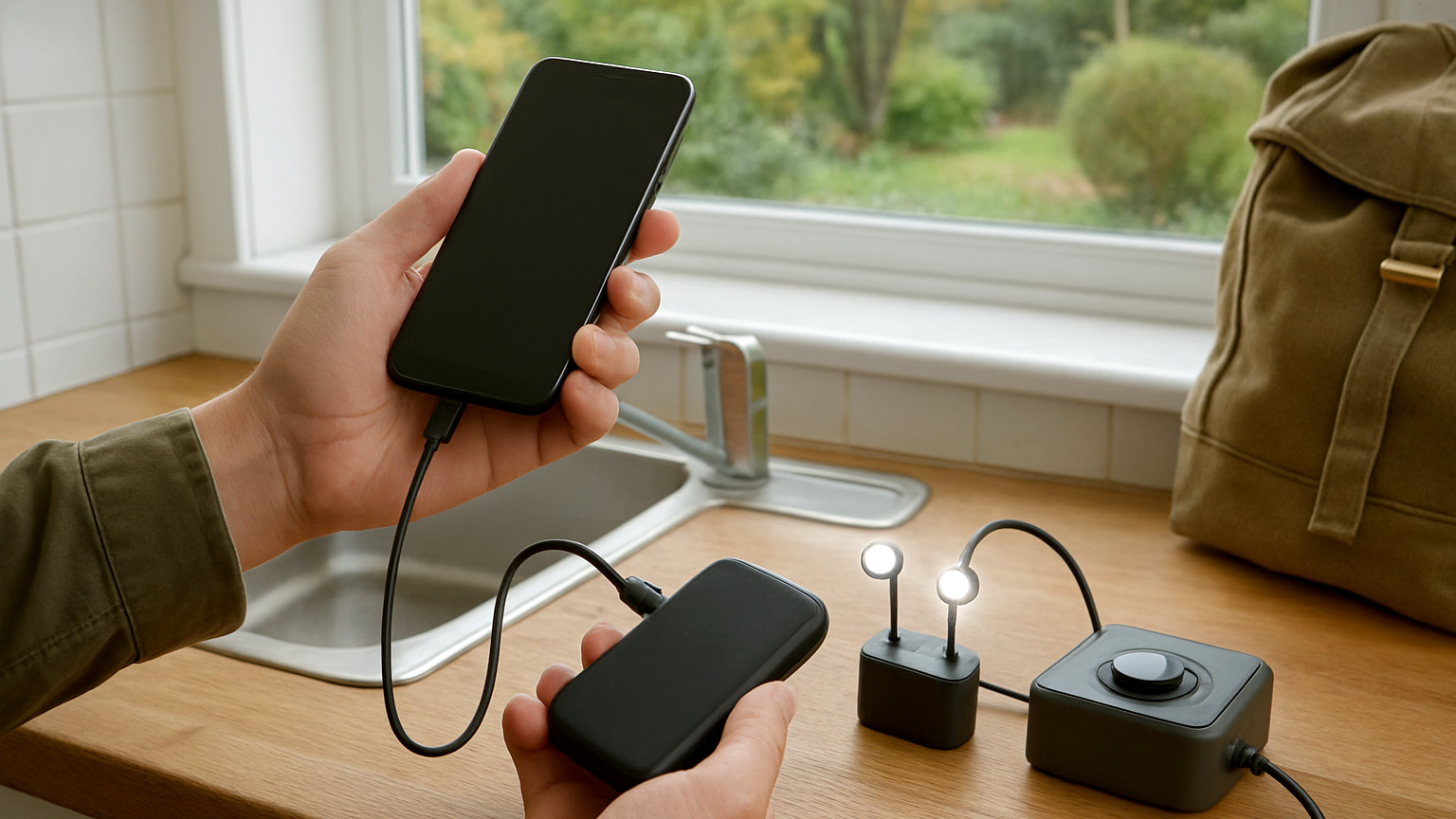
The things that are actually missed. Phone chargers and cables. Cash. Spare glasses. Enough medication. Copies of documents. Something to do during many hours of waiting. Familiar snacks. Wet wipes. A childs comforter. Every one of these is light, cheap and genuinely used, and every one is commonly absent from bags containing three ways to make fire.
Is there ever a case for the camping equipment?
Occasionally. If you live somewhere genuinely remote, if your realistic plan involves reaching a location on foot over distance, or if you already camp and the equipment is to hand, some of it makes sense. The point is that it should follow from your actual plan rather than from a generic list, and most households do not have a plan involving sleeping outdoors.
What is the cost of carrying it?
Weight, which is the constraint that determines whether the bag works. Five kilograms of camping equipment is the difference between a bag an adult can carry a mile with a child in tow and one they cannot. It also crowds out the light items that would have been used, so the cost is paid twice.
How do you audit your own bag?
Empty it and ask, for each item, when you would use it in the three or four scenarios you have actually planned for. Anything you cannot answer for goes in a pile. Then weigh what is left and weigh the pile. Most people find the pile is heavier than they expected and that removing it makes no practical difference to their preparedness.
What about the appeal of the gear?
It is worth acknowledging honestly, because it is the real driver. Equipment is enjoyable to research, buy and organise in a way that copying documents and rotating medication is not. That is fine as a hobby and unhelpful as a substitute for preparation. The test is whether the bag would serve you well on a wet Tuesday when the river rises, which is the scenario that will actually occur.
What should replace it?
Nothing, mostly. A lighter bag is a better bag. If you do add something, make it a second power bank, more socks, extra medication or something for a child to do, all of which are light and all of which get used.
What about legality?
It is a practical reason to reconsider some of the standard list. Carrying a fixed blade or a locking knife in a public place in England and Wales requires good reason, and having it in a bag by the door for a hypothetical emergency is unlikely to qualify. Evacuating with one, through a rest centre full of strangers and police officers, creates a problem you did not need. A small folding knife under three inches with no lock avoids the issue entirely.
Empty the bag, justify each item against your actual plan, and accept that a lighter bag with chargers and socks beats a heavy one with a fire steel.