A bug out bag, known in Britain more often as a grab bag, is a packed bag kept ready so that leaving home quickly does not involve deciding what matters while under pressure. The concept is sound and the version circulating online is frequently aimed at a scenario that does not apply here.
What is it actually for?
Covering roughly seventy two hours away from home at short notice. The realistic destinations in Britain are a hotel, a relative or friend, or a local authority rest centre. The bag bridges the gap between walking out of the door and being somewhere with beds, heating and food, which is usually a matter of hours rather than days.
When would you actually use one?
Flooding is the most common trigger, and flood warnings frequently arrive in the evening with limited notice. Gas leaks and chemical incidents produce street level evacuations. House fires leave people outside with nothing. Structural damage after a storm can make a property unusable. Each of these is a real and reasonably frequent event in Britain, and none of them resembles the collapse scenario the term suggests.
- Flood warning requiring evacuation, often at short notice
- Gas leak or chemical incident clearing a street
- House fire leaving you outside with nothing
- Storm damage making a property unsafe
- A relative needing you to arrive and stay unexpectedly
Why does the destination matter so much?
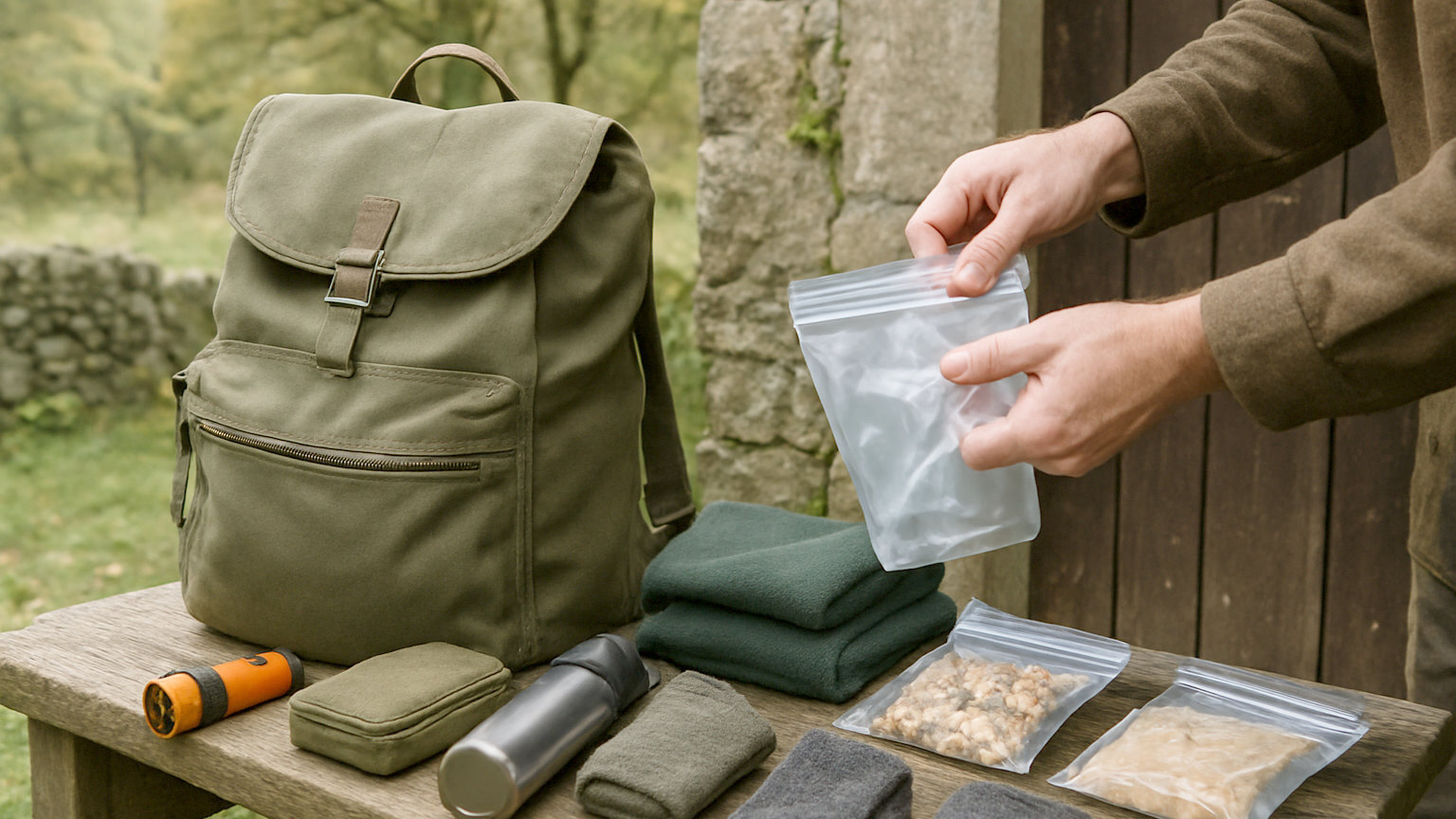
Because it determines the contents entirely. A bag packed for wilderness self sufficiency contains a shelter, a water filter, fire lighting equipment and a knife. A bag packed for a rest centre contains medication, documents, a phone charger, cash, a change of clothes and something to keep a child occupied. The second list is what British households actually need and it is lighter, cheaper and more useful.
Does every household need one?
Most benefit from one, and the case is strongest for households in flood risk areas, anyone with medication they cannot skip, families with young children, and anyone who would struggle to gather things quickly. If you live somewhere with no flood risk, no dependants and few medical needs, a short written list of what to grab may be sufficient.
What is the minimum useful version?
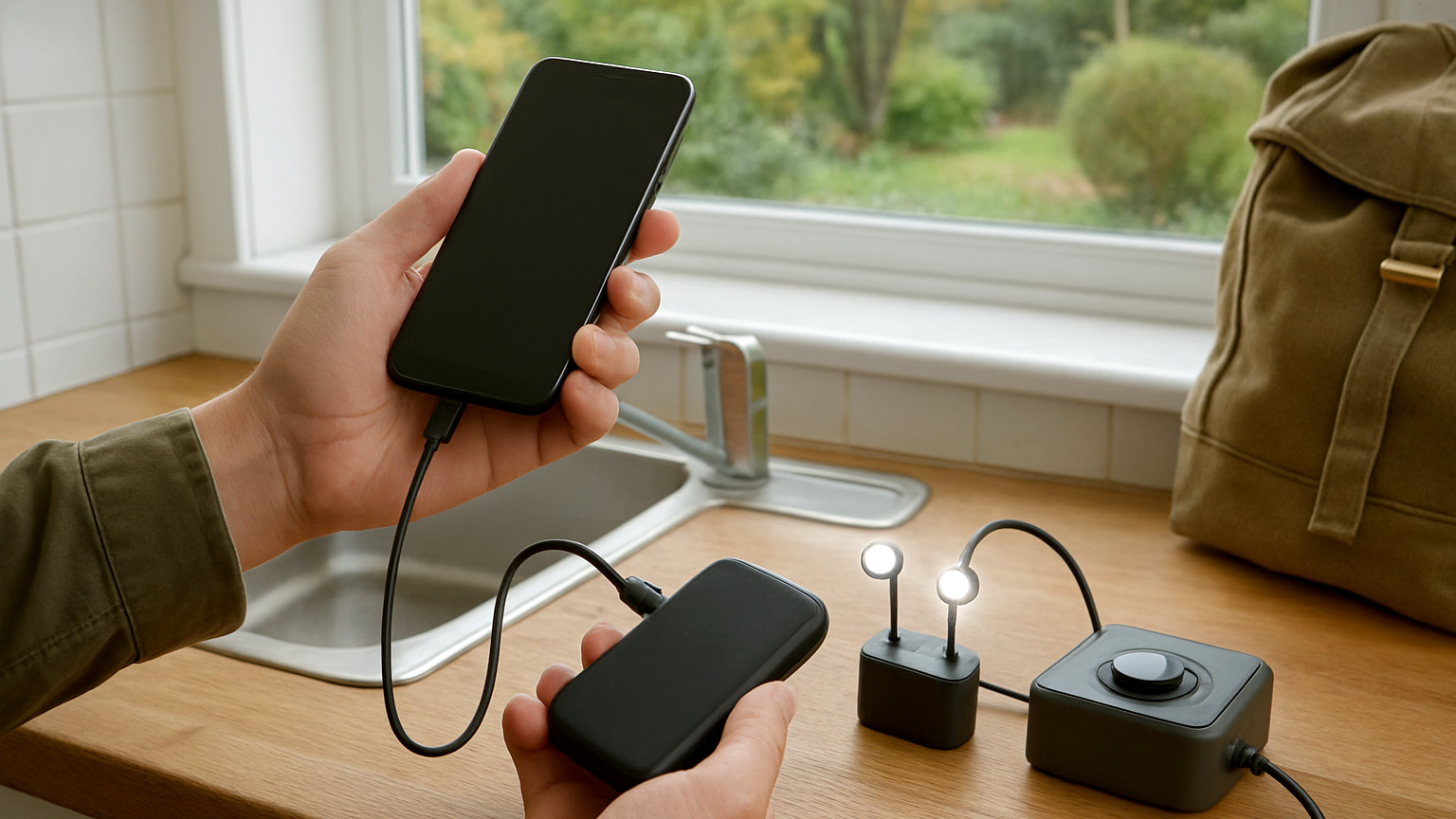
A carrier bag by the door containing prescription medication, copies of documents, a phone charger and power bank, cash, spare glasses, and a change of underwear and socks. That takes ten minutes to assemble, costs almost nothing, and addresses the majority of what people find themselves without after an unplanned departure.
How is it different from your home emergency kit?
By purpose and by weight. The home kit is for sheltering in place and can be heavy and bulky, holding water, food and a radio. The grab bag is for leaving, so everything in it must be carried, possibly on foot and possibly by a child or an older person. The two overlap and should be stored separately, since raiding one to build the other is how both end up incomplete.
Should the bag look tactical?
No, and there is a practical argument as well as a social one. Military styled bags mark you out, attract attention in a rest centre or a hotel, and suggest you are carrying something worth taking. An ordinary rucksack or holdall is cheaper, less conspicuous and does the same job. It also avoids the impression that preparedness is a subculture rather than a sensible household habit.
How much should it cost?
Very little, since most of the contents are things you already own. An old rucksack, spare clothing, a duplicate charger and some copies of documents cover most of it. The only genuine purchases are usually a power bank and a spare set of anything you cannot duplicate cheaply, and both are useful in ordinary life.
Pack for a hotel or a rest centre rather than a forest, keep it by the door, and start with medication, documents, cash and a charger.