Clothing is where grab bags gain weight fastest and where people pack least usefully. The guiding question is not what you would like to have, but what you would be missing if you left the house in whatever you happened to be wearing.
What should be in it as a minimum?
Two changes of underwear and socks, one warm mid layer such as a fleece, a waterproof jacket, and a hat. That covers the essentials for two or three days at modest weight. Trousers and shirts are lower priority, since they can be worn longer and are easily borrowed or bought, whereas nobody wants to lend you underwear.
Why do socks matter so much?
Because wet feet degrade everything else. If you walk any distance in rain or through standing water, dry socks are transformative, and they weigh almost nothing. Pack more pairs than seems reasonable, at least three per person, and choose wool or a synthetic blend rather than cotton, which holds water and loses all insulating value when wet.
- Three pairs of socks per person, wool or synthetic
- Two changes of underwear
- One warm mid layer such as a fleece
- A waterproof jacket and a hat
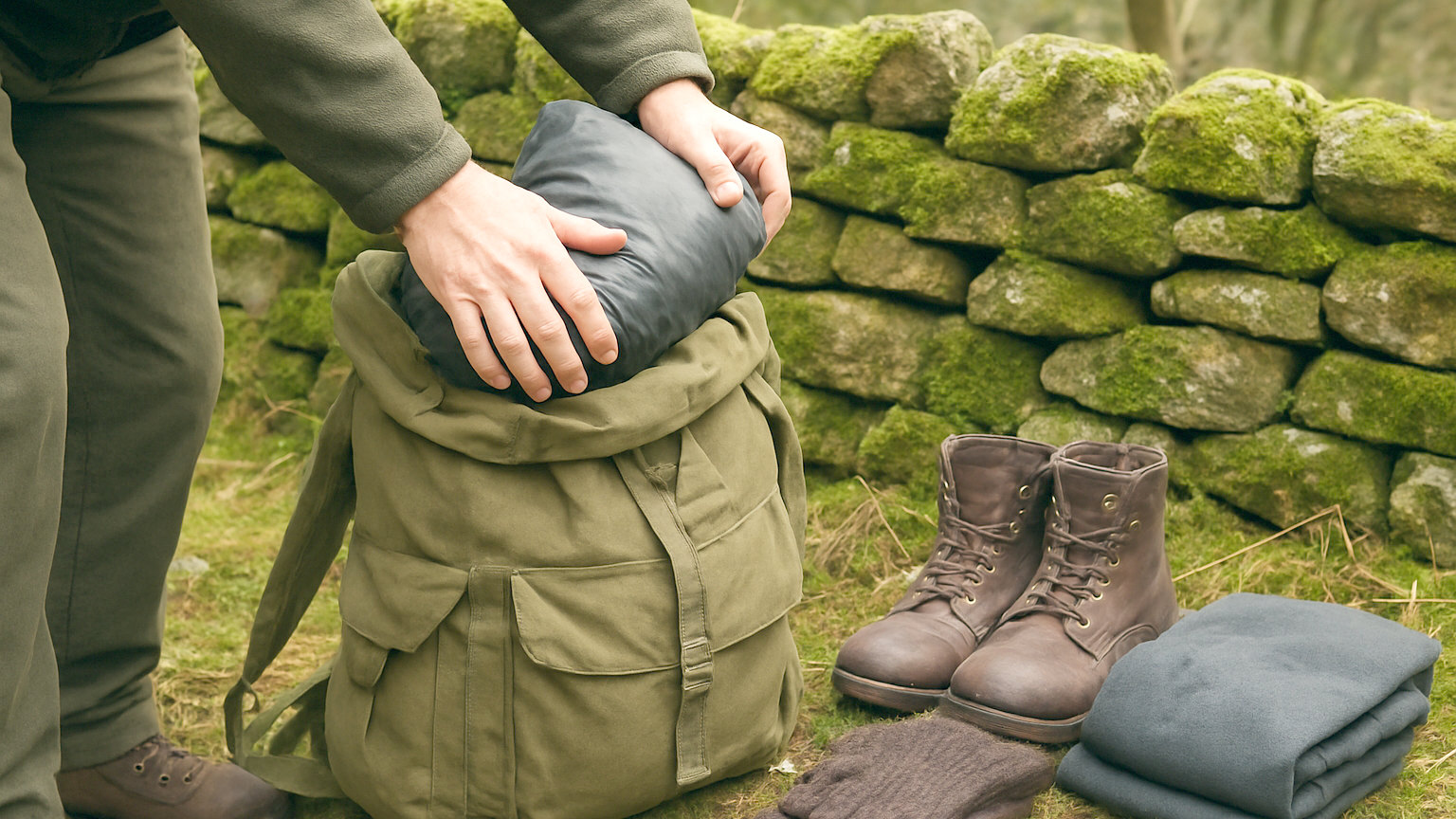
- Sturdy shoes kept beside the bag, not inside it
- Seasonal swap at each kit check
Why keep shoes outside the bag?
Because they take up an enormous amount of space and you will almost certainly be wearing something already. Keep a pair of sturdy, comfortable, already worn in shoes or boots beside the bag along with a coat. That way you can change into them on the way out without carrying them, and you avoid evacuating in slippers or office shoes, which is a genuinely common outcome.
What should you avoid packing?
Cotton next to the skin, jeans, and anything bulky. Cotton absorbs water, dries slowly and provides no warmth when wet, which makes it a poor choice for anything you might be wet in. Jeans are heavy, cold and take days to dry. Bulky fleeces and thick jumpers eat space, so a thin insulated layer is a better use of the volume.
How should clothing be packed?
In a sealed bag, rolled rather than folded. A dry bag or a heavy bin liner keeps everything usable even if the rucksack gets soaked or set down in water, and dry clothing is the whole reason it is there. Rolling compresses better than folding and makes it easier to take out one item without disturbing the rest.
Does it need changing with the seasons?
Yes, and this is the easiest maintenance item to forget. Swap in warmer layers, a hat and gloves for winter, and lighter items plus sun protection for summer. Doing it at the twice yearly kit check means it happens automatically rather than being remembered in November. Children in particular need seasonal and size checks, since a bag packed last winter will hold clothing that no longer fits.
What about high visibility items?
Worth including, particularly for evacuations on foot in the dark or along roads. A folded hi vis waistcoat weighs almost nothing, makes a family group far easier to see, and is genuinely useful if you end up walking on a verge. Bright colours also make children easier to keep track of in a crowded rest centre.
How much is enough?
Two to three days, on the assumption that laundry becomes possible or clothing can be bought after that. Grab bags packed for a week are heavy, and the extra days are the least likely to be needed. If you are still uncertain, cut the shirts and trousers first and keep the socks.
What if you have to leave in nightwear?
It happens more often than people expect, since fires and gas leaks do not respect the hour. This is the strongest argument for keeping a full set of clothing in the bag rather than only spares, and for keeping shoes and a coat beside it. Some households keep a complete outfit for each person including trousers and a top, on the reasoning that a two in the morning evacuation is the scenario the bag most needs to cover.
Three pairs of socks, two changes of underwear, one warm layer, a waterproof, and shoes beside the bag rather than in it.