The single household bag is the most common arrangement and the least robust. It concentrates everything in one place and on one person, and it fails badly if the household is separated or if that person is occupied with a child.
Why give everyone their own?
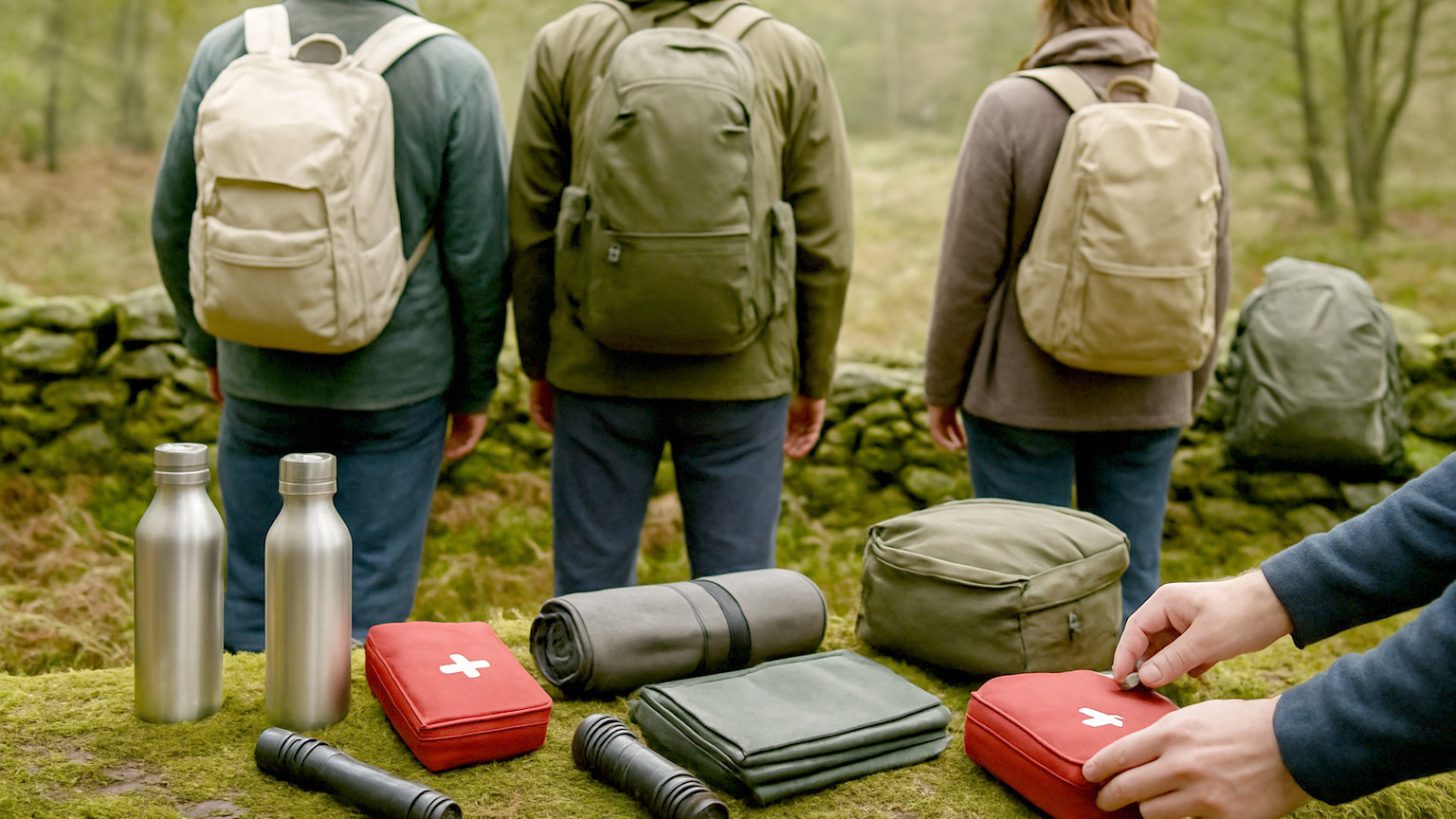
Three reasons. It spreads the weight, so no adult is carrying an unmanageable load. It means a separation does not leave anyone with nothing, which matters because families are frequently split during evacuations. And it gives each person, particularly children, a sense of agency and a job to do, which helps considerably with how they cope.
What goes in each individual bag?
Personal items: clothing, socks, underwear, a water bottle, snacks, personal medication, spare glasses, and comfort items. These are the things that are specific to the person and useless to anyone else. Keeping them in the bag the person carries means nobody has to unpack somebody elses luggage to find their own socks.
- Personal clothing, medication and comfort items in each bag
- Shared items in the bag of a responsible adult
- Critical items duplicated across at least two bags
- Weight matched to the person, not divided equally
- All bags stored together, not in separate rooms
- Each bag labelled with the owner name
What should be duplicated?
Anything whose absence would be serious. Cash, split across two bags. A copy of the household plan and contact list in each. A phone charging cable in each. A small torch each. Copies of documents in two bags rather than one. Duplication costs almost nothing for these items and removes the single point of failure that a consolidated bag creates.
What stays in one bag?
Bulky shared items that would be wasteful to duplicate: the main first aid kit, the bulk of the document copies, spare batteries, and any household level supplies. These belong with a responsible adult, and it is worth agreeing in advance who that is so nobody assumes someone else has them.
How should weight be divided?
By capability rather than equally. An adult carries eight kilograms, a teenager perhaps five, an eight year old two or three, and a small child carries their toy and nothing else. Total household weight matters less than whether each individual can manage theirs over a mile without help, since an adult who ends up carrying two bags and a child is the failure mode this arrangement exists to prevent.
What if someone cannot carry anything?
Use wheels and redistribute. A wheeled bag or trolley for anyone with mobility difficulties, and their essential items, particularly medication and documents, duplicated into an adult bag in case the wheeled bag has to be abandoned on stairs or in water. Plan for the possibility that it cannot come, rather than assuming it will.
Should bags be stored together?
Yes, in one place by the exit. Bags kept in individual bedrooms are the ones left behind, because collecting four bags from four rooms takes time nobody has. Storing them together means one person can pick up several while another manages the children, the pets and the door.
How do you keep them all current?
Review them together at the same time. Doing all the bags in one twenty minute session twice a year is far more likely to happen than reviewing them individually, and it lets you check that duplicated items are still in both places. Involve each person in their own bag, since they know what they actually need.
What if the household is separated?
This is the scenario individual bags are really for, and it is common. People are at work, at school and out when something happens, and they may reach the meeting point from different directions with only what they were carrying. Personal bags do not help if everyone is at home together and matter enormously if they are not, which is also why the get home bag at work and the card with the out of area number in each wallet earn their place.
One bag each, weight matched to the person, cash and documents duplicated, and all of them stored together by the door.