Children need less than adults in weight and more in specificity. The items that make the difference are rarely the practical ones, and a bag packed only for warmth and hydration misses most of what actually helps.
What matters most?
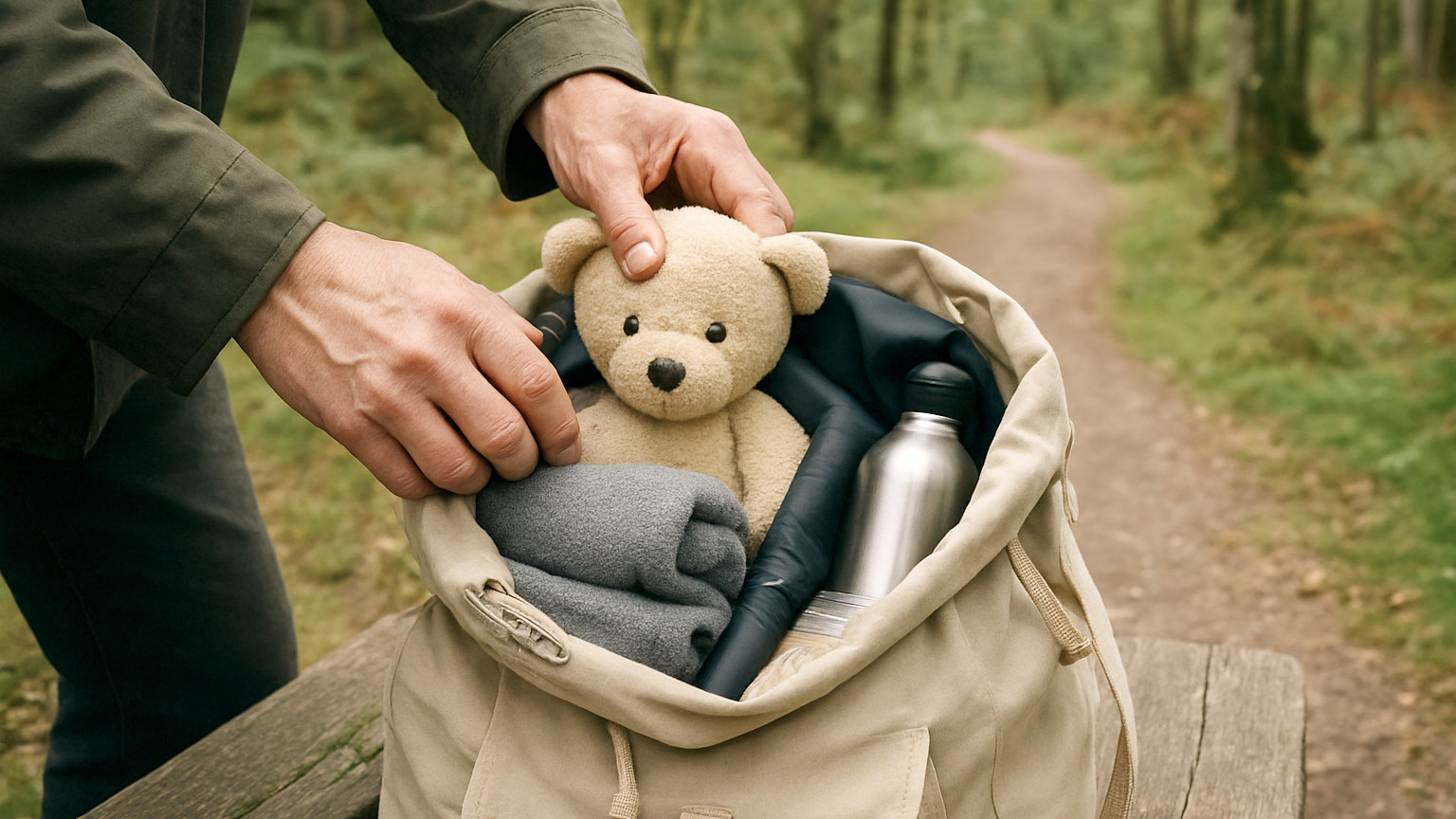
The comforter, whatever it is. A specific blanket, a particular soft toy or a well worn item of clothing does more for a distressed child than anything else you could pack. If the item is in daily use and cannot be pre packed, put it on a written grab list taped inside the bag so nobody forgets it while leaving. Keeping a spare of the same item, if one exists, is worth doing.
What clothing should they have?
Two changes of everything, because children get wet, dirty and sick far more readily than adults. Extra socks and underwear, a warm layer, a waterproof and a hat. Include a full change for the youngest children, since a single incident can leave them in nothing wearable. Check sizes at every kit review, as this is the fastest expiring item in any household bag.
- The specific comforter, or a spare of it
- Two full changes of clothing including socks
- Familiar snacks they will actually eat
- Something to do that needs no screen or power
- An ID card with names, numbers and any medical need
- Their own small bag to carry, if old enough
Why does familiar food matter?
Because children under stress reject unfamiliar things and will simply not eat. This is not fussiness and arguing with it wastes energy everyone needs. Pack snacks they already like, even if they are not the ones you would choose nutritionally, and include a few treats. A child who eats and drinks is a child who copes, and morale food genuinely earns its place.
What should they carry themselves?
A small bag with their own things in it, if they are old enough to walk any distance. Two or three kilograms at most, containing their comforter, a water bottle, snacks and something to play with. Having their own bag gives a child a job and a sense of control, both of which help considerably, and it spreads the load off the adults.
What should an ID card contain?
The childs full name and date of birth, parents or carers names and mobile numbers, the out of area contact, home address, GP details, and any allergy, medication or condition. Put it in a pocket of their bag and, for younger children, in a coat pocket too. It matters if you become separated in a crowded rest centre or if someone else is helping them.
How do you keep them occupied?
With things that need no power. Rest centres and hotels involve long stretches of waiting, and screens will run out of battery early. A book, colouring things, a pack of cards, a small puzzle or a couple of favourite toys cost almost nothing in weight and make hours of waiting manageable for everyone in the room, not just the child.
Should you explain what the bag is for?
Yes, briefly and calmly, framed as something the family has ready rather than something to worry about. Children handle preparation well when it is presented matter of factly, and badly when it is presented as a warning. Letting them help pack their own bag, and choose which toy goes in it, turns the whole thing into something familiar.
What about babies?
Their needs are non negotiable and should be the first thing packed. Ready to feed formula cartons requiring no water, nappies, wipes, sterilising tablets, spare bottles, infant paracetamol and a sling. A sling is far more practical than a pushchair over rough ground, through water or in a crowded building.
What about older children and teenagers?
Give them a real bag and a real role, since being useful helps them considerably more than being managed. A teenager can carry a proper load, look after a younger sibling, keep track of the pet carrier and hold a duplicate copy of the contact list. Let them pack their own bag with a checklist rather than packing it for them, and make sure they know the meeting points and the out of area number independently of any adult.
Pack the comforter, familiar snacks and something to do, give them their own small bag, and check the clothing sizes every six months.