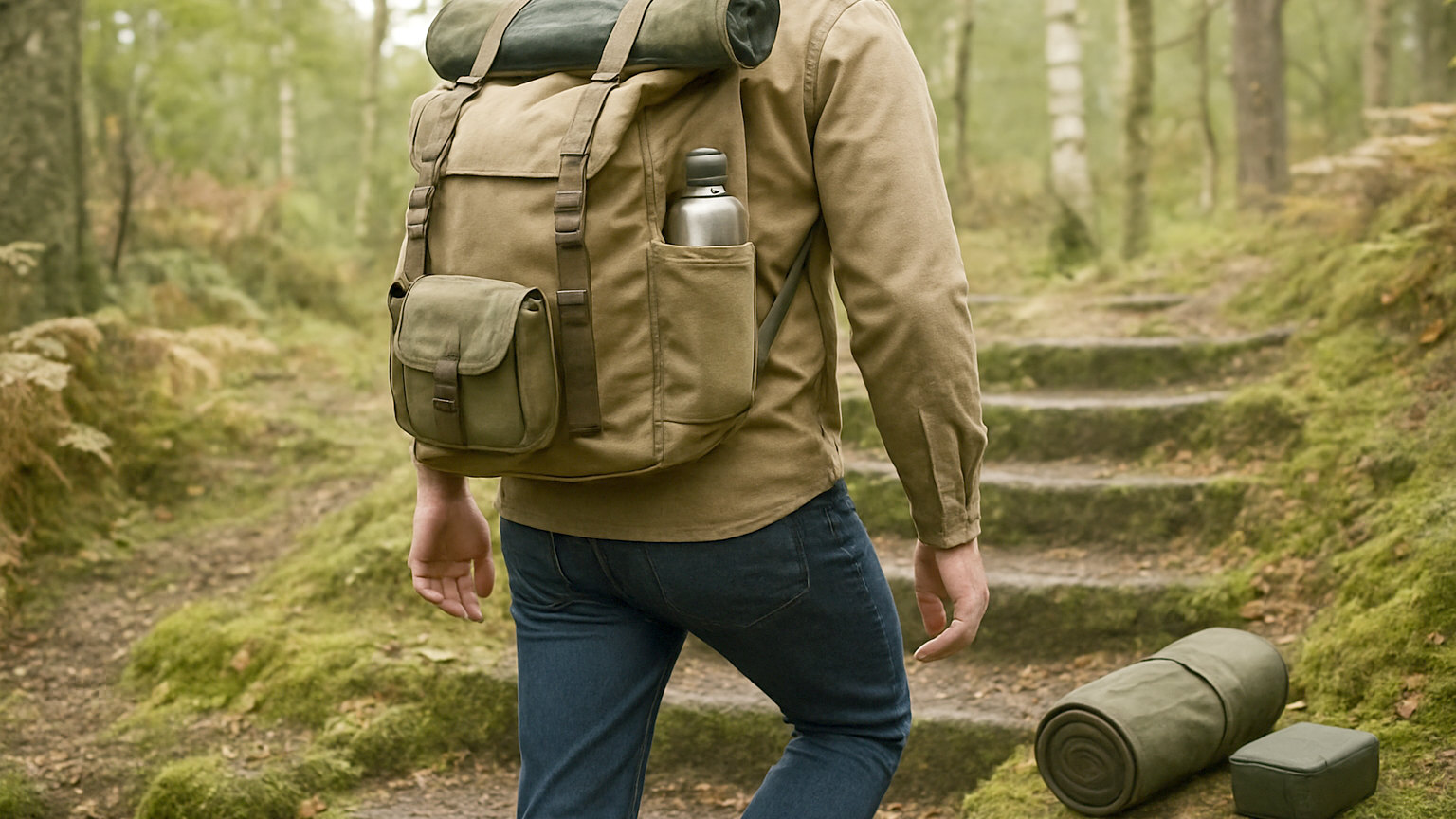
Weight is where most grab bags fail. Assembled from an online list, a first attempt commonly reaches fifteen or twenty kilograms, which is fine on a kitchen floor and impossible for the person who would actually carry it.
What is a realistic target?
For a fit adult, somewhere between six and ten kilograms including water. A commonly quoted guide is ten to twenty percent of body weight, though that figure comes from hiking and assumes fitness, a properly fitted rucksack and level ground. For a British grab bag, where the journey is usually short and the destination has facilities, lighter is almost always better.
How do you test it?
Carry it up two flights of stairs and then walk a mile in the clothes and shoes you would actually be wearing. If you are stopping to rest, changing shoulders constantly or dreading the second mile, it is too heavy. Do this test with the person who owns the bag rather than the fittest member of the household, since a bag packed by one person and carried by another is a common and unhelpful arrangement.
- Six to ten kilograms for a fit adult, including water
- Considerably less for children and older relatives
- Test by carrying it upstairs and walking a mile
- Water and tools are the heaviest items to reconsider
- The bag you can carry beats the one you assembled online
What makes bags heavy?
Water and metal, mostly. A litre of water weighs a kilogram, so three litres is a third of your budget immediately. Knives, multi tools, torches with large batteries, tinned food and hardback books all add up quickly. Reviewing a heavy bag usually reveals two or three items accounting for most of the excess, and removing those is easier than trimming everything.
How should weight vary by person?
Substantially. A child of eight can carry perhaps two or three kilograms comfortably, mostly their own comfort items and a water bottle. An older relative may manage very little, and a wheeled bag may be far more appropriate than a rucksack. The household total matters less than whether each person can carry their own, since one adult carrying four bags is not a plan.
Does the destination change the answer?
Completely. Evacuating by car to a relative sixty miles away means weight barely matters and you can pack generously. Walking two miles to a rest centre with two children means weight matters enormously. Since you cannot know which applies, pack for the walking scenario, because a light bag works in both and a heavy one only works in one.
How does the bag itself affect it?
More than people expect. A proper rucksack with a hip belt transfers most of the load to your hips and makes eight kilograms feel far lighter than the same weight in a holdall carried by hand. A cheap bag with thin straps and no belt is genuinely painful after a mile. If you own a walking rucksack, that is the right bag, and if you do not, prioritise a hip belt over capacity.
What should you cut first?
Duplicated capability and anything for a scenario you have not actually planned for. Two torches become one plus a phone. Three fire lighting methods become none, if your destination is a hotel. Tinned food becomes bars. A full water bladder becomes a bottle. These cuts typically remove several kilograms without touching anything you would genuinely miss.
Does the weight change through the year?
A little, and winter is the heavier season. Warmer layers, a hat and gloves, and thicker socks all add bulk and weight, which is the opposite of what you want when the walking conditions are also worse. The compensation is that you carry less water in cold weather, and that you are likely to be wearing more of the clothing rather than carrying it. Reweigh at the seasonal swap so the winter version does not quietly become unmanageable.
What about carrying a child as well?
It changes the arithmetic entirely and is worth testing honestly. A toddler in a carrier is ten to fifteen kilograms before the bag, which for most adults means the bag must drop to four or five. If your household includes a child too young to walk, plan on one adult carrying the child and little else, and spread their share across the other bags.
Aim for eight kilograms, test it on stairs and a mile of pavement, and cut the water and the metal first.