Standard grab bag advice assumes someone who can shoulder ten kilograms and walk a couple of miles. Where that does not hold, the answer is a different bag rather than a lighter version of the same one.
What comes first?
Medication, without question. Several days supply plus a written list of everything taken, with doses, the prescribing surgery and the pharmacy. Many older people take several medicines with narrow tolerances, and missing doses of some can cause rapid deterioration. A dosette box for a week, kept with the bag and rotated, is a practical way to manage this.
What else is difficult to replace?
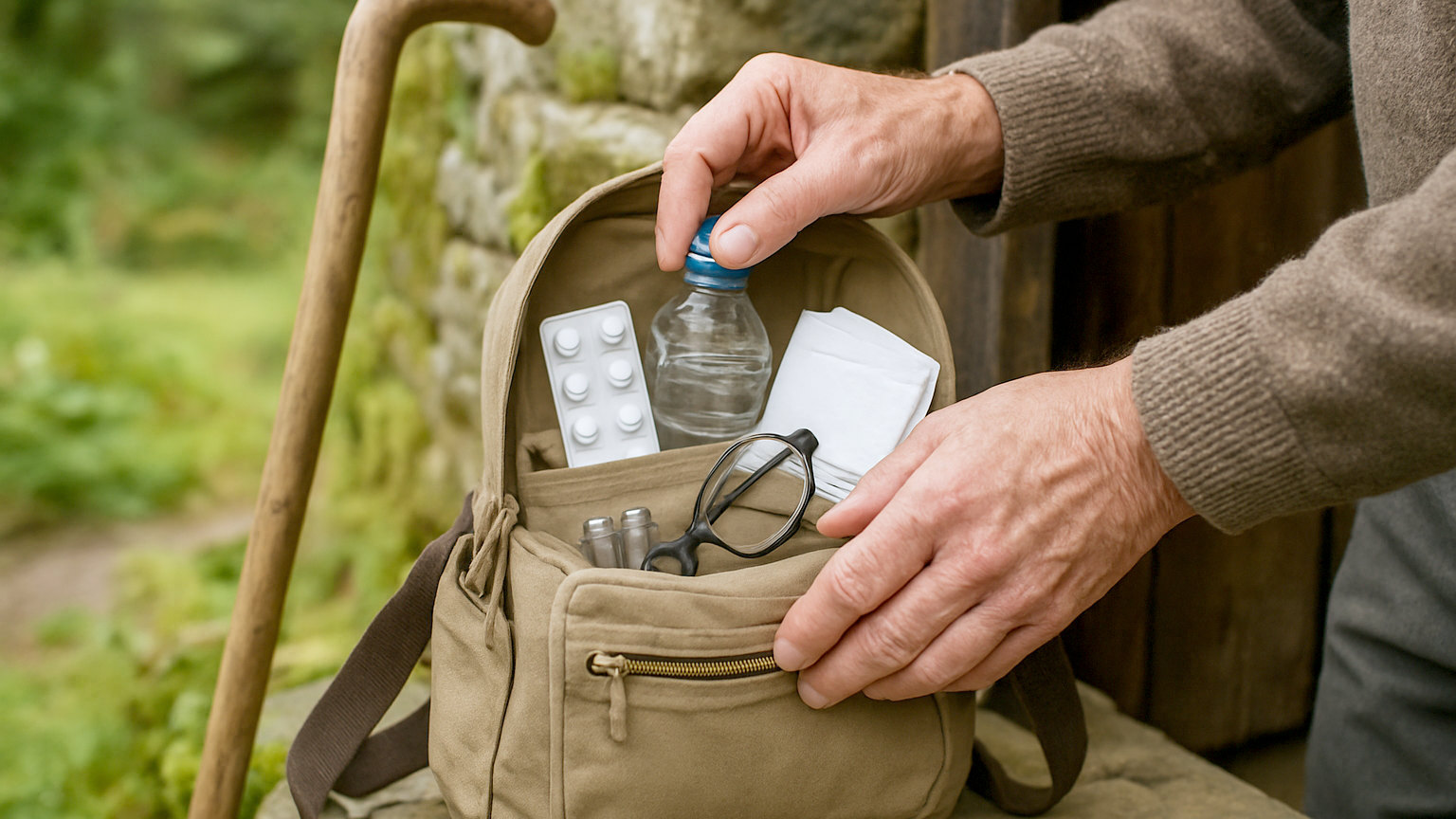
Spare glasses, hearing aid batteries, dentures and denture care, and any continence supplies. A spare charger for a powered wheelchair or mobility scooter. A folding walking stick if the usual one might be left behind. These are the items that make the difference between someone being comfortable and being genuinely stuck, and none of them can be obtained quickly from a rest centre.
- A week of medication plus a written list with doses
- Spare glasses, hearing aid batteries and denture care
- Continence supplies and any personal care items
- Copies of documents, GP details and care arrangements
- A wheeled bag rather than a rucksack
- Contact details for family, carers and the care agency
What sort of bag works?
Wheeled, almost always. Wheeled luggage, a shopping trolley or a bag that clips to a walker moves a load that could not otherwise be carried, and most British evacuations happen on pavements where wheels work well. Keep the weight genuinely low, under five kilograms if possible, and accept that this means packing less rather than packing tighter.
Who should know where it is?
Family, neighbours and any carer, all of them. If the person may need help leaving, whoever arrives to help needs to know there is a bag and where it lives. Put a note on the fridge or by the front door saying where it is, since that is where responders and family look. Keeping a duplicate list of medication with a relative elsewhere is worth doing too.
What documents matter most?
The ones that establish identity, entitlement and care needs. A copy of the NHS number, GP details, a summary of conditions and medication, any power of attorney documents, and contact details for family and the care agency. If a hospital or a rest centre becomes involved, having this on paper saves a great deal of time and repeated questioning.
How does evacuation itself differ?
It takes longer and needs planning. Lifts stop in a power cut and must not be used in a fire, so anyone living above ground floor needs an arrangement that does not rely on one. Speak to the building manager or the fire service about a personal emergency evacuation plan, and identify in advance who could physically assist. This is a conversation to have on a calm afternoon, not during an incident.
What about the Priority Services Register?
Register, since it is free and directly relevant. It brings advance warning of interruptions, priority reconnection and welfare support from energy and water suppliers, and registration is separate with each. Anyone of pensionable age, with a disability or chronic illness, or dependent on powered equipment is eligible, and it is substantially underused.
Who should pack it?
The person themselves, with help, rather than a relative packing on their behalf. A bag someone else assembled is one they cannot find things in, and the person knows what they actually need day to day far better than anyone else does. Sitting down together and doing it once is also a natural way to have the wider conversation about plans and contacts.
What if they live alone and some distance away?
Build redundancy into who can act. Keep a duplicate medication list and copy of their documents at your own address, make sure a nearby neighbour has your number and a key, and check that the care agency, if there is one, has current contacts. Distance means you cannot be the first responder, so the plan has to work through people who are close by, and arranging that is a conversation rather than a purchase.
Medication and mobility first, wheeled rather than carried, under five kilograms, and make sure family and carers know where it is.