The event is usually short and the aftermath is long. Weeks spent proving identity, ownership and entitlement follow most serious incidents, and that process runs far faster for households who packed a few sheets of paper in advance.
What should be copied?
Insurance policies with policy numbers and the twenty four hour claim line, first and foremost. Then passports, driving licences, birth and marriage certificates. Mortgage or tenancy documents. Bank details. NHS numbers and a summary of medical conditions and medication. Vehicle registration. Anything slow to replace, such as immigration documents and qualifications.
What form should the copies take?
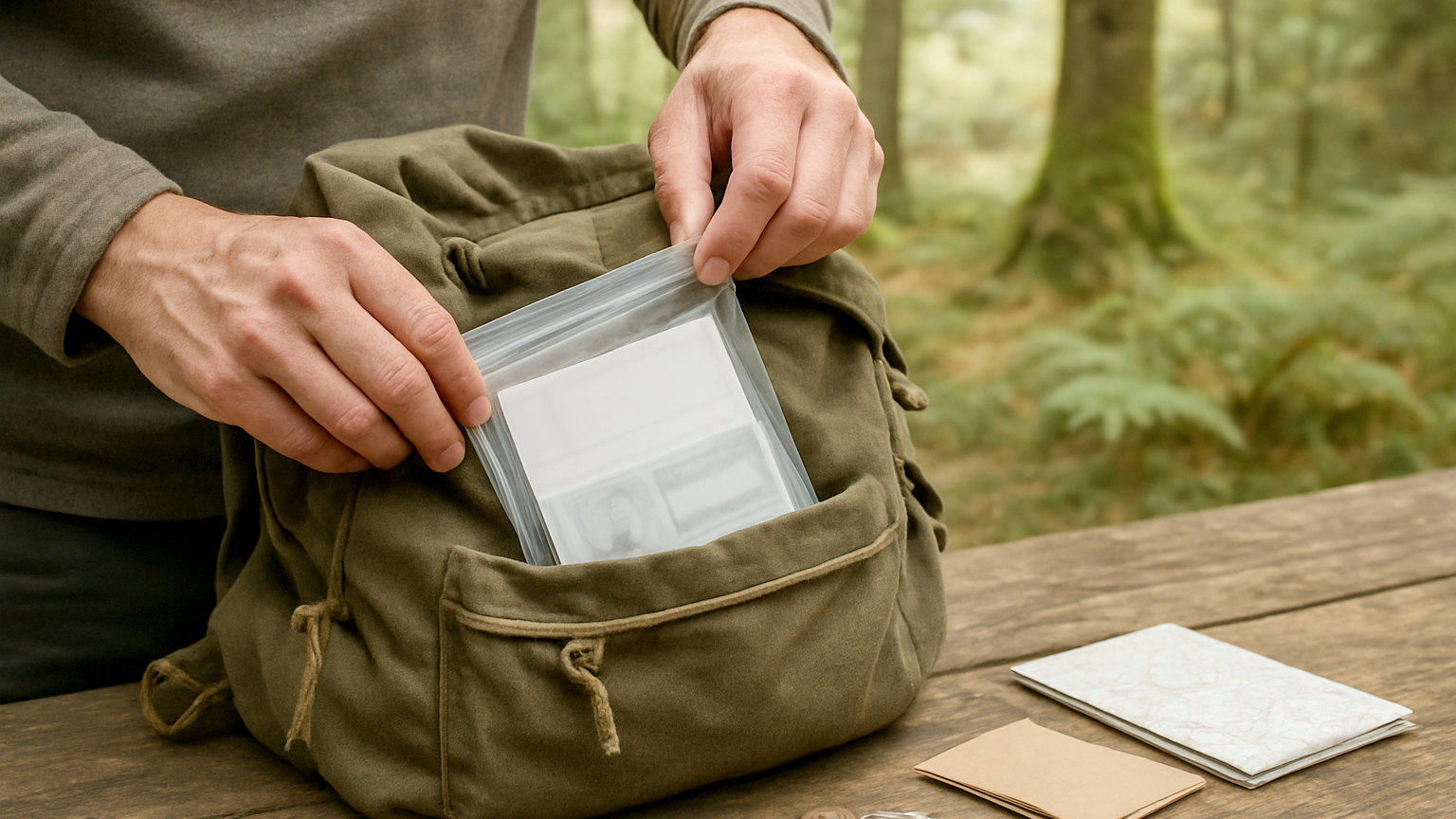
Both paper and digital, because each fails differently. Printed copies of the most critical items, chiefly insurance and contact numbers, in a waterproof wallet. An encrypted memory stick with scans of everything. A second copy in encrypted cloud storage, accessible from any device. Redundancy is the point, since the whole scenario involves losing access to something.
- Insurance policies with numbers and claim lines
- Identity documents and proof of address
- Property, tenancy and vehicle papers
- Medical summary, NHS numbers and prescriptions
- Photographs of every room for a contents claim
- Encrypted memory stick plus printed essentials
Why photograph your rooms?
Because contents claims are settled on evidence and almost nobody can list their own possessions accurately from memory. Walk through the house filming, open cupboards and wardrobes, and capture serial numbers on larger items. It takes twenty minutes, turns a difficult claim into an administrative one, and the file lives on the same memory stick as everything else.
How do you keep digital copies secure?
By encrypting them properly. A memory stick of scanned passports lost in a car park is a serious identity theft problem, so use full disk encryption on the stick and a reputable cloud provider with two factor authentication. Use a strong unique password held in a password manager, and make sure the recovery route for that manager does not depend solely on a device you might lose.
How much cash should be in the bag?
Enough for a few days of essentials, in small notes and coins. Fifty to a hundred pounds is a reasonable figure for most households. Card machines and cash points fail during power cuts, and a shop running on a calculator may be unable to change a large note. Coins cover parking, payphones and vending machines, all of which may be the only working option.
Should the originals go in the bag?
Generally not, since a bag by the door is a theft risk and a lost bag would then cost you both. Keep originals in a fire resistant box or a single labelled folder you could grab, and put that folder on your written grab list. Copies live in the bag permanently, originals get collected if there is time.
What about passwords and account access?
Include a route in, because most practical recovery now happens through online accounts. A password manager with a documented emergency access arrangement means a partner can reach insurance portals, banking and utilities. Households routinely discover after an incident that only one person could log in to anything, and that person is the one who is unavailable.
How often should it be updated?
Annually, and at each renewal. Policy numbers change, passports expire, tenancies end and people move. Tying the update to insurance renewal makes it happen naturally, since you are handling the documents anyway. Note the date on the wallet so it is obvious how current it is.
What proves who you are if everything is lost?
A combination rather than any single item, which is why copies of several documents matter more than one perfect one. Banks, insurers and local authorities will generally work from a passport or driving licence copy alongside proof of address and an account number, and the copies are usually enough to start a process even where originals are eventually required. Having your NHS number and GP details written down separately also speeds up any medical care away from home.
Scan everything once, encrypt it, print the insurance details, film your rooms, and keep a hundred pounds in small notes with it.