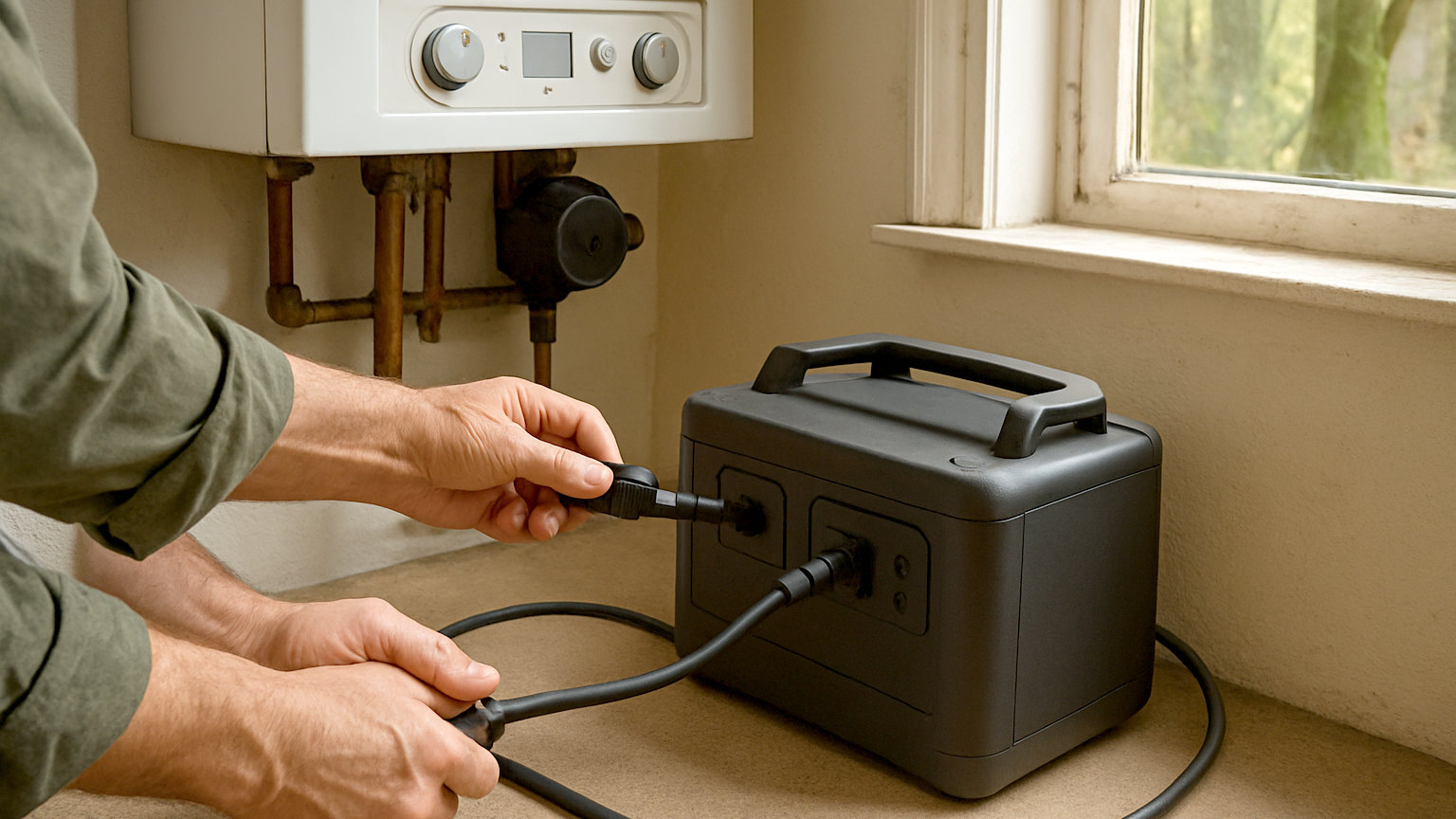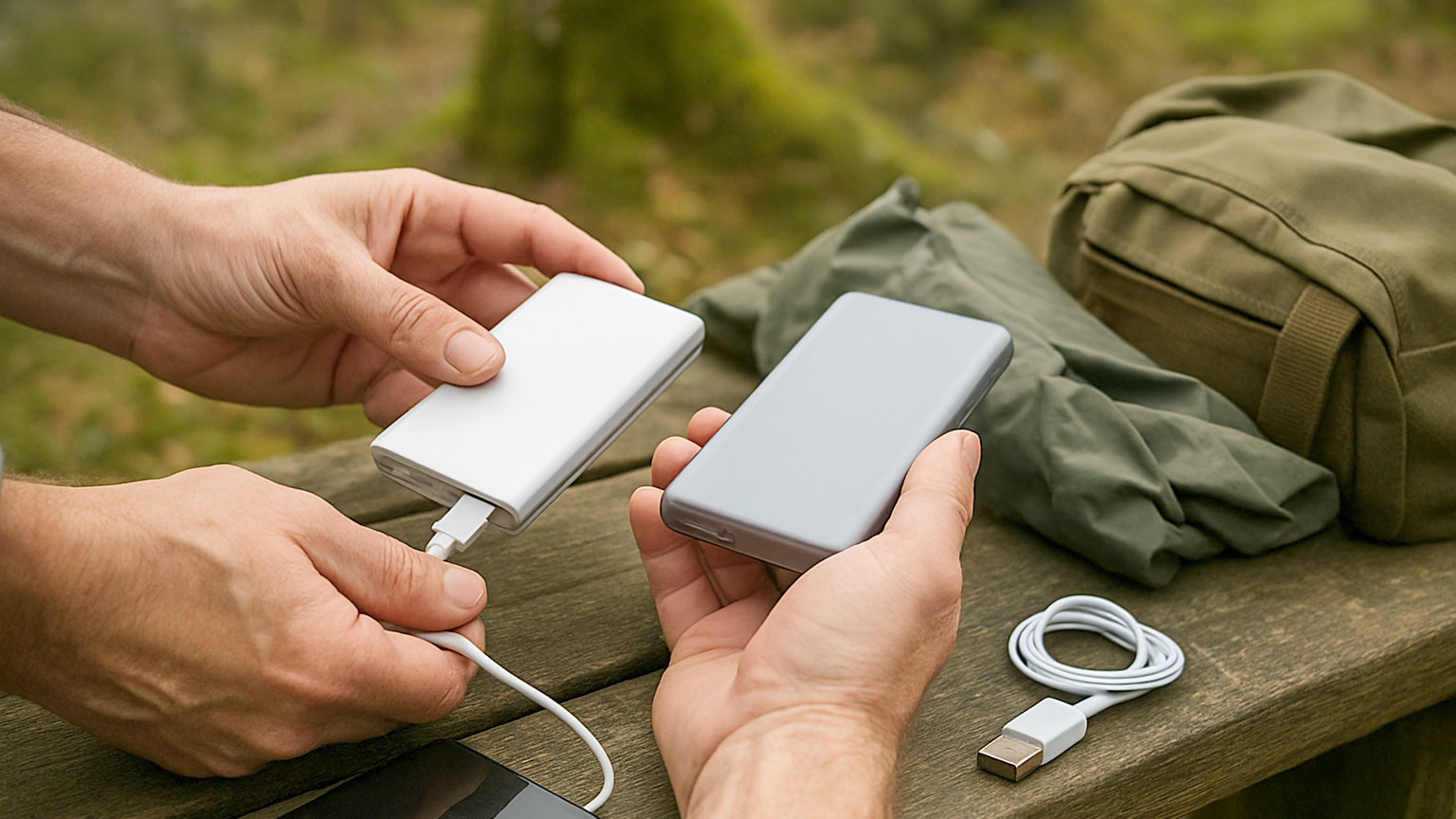
A power bank is the cheapest and most useful piece of backup power any household can own, and the ratings on the box are systematically misleading in a way worth understanding before buying.
Why does the advertised capacity overstate things?
Because the milliamp hour figure is measured at the cell voltage of around three point seven volts, while your phone charges at five volts or higher. Converting between them, plus inverter and heat losses, means real delivered capacity is typically sixty to seventy percent of the headline number. A twenty thousand milliamp hour bank delivers roughly thirteen thousand to your phone, which is around three charges for a typical handset rather than five.
What size should you get?
Ten thousand for a pocket bank covering a day, twenty thousand for a household emergency bank giving three or four phone charges, and twenty six thousand as the practical upper limit for anything you might fly with. Larger banks exist and become heavy and slow to recharge. Two twenty thousand banks are more useful than one forty thousand, since they can charge two people at once and one can live in a bag.
- Expect around sixty five percent of the advertised capacity in practice
- Twenty thousand milliamp hours suits a household emergency bank
- Check the output wattage, not just the capacity
- Look for USB C power delivery for laptops and fast phone charging
- Pass through charging lets it run a device while recharging
- Recharge every three to six months in storage
Why does output wattage matter?
Because it determines what you can charge and how fast. A bank with only an older USB A output at ten watts will charge a phone slowly and will not charge a laptop at all. A USB C power delivery output of sixty watts or more charges a phone rapidly and will run most laptops. For a household bank intended to keep several devices going, output capability matters as much as capacity.
Is there anything to avoid?
Unbranded banks with implausible capacity claims, which are common and frequently contain far less than stated or poor quality cells. Anything showing swelling, damage or excessive heat in use should be removed from service, since lithium cells that fail can vent or catch fire. Buy from a recognised brand through a reputable retailer, and treat a very cheap high capacity bank as the warning sign it is.
How should you store it?
Around half to eighty percent charged rather than full or flat, at room temperature, and topped up every three to six months. Lithium cells self discharge slowly and degrade faster when stored at extremes of charge or temperature. A bank left flat for a year may not recover at all. Adding it to the twice yearly kit check is the simplest way to keep it alive.
What about solar power banks?
Generally disappointing for their price. The small panel on a solar power bank typically produces so little that a full charge takes days of direct sunlight, which is not useful in a British emergency. A proper separate folding solar panel charging a normal bank is far more effective. Treat the integrated ones as a novelty rather than a plan.
What else can a bank run?
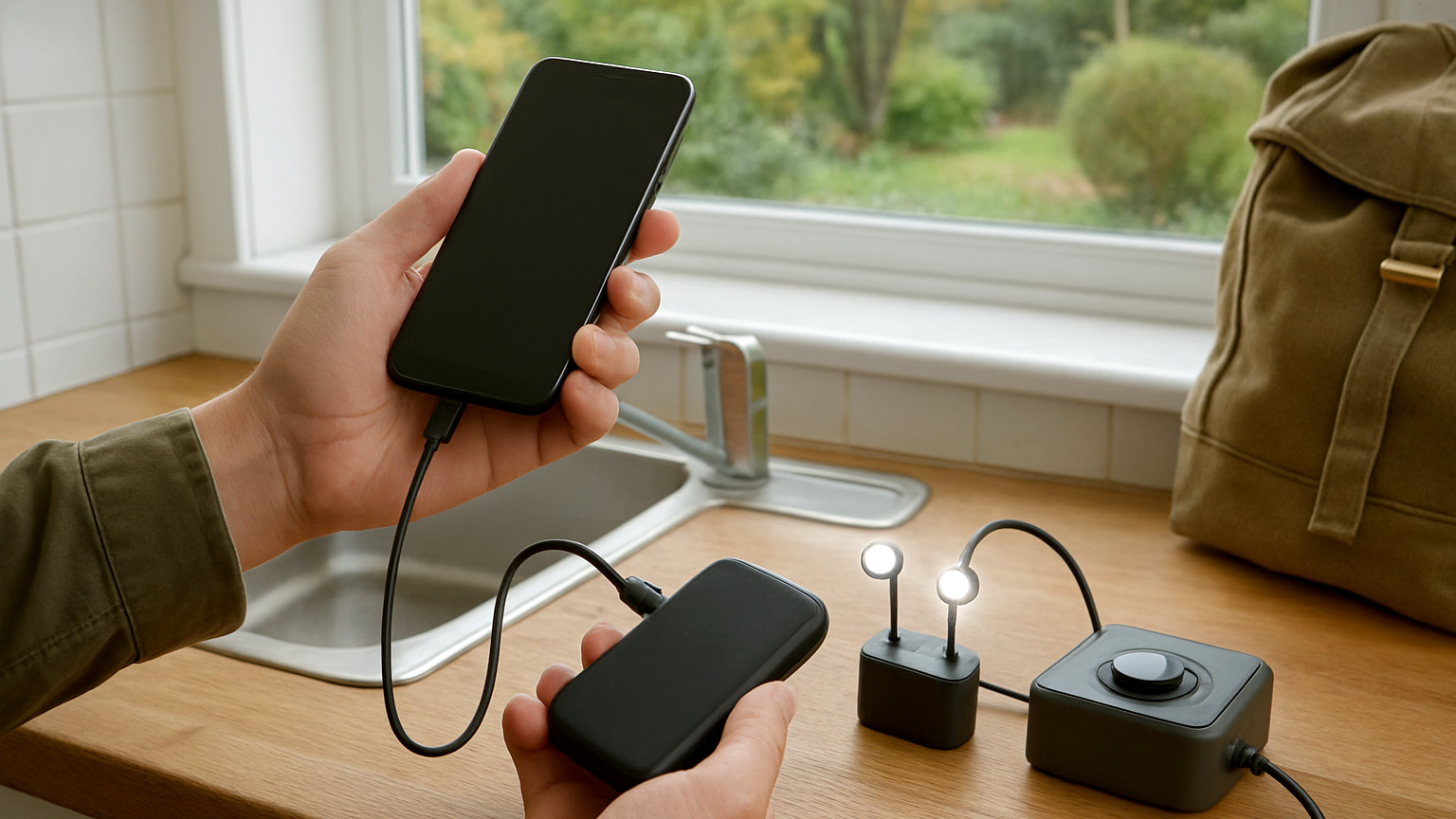
More than people expect. Head torches and lanterns with USB charging, a USB radio, a portable fan, some CPAP machines with the right adapter, and a router if it accepts USB C power or you have a small converter. Keeping a router alive maintains internet if the exchange still has power, which is often the case in a purely local outage.
How many should a household have?
At least two, kept in different places, plus a small one in each grab bag. They are cheap, useful daily, and the redundancy costs very little. Label them so you know which are charged, and keep the cables with them, since a bank without the right cable is a brick.
Buy two twenty thousand banks with USB C power delivery from a known brand, keep the cables attached, and top them up twice a year.