Protecting the contents of a fridge and freezer is the most common reason people consider backup power, and for most outages the correct answer requires no equipment at all.
How long does food stay safe?
A closed fridge holds a safe temperature for around four hours. A full freezer holds for roughly twenty four to forty eight hours, and a half empty one for considerably less. The single biggest variable is whether the door stays shut, since each opening loses a large proportion of the cold air and costs hours of holding time. Most British power cuts are shorter than these windows.
What should you do when the power goes?
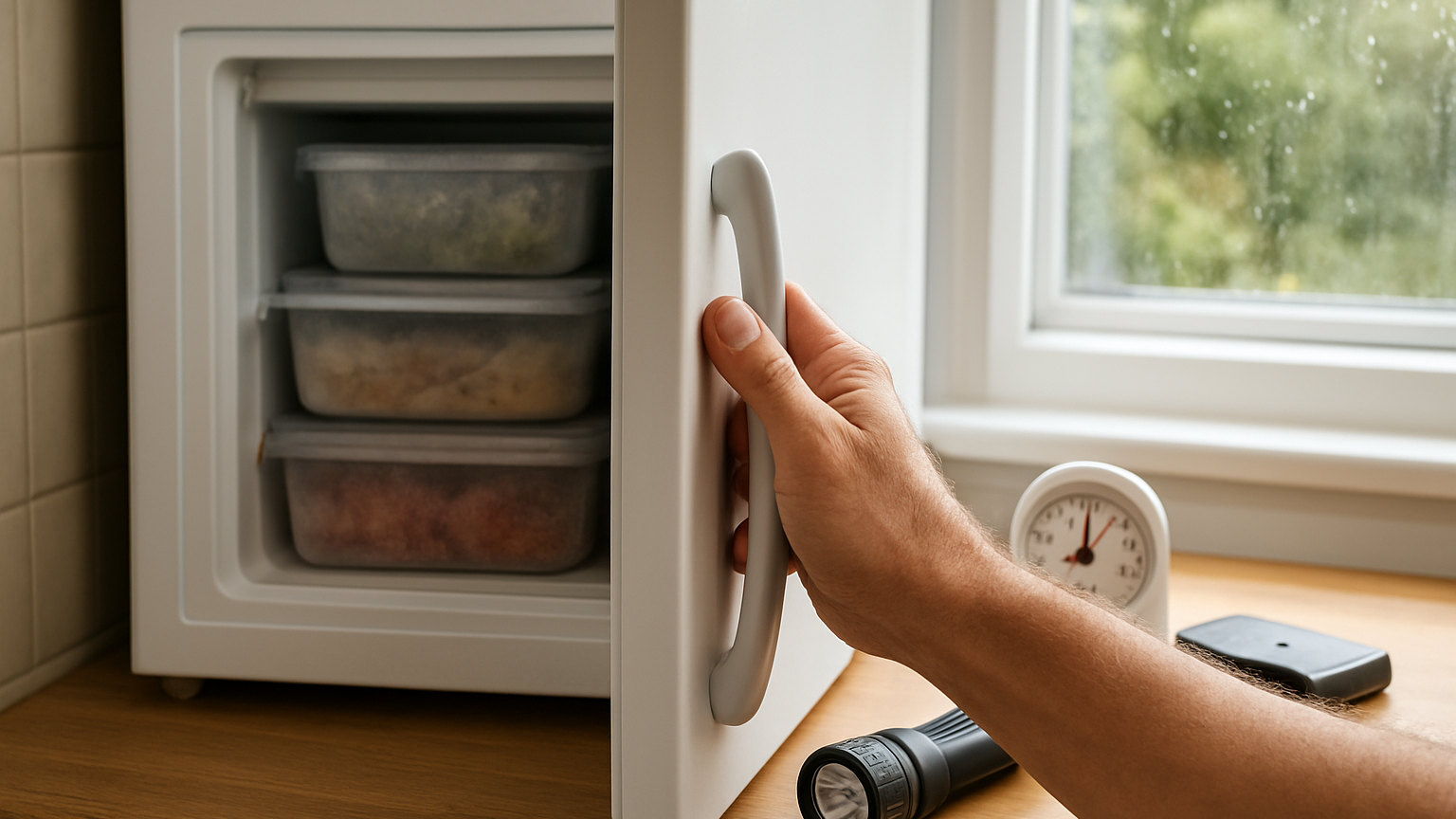
Nothing to the fridge or freezer, which is the hard part. Do not open them to check, do not move things around, and do not open them to see what needs eating. Decide in advance what you would take out in the first few minutes if you needed to, take it out immediately, then close both and leave them alone until the power returns or the time limit approaches.
- Keep both doors closed, which matters more than anything else
- A full freezer holds cold far longer than a half empty one
- Fill gaps with bottles of water to add thermal mass
- Move fridge items into the freezer if an outage looks long
- Use a fridge thermometer to judge safety rather than guessing
- Above five degrees for more than four hours means discard
Why does filling the freezer help?
Because frozen mass stores cold. A full freezer has far more thermal inertia than an empty one and warms up much more slowly. Filling empty space with bottles of water is free, effective, and doubles as an emergency water store. Those bottles can also be moved into the fridge during an outage to keep it cold, which extends the fridge window considerably.
How do you know if food is still safe?
By temperature rather than appearance. Keep a thermometer in the fridge and one in the freezer. Food held above five degrees for more than a couple of hours should be treated as suspect, and anything above that for four hours or more should be discarded. Frozen food that still contains ice crystals and is at or below five degrees can generally be refrozen, though quality suffers.
What should you discard?
Anything high risk that has been warm: raw and cooked meat, fish, dairy, cooked rice and pasta, prepared salads and anything containing eggs. When in doubt, discard, since the cost of replacing food is far below the cost of serious food poisoning during a period when medical services may already be stretched. Do not taste anything to check.
Can a battery run a fridge?
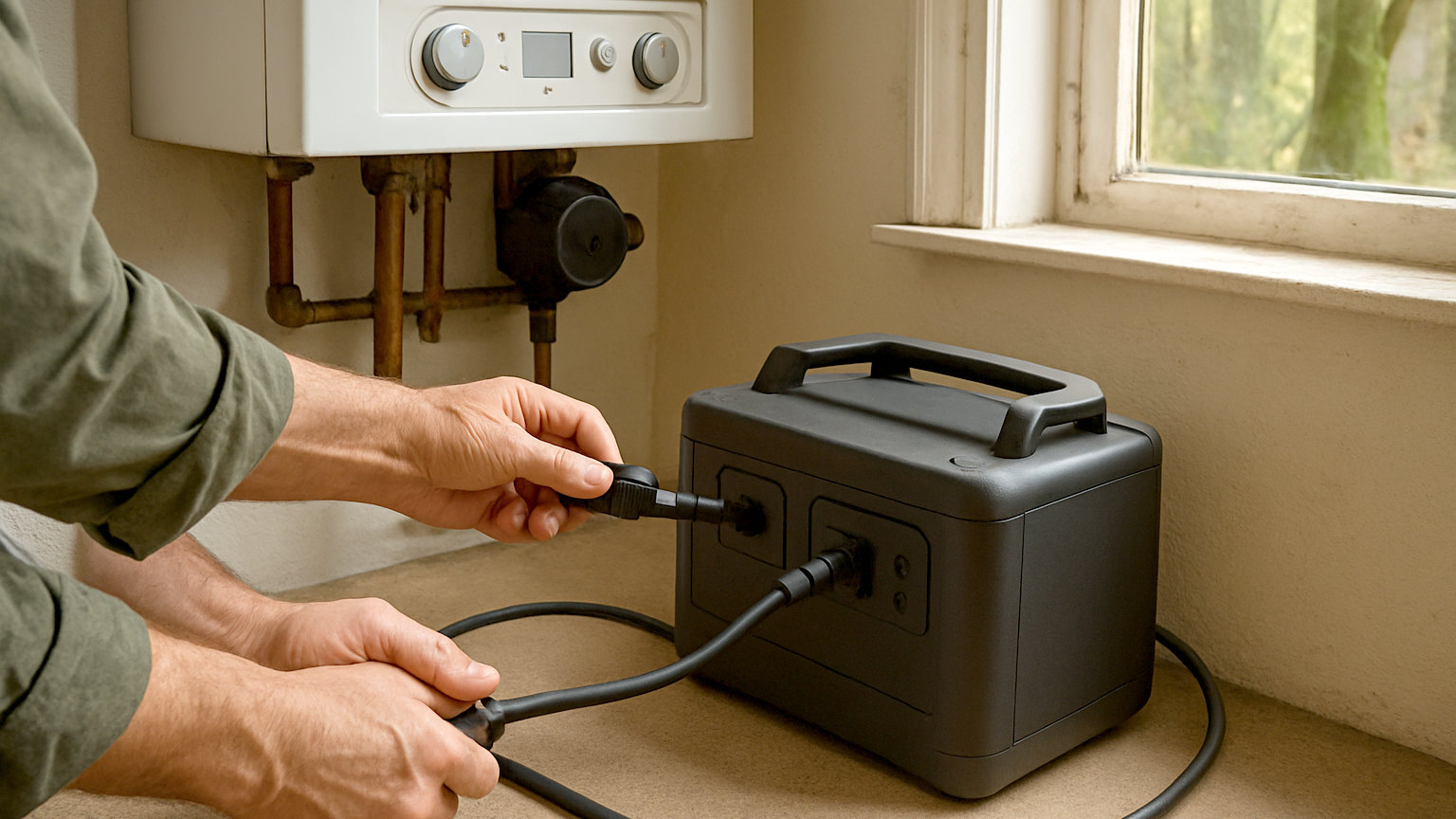
Yes, with a reasonably large power station. A domestic fridge freezer typically draws around a hundred to two hundred watts while the compressor runs, and cycles on and off, using perhaps one to two kilowatt hours a day. A one thousand watt hour station therefore covers roughly half a day to a day, and a larger unit covers longer. Check the surge rating, since compressors draw several times their running current at startup.
Is a generator worth it just for this?
Rarely, on cost alone. Replacing a freezer full of food costs less than a generator and its running costs for most households. The calculation changes if you store expensive food, run a smallholding, keep refrigerated medication, or live somewhere with regular multi day outages. For everyone else, keeping the door shut is the correct and free answer.
What about medication needing refrigeration?
Plan for it specifically, since it is the one genuinely critical case. Ask your pharmacist or clinical team what temperature range matters and how long the medicine tolerates being warm, since some are more forgiving than assumed. A cool bag with ice packs handles short outages. Register on the Priority Services Register, which brings priority reconnection and welfare support.
Keep the doors shut, fill the freezer with water bottles, use a thermometer to decide, and plan separately for refrigerated medication.