Generators are useful and genuinely dangerous, and the hazards are concentrated in two areas: exhaust gas and electrical connection. Both cause deaths every year and both are entirely avoidable.
Where must a generator run?
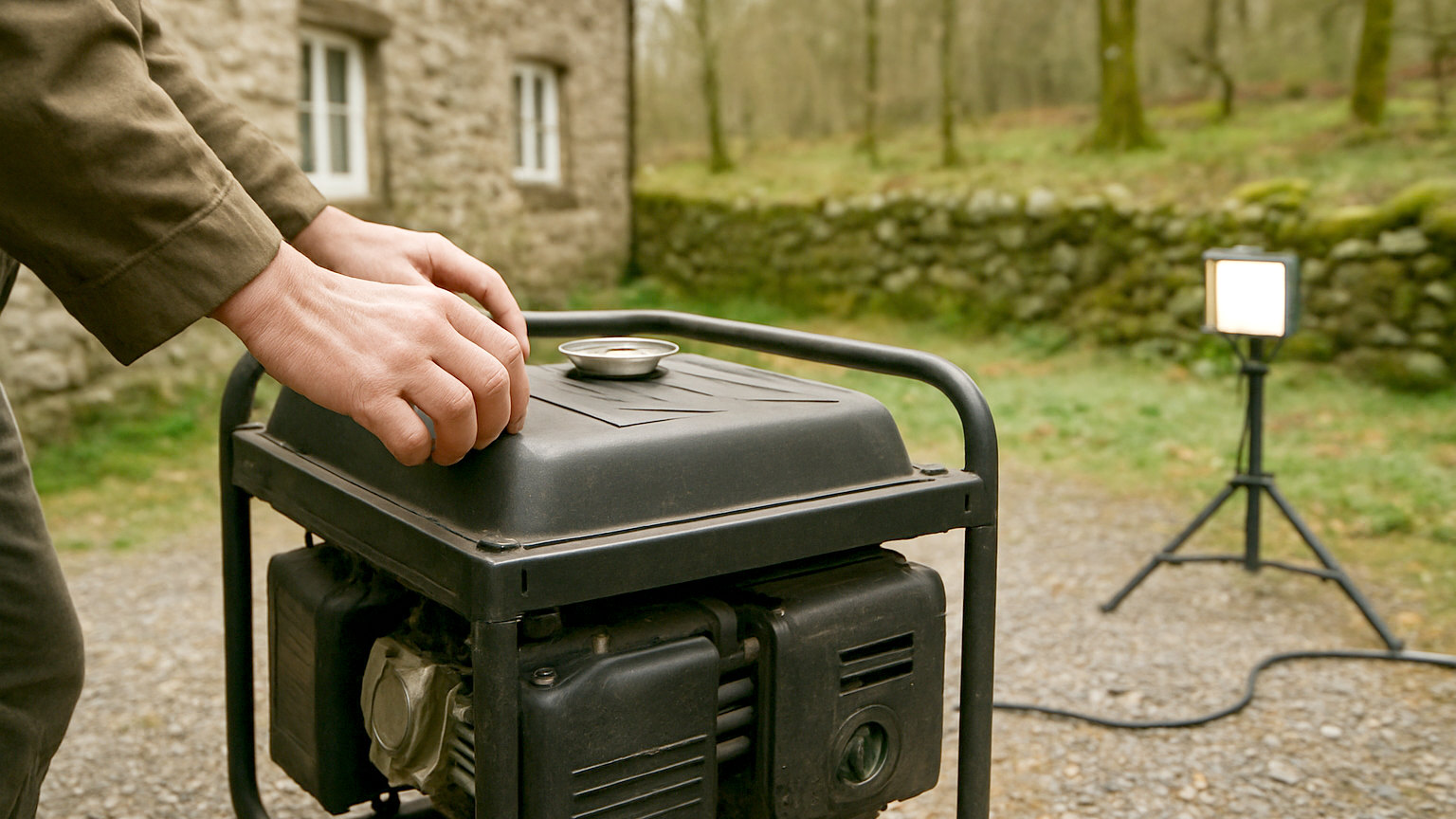
Outdoors, always, and well away from any opening into a building. Never in a garage, a shed, a conservatory, a porch, a caravan or a partially open outbuilding, and never just outside a window or door. Exhaust contains carbon monoxide at concentrations that can kill within minutes in an enclosed space, and it travels readily through open windows, air bricks and vents. Opening a garage door does not make a garage safe.
How far away is far enough?
Several metres at minimum, positioned so exhaust blows away from the building, and clear of any window, door, vent or air brick on any side. Consider the wind direction, which changes. Fit carbon monoxide alarms conforming to the relevant British Standard inside the house, particularly near sleeping areas, and treat any alarm as a reason to get everyone outside immediately rather than to investigate.
- Outdoors only, several metres from any opening
- Never in a garage or shed, even with the door open
- Fit and test carbon monoxide alarms inside the house
- Never connect to house wiring through a socket
- Use a changeover switch installed by a qualified electrician
- Refuel only when the engine is off and cool
What is backfeeding and why is it dangerous?
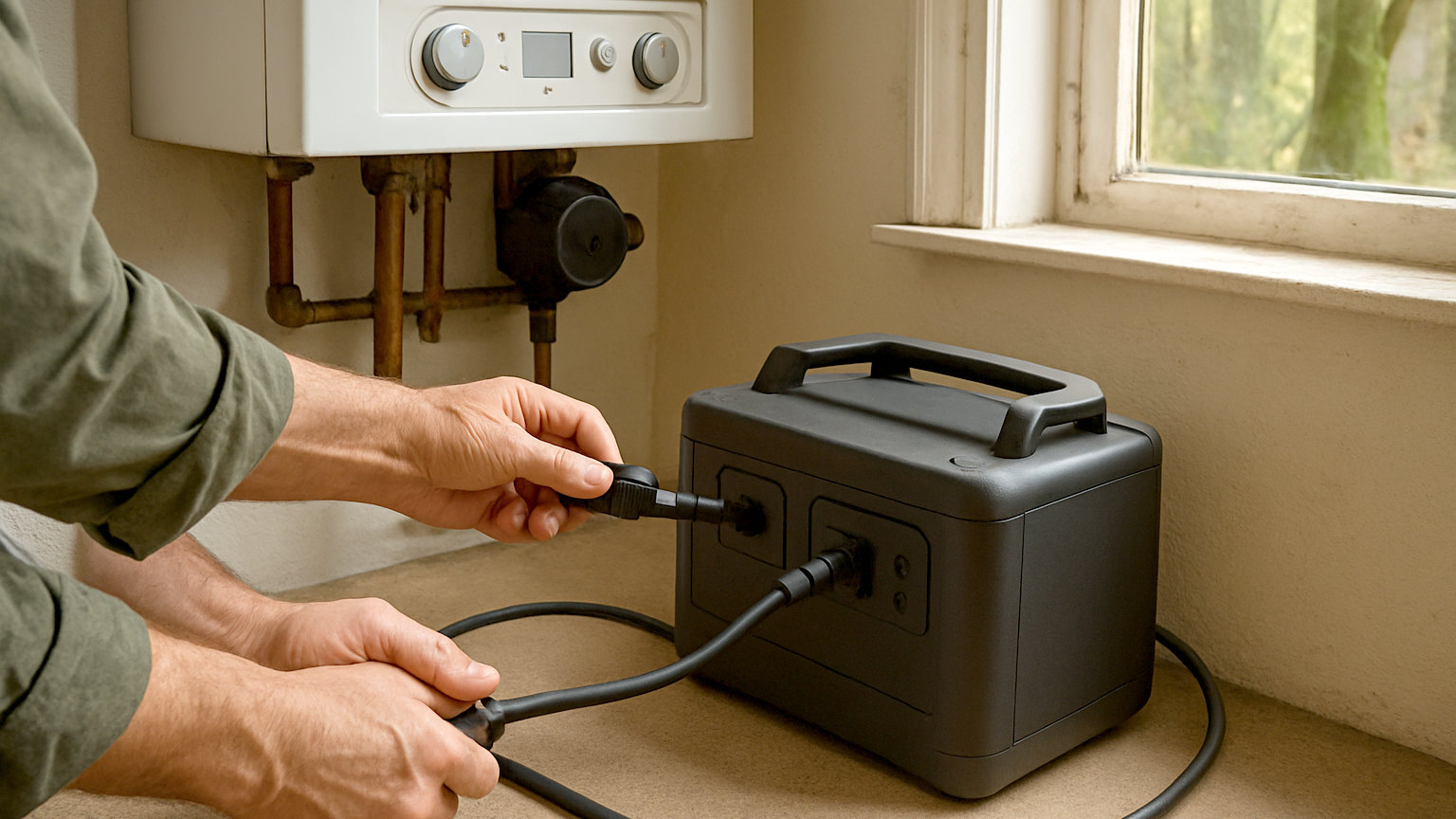
Backfeeding means connecting a generator to a household socket to energise the house wiring. It is dangerous for two reasons. It can send power back through your supply into the local network, where engineers working to restore it expect dead conductors and can be electrocuted. And it bypasses the protective devices in your consumer unit, creating fire and shock risk inside the property. It is unlawful as well as unsafe.
What is the correct electrical arrangement?
Either run appliances directly from the generator on suitable extension leads, which needs no installation work at all, or have a qualified electrician fit a manual changeover switch. The switch physically isolates the property from the incoming supply before connecting the generator, so backfeeding is impossible. Your network operator should be informed where a fixed connection is made.
How should you handle the leads?
Use heavy duty outdoor rated extension leads, fully unwound from the reel, since a coiled lead under load overheats and can melt or catch fire. Keep connections off wet ground and out of standing water, and use an RCD protected lead or socket. Do not run leads under doors where they can be crushed, and check for damage before each use.
What are the fuel risks?
Fire and vapour. Never refuel a running or hot engine, since petrol spilled onto a hot exhaust ignites readily. Let it cool for several minutes first. Store fuel in approved containers, outside the house, away from ignition sources and within the legal quantity limits. Keep a suitable fire extinguisher nearby, and never smoke while refuelling.
What about weather?
Generators must be kept dry while remaining ventilated, which is an awkward combination. Purpose made generator covers or open sided canopies allow airflow while shedding rain. Never run one under a tarpaulin draped over it, which traps exhaust and heat. Never operate one in standing water or with wet hands, and site it where surface water will not collect.
What should you do before an outage?
Practise. Start it, connect the leads you would actually use, and run the appliances you intend to power, in daylight and calm conditions. Discovering the starting procedure, the lead lengths and the siting problems at midnight in a storm is how mistakes are made. Write the sequence down and keep it with the generator.
Does it need earthing?
It depends on how it is used, and it is worth asking an electrician rather than guessing. Portable units supplying appliances through their own sockets usually have the necessary protective arrangements built in, and many include residual current protection. Where one connects to a property through a changeover switch, the earthing becomes part of that design and must be specified properly.
Outdoors, several metres clear, carbon monoxide alarms fitted, never through a socket, and refuel only when cool.