Sizing backup power is straightforward arithmetic that most people skip, which is why they end up with something too small to be useful or far larger than they needed. Ten minutes with a list solves it.
What are the two numbers?
Watts and watt hours. Watts measure how fast something uses energy and determine whether your equipment can run it at all. Watt hours measure total energy stored and determine how long it will run for. A device needs both to be adequate: enough watts to start and sustain the load, and enough watt hours to keep it going for the period you care about.
How do you find an appliance rating?
On the label, usually near the plug or on a plate on the back or base. It will state watts directly, or amps and volts, in which case multiply them: amps times two hundred and thirty gives watts for a British mains appliance. For something that cycles, such as a fridge, the plate figure is the running draw rather than the daily consumption, which is far lower because it is off much of the time.
- Watts equals amps times two hundred and thirty for UK mains
- Watt hours equals watts times hours of use
- Motors surge to several times their running draw at startup
- Allow twenty percent for inverter and conversion losses
- Anything producing heat is very high wattage
- Use a plug in energy monitor to measure rather than estimate
What does a worked example look like?
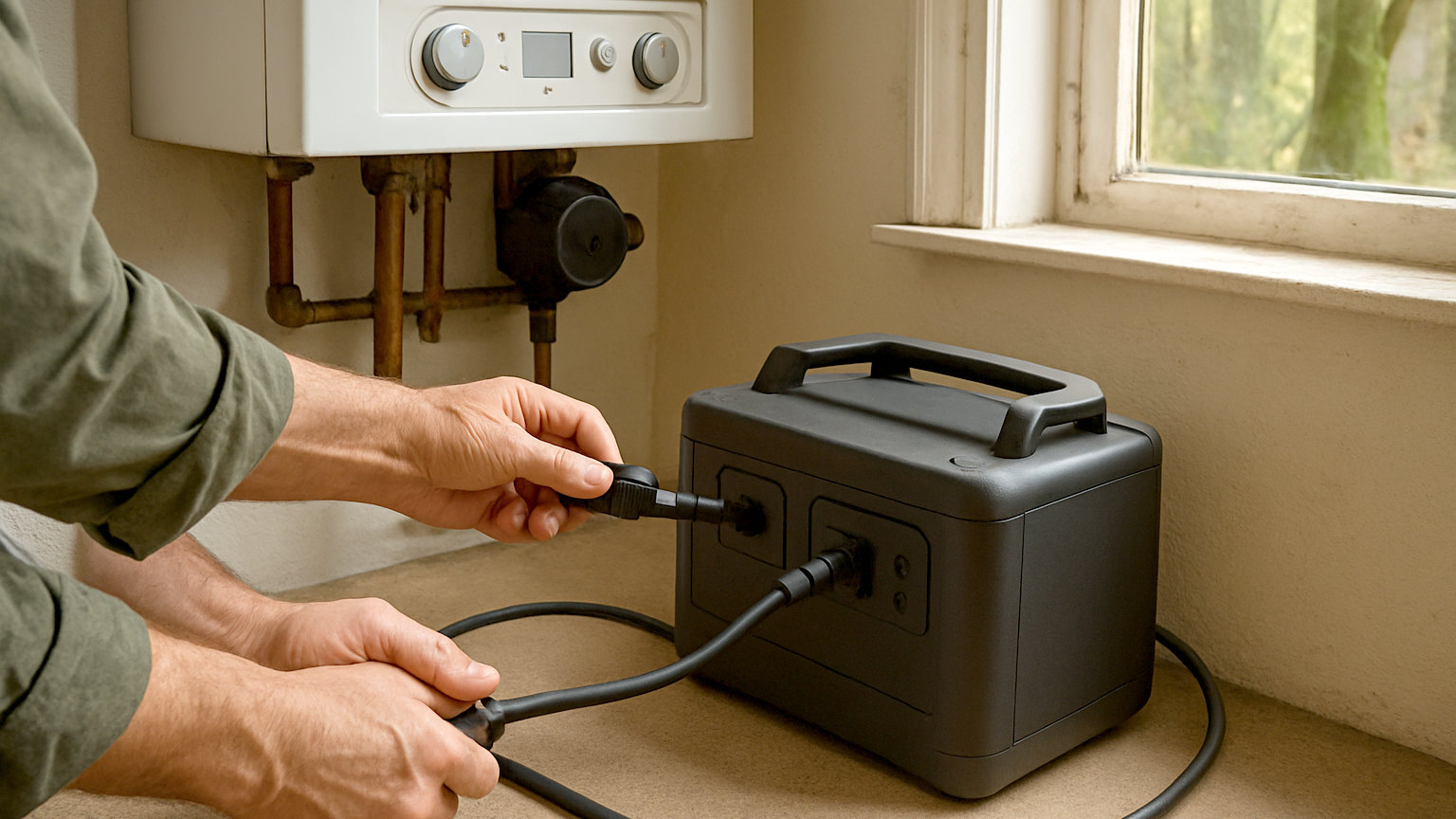
Suppose you want lights, a router, a laptop and the boiler for a twelve hour evening and night. Two LED lamps at ten watts each is twenty. A router at fifteen. A laptop at fifty. A boiler at a hundred, running perhaps a third of the time, so an effective thirty three. Total around a hundred and twenty watts, but the laptop and boiler are intermittent, so a realistic average might be seventy. Over twelve hours that is eight hundred and forty watt hours, plus losses, so a one thousand watt hour station covers it comfortably.
Why does surge current matter?
Because motors draw far more when starting than when running. A fridge compressor rated at a hundred and fifty watts may draw six hundred or more for a fraction of a second at startup, and a pump or a power tool considerably more. If your equipment cannot supply that surge it will shut down protectively even though the running load is well within its rating. Check the surge specification, not just the continuous one.
What is expensive to run?
Anything that makes heat. Kettles, toasters, hair dryers, irons, heaters, showers and ovens all draw between one and three kilowatts, which either exceeds a portable unit entirely or drains it within minutes. Resistive heating is fundamentally unsuited to battery backup, and the practical answer is a gas hob, a camping stove used safely, or simply not doing that thing during an outage.
How do you measure rather than estimate?
With a plug in energy monitor, which costs very little and shows actual consumption over time. Leave one on the fridge for a day and it will report the real kilowatt hours used, which is far more accurate than multiplying the plate rating. Doing this for two or three key appliances turns your sizing calculation from guesswork into something reliable.
How much margin should you add?
Around twenty to thirty percent, covering conversion losses, battery capacity that is not fully usable, cold weather performance and the things you forgot. Do not add several times over, since oversizing is expensive and heavy. A sensible margin on an honest list beats a large margin on an optimistic one.
What should you write down?
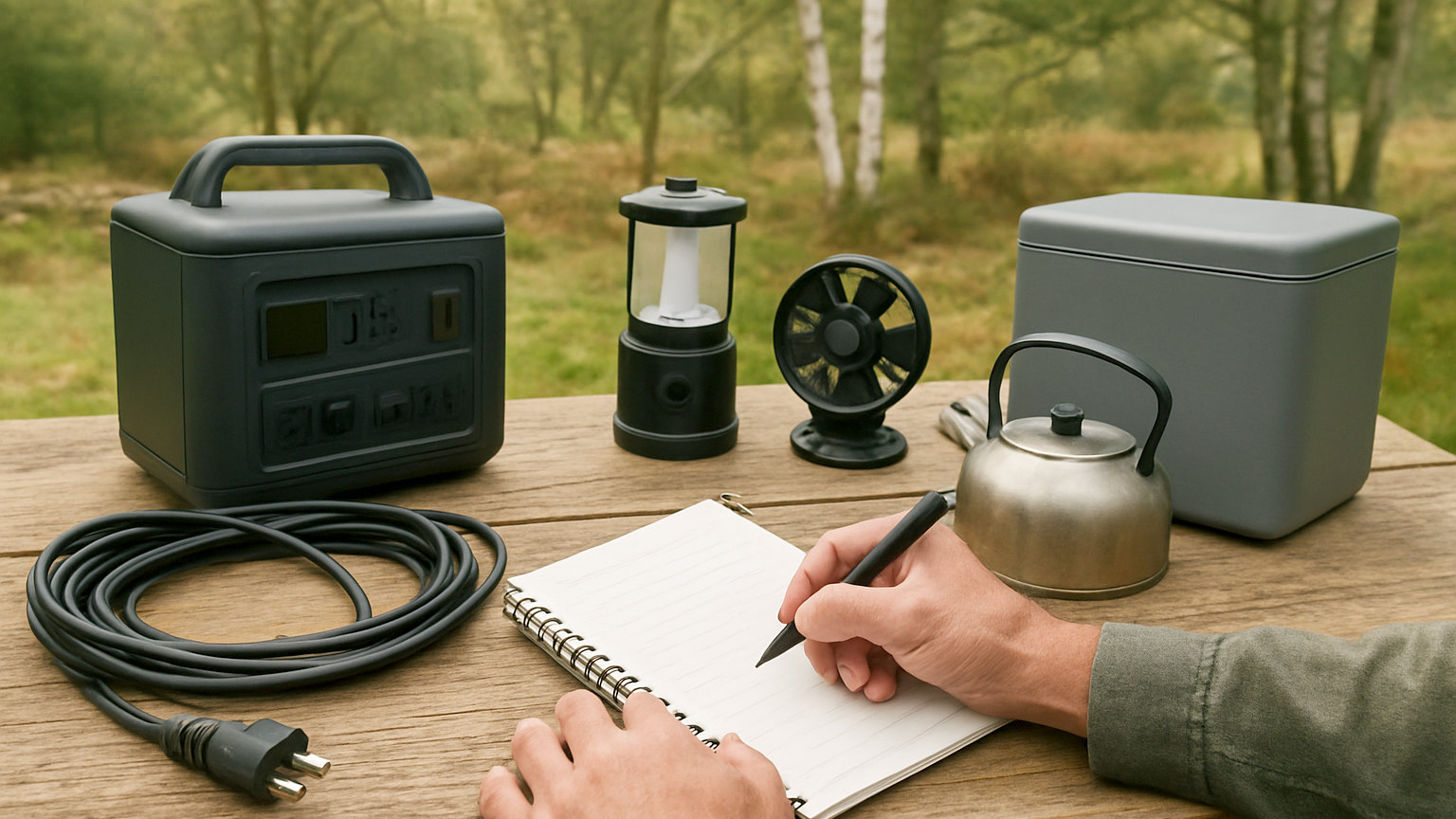
The list itself, kept with the equipment. In an outage, knowing that the boiler, two lamps and the router are the priority, and that the kettle is not, prevents the common mistake of flattening the battery on a hot drink in the first hour.
List the loads, add the watt hours, check the surge rating, add a quarter for losses, and keep the list with the equipment.