Fuel storage at home is regulated, the limits are lower than many people assume, and fuel degrades faster than most expect. Both facts constrain how useful stockpiling actually is. This is general information rather than legal advice.
How much petrol can you keep?
Up to thirty litres at domestic premises without notifying anyone, under the petroleum regulations applying in Great Britain. Above thirty litres and up to two hundred and seventy five litres, you must notify your local Petroleum Enforcement Authority, usually the fire authority or trading standards. Above that, a licence is required. The thirty litre figure covers most realistic domestic purposes.
What containers are permitted?
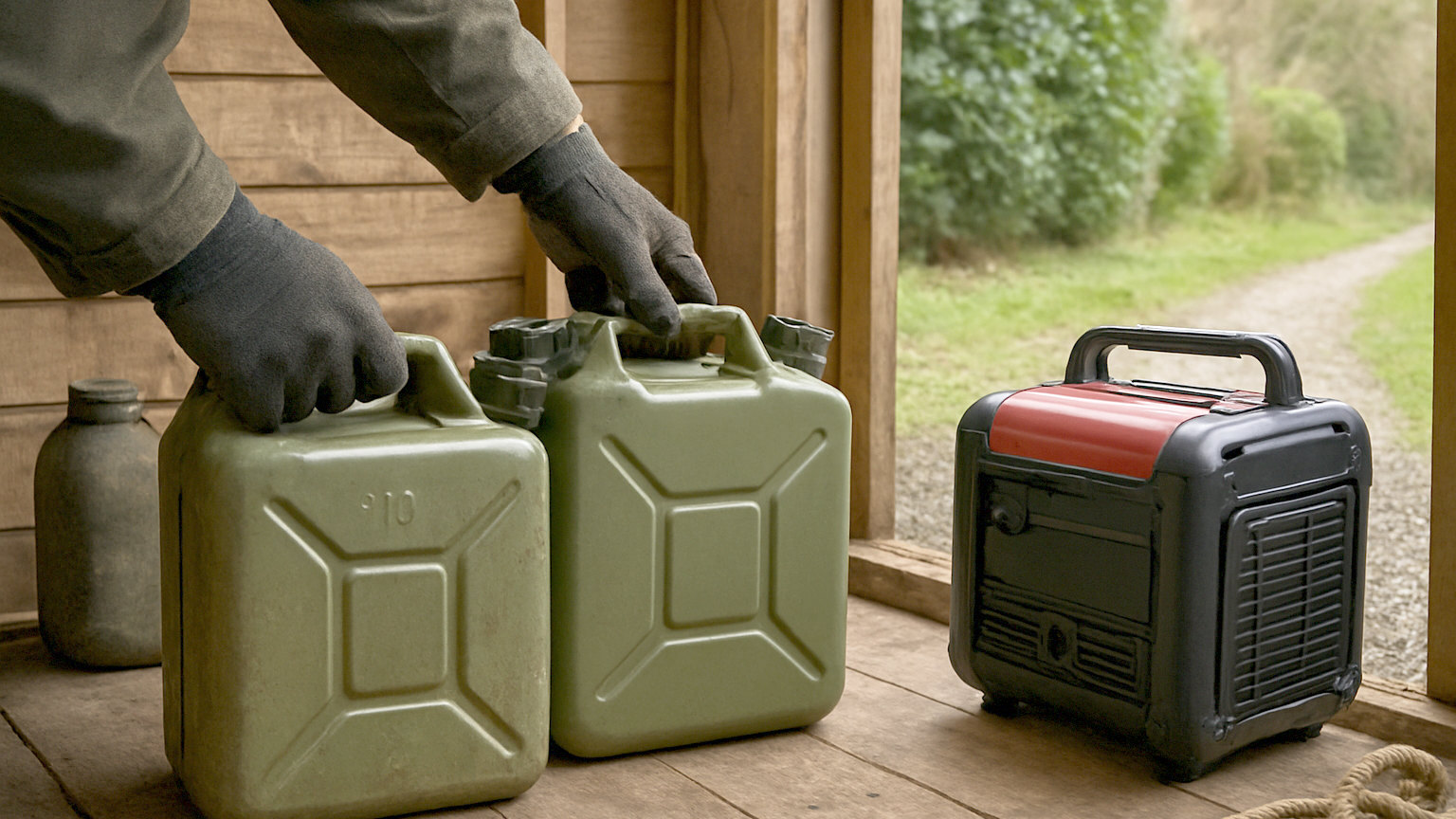
Approved containers of specified maximum sizes: metal containers up to ten litres, plastic containers up to five litres, and demountable fuel tanks up to thirty litres. Containers must be suitable, marked for petroleum, and kept closed. Storing petrol in improvised containers, water bottles or unmarked drums is both unlawful and dangerous, since petrol vapour is heavier than air and travels along the ground to find an ignition source.
- Up to thirty litres of petrol without notification
- Metal containers up to ten litres, plastic up to five
- Store outside the house, in a shed or garage, never indoors
- Keep away from ignition sources, drains and living areas
- Diesel is far less restricted than petrol
- Check your home insurance, which may limit stored fuel
Where should it be kept?
Outside the dwelling, in a secure, well ventilated place away from any ignition source, and not in a basement or anywhere vapour could collect. A detached shed or a garage is the usual answer, kept locked, since fuel is attractive to thieves. Do not store it in a cellar, under stairs, or in any living space, and keep it away from drains, since spilled petrol entering a drain is both an environmental and an explosion hazard.
How long does fuel last?
Less time than people expect. Petrol begins to degrade within around three to six months, and modern petrol containing ethanol degrades faster and absorbs moisture from the air, which can cause corrosion and starting problems. Diesel keeps better, typically six to twelve months, and is prone to microbial growth in the presence of water. Fuel stabiliser additives extend both meaningfully.
How do you keep a stock usable?
By rotating it. Use stored fuel in the car or the mower every few months and refill with fresh, which keeps everything within its useful life at no extra cost. Label containers with the date filled. Add stabiliser if the fuel will sit for more than a few months. A generator that will not start on two year old petrol is a common and avoidable disappointment.
What about diesel and LPG?
Diesel is less tightly regulated than petrol because it is far less volatile, though quantity limits and sensible storage still apply and larger volumes attract other requirements. LPG cylinders have their own rules, must be stored upright, outdoors and never in a cellar or below ground, since the gas is heavier than air and pools. Check with your supplier and your insurer for quantities beyond one or two cylinders.
Does insurance care?
Frequently, yes. Many home insurance policies limit or exclude cover where flammable liquids are stored in quantity, and storing beyond the permitted limits could affect a claim after any fire regardless of cause. Read the policy wording, and tell your insurer if you keep more than a nominal amount.
Is stockpiling fuel a good idea at all?
In moderation and for a specific purpose. Enough to run a generator through a plausible outage, or to get a vehicle somewhere useful, is reasonable. Large quantities create fire risk, degrade before use, breach regulations and may invalidate insurance. Keeping the vehicle tank above half is a simpler and safer way of holding a fuel reserve.
Thirty litres maximum without notification, in approved containers outside the house, rotated every few months, and check your insurance.