A portable power station is a large rechargeable battery with an inverter and a set of outputs. It is the most practical backup power solution for most households because it works indoors, makes no noise and produces no exhaust.
What is inside one?
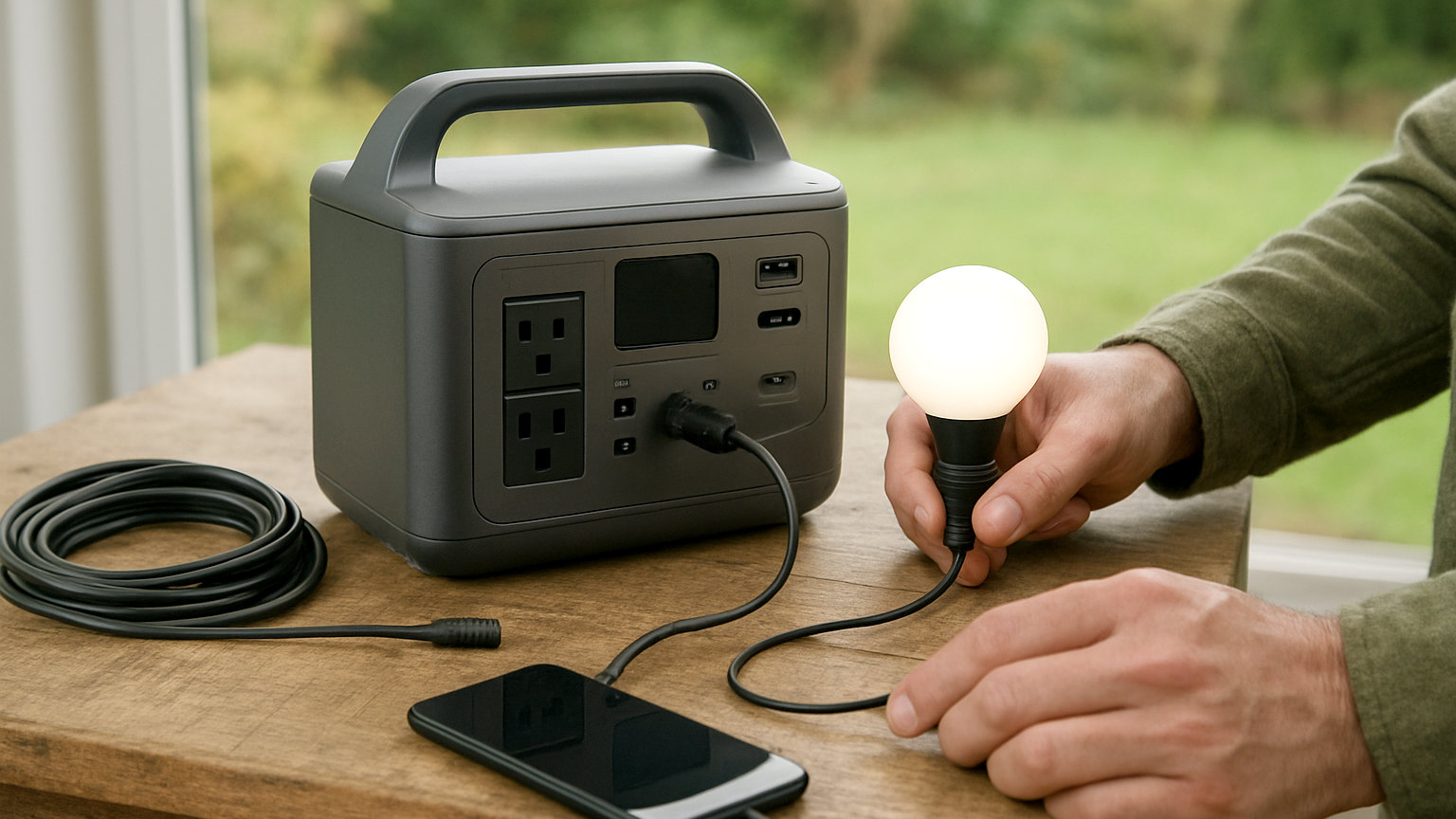
Three components. A lithium battery pack storing the energy. An inverter converting the direct current from the battery into mains alternating current at two hundred and thirty volts. And a controller managing charging, discharging and protection. The outputs typically include mains sockets, USB ports and a twelve volt output, so it can run most things directly.
What do the numbers mean?
Two figures matter. Capacity is given in watt hours, which is how much energy is stored. Output is given in watts, which is how much it can deliver at once. A station rated at one thousand watt hours and six hundred watts can supply a six hundred watt appliance, and will store enough to run a hundred watt load for roughly ten hours before losses. Both numbers must suit your intended use.
- Watt hours is the fuel tank, watts is the engine size
- Check both continuous and surge output ratings
- Prefer lithium iron phosphate for long life and safety
- Look for a pure sine wave inverter
- Check how quickly it recharges from mains and from solar
- Expect real usable capacity around eighty five percent of the rating
Which battery chemistry is better?
Lithium iron phosphate, usually shown as LiFePO4, for anything intended to sit as backup. It handles two to three thousand charge cycles or more against several hundred for older lithium chemistries, tolerates being left charged, and is markedly more stable thermally. Units using nickel manganese cobalt cells are lighter and cheaper for a given capacity, and are the better choice only where weight genuinely matters.
Why does pure sine wave matter?
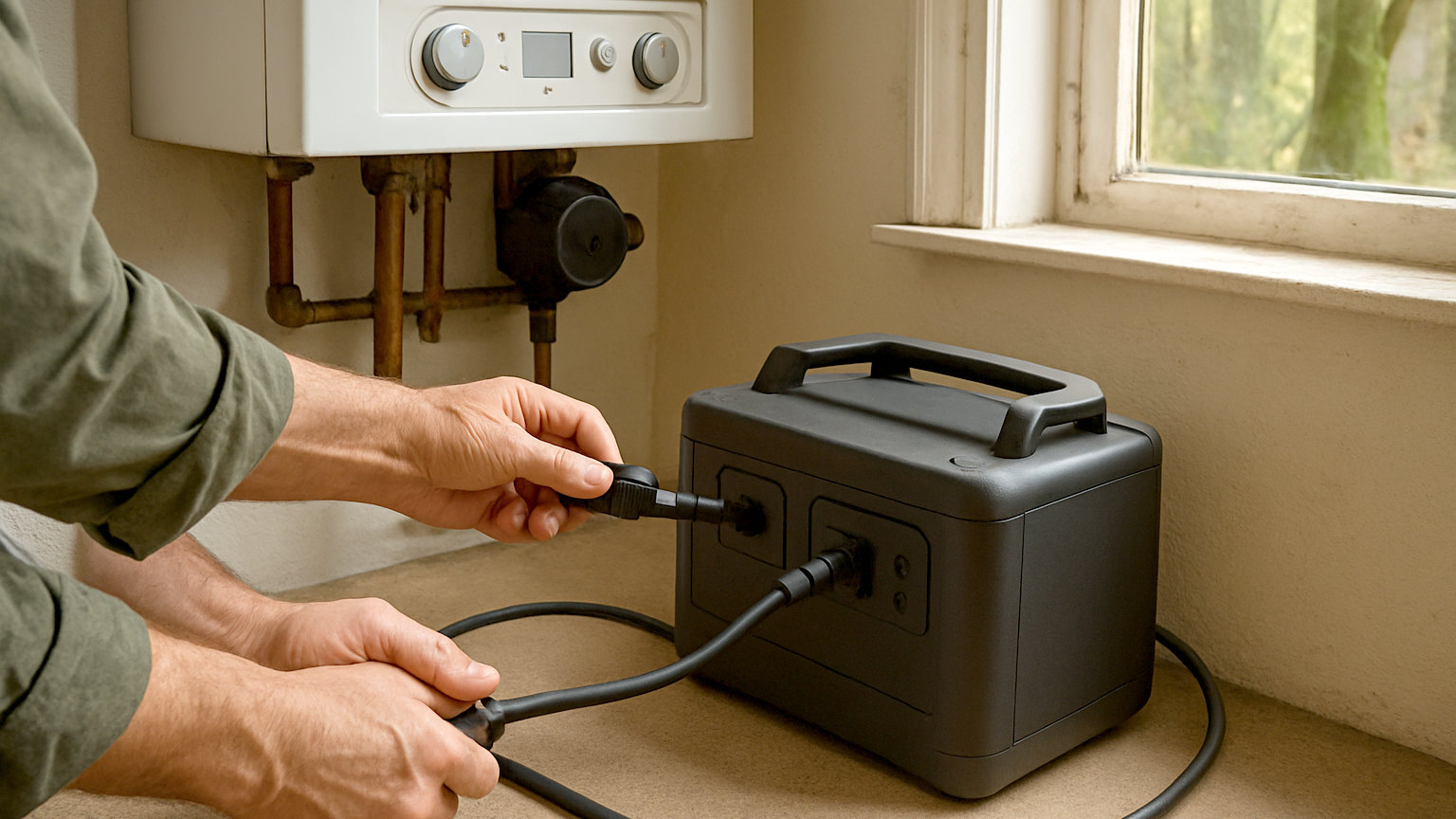
Because some equipment misbehaves on the cheaper modified sine wave output. Motors, medical devices, sensitive electronics and some boiler control boards can run hot, buzz, or refuse to operate. Almost all reputable power stations now use pure sine wave inverters, and it is worth confirming before buying, particularly if you intend to run a boiler or anything with a compressor.
What can one realistically run?
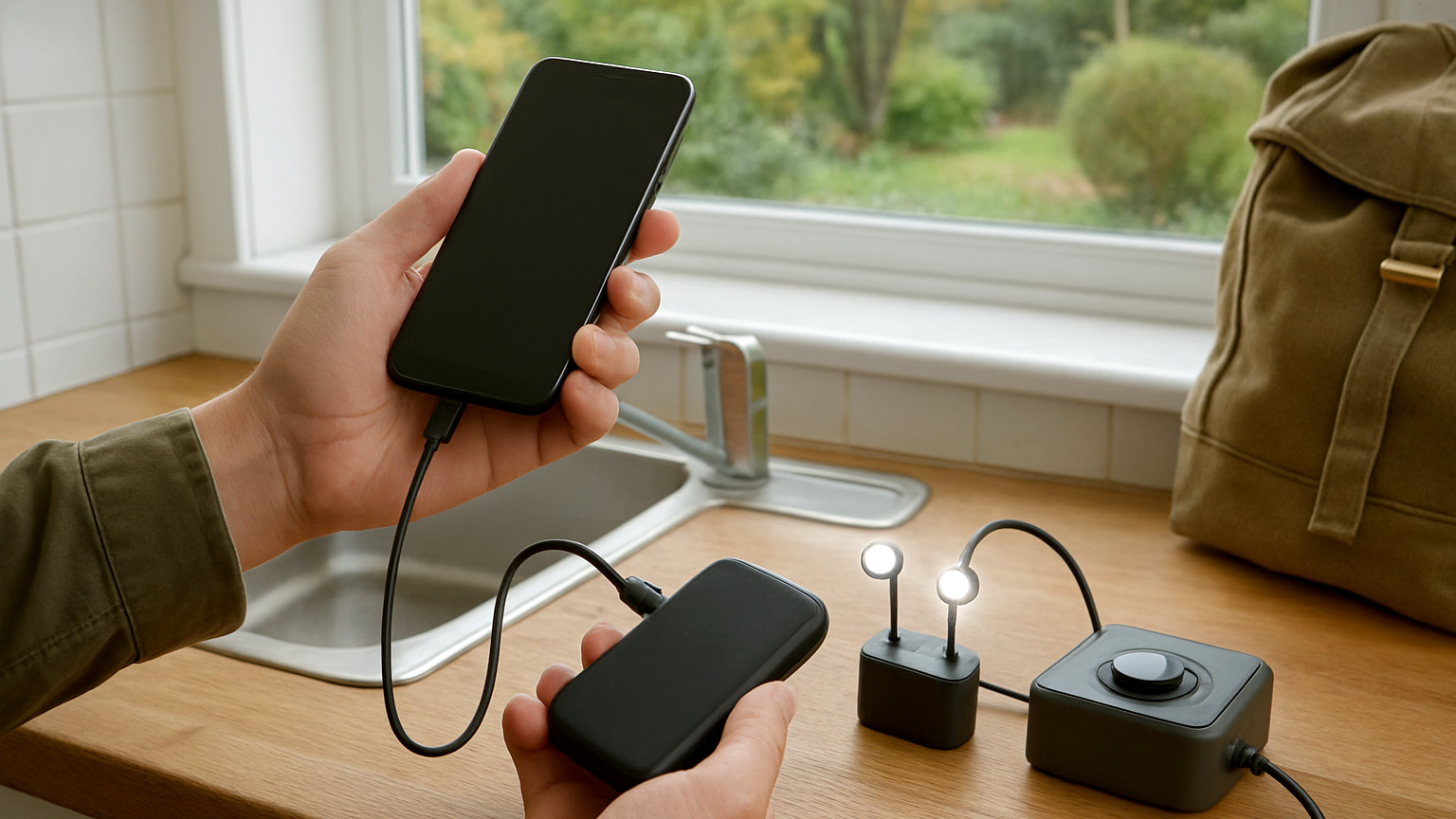
A great deal at low power and very little at high power. Phones, laptops, lights, a router and a boiler are all tens of watts and run for many hours. A fridge cycles at around a hundred and fifty watts and might run a day from a large unit. Kettles, heaters, toasters and hair dryers draw two to three thousand watts and will either exceed the output or empty the battery in minutes. Anything producing heat is the wrong job for a battery.
How do you recharge it?
From the mains normally, and from solar or a car during an outage. Mains charging is fastest, often a couple of hours for a mid sized unit. Solar panels extend runtime indefinitely in decent daylight, which matters for a multi day outage, though British winter output is modest. Charging from a car twelve volt socket is slow and useful as a fallback.
How should you store it?
Charged, cool and checked. Leave it at around eighty percent rather than full or empty, top it up every three to six months, and keep it somewhere with a stable temperature rather than a garage that freezes. A station discovered flat during an outage is the most common failure, and a calendar reminder alongside the twice yearly kit check prevents it.
Can you use one while it charges?
Most modern units support pass through charging, meaning they can supply appliances while being recharged from mains or solar. This matters when power returns briefly and you want to top up without unplugging everything. Check the specification, since some cheaper units disable output while charging.
Are they safe to use indoors?
Yes, which is the central advantage over a generator. There is no combustion, no exhaust, no carbon monoxide and no fuel, so a power station can sit in a kitchen or a bedroom and run appliances overnight without any ventilation requirement. They should still be kept dry and uncovered under heavy load, since most units rely on a fan.
Buy lithium iron phosphate with a pure sine wave inverter, size it to your actual load, and set a reminder to top it up twice a year.